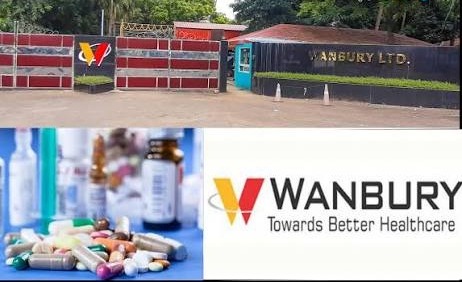
Wanbury Limited has received a Form 483 with six procedural observations from the USFDA following a five-day cGMP inspection at its Tanuku-J API plant from July 13 to July 17, 2026. The company is actively preparing a formal response to resolve the administrative findings while maintaining regular global shipping operations.
MUMBAI — Global health regulators have issued six procedural observations to Indian drugmaker Wanbury Limited following a specialized current Good Manufacturing Practices (cGMP) inspection at its primary active pharmaceutical ingredient (API) manufacturing asset. The United States Food and Drug Administration (USFDA) conducted the comprehensive five-day site evaluation from July 13 to July 17, 2026, culminating in the issuance of a Form 483 regulatory notice. While the enforcement action sets up near-term operational compliance requirements, the pharmaceutical enterprise has immediately initiated resolution steps to address the regulatory feedback without interrupting its broader international supply logistics.
Technical Parameters of the USFDA Audit
According to official corporate updates transmitted to regional stock exchange monitoring desks on July 20, 2026, the USFDA field team targeted the operational workflows of Wanbury's key export-oriented manufacturing asset. The specialized facility, designated in corporate filings as the Tanuku-J plant situated in Andhra Pradesh, underwent intensive product safety, tracking, and structural validation audits over the five-day timeline.
The regulatory review resulted in the issuance of an FDA Form 483 report containing six distinct procedural observations. In the context of international health code oversight, a Form 483 does not constitute a definitive final embargo or product ban; rather, it functions as an administrative mandate identifying conditions that field investigators judge could cause manufactured pharmaceuticals to fall short of global purity standards.
The enterprise has confirmed that its regulatory steering committees are drafting comprehensive Corrective and Preventive Action (CAPA) plans to submit to the USFDA within the standard 15-day statutory window.
Industrial Landscape and Export Dependencies
The compliance updates at the Tanuku-J manufacturing plant occur during an active period of asset optimization and balance sheet restructuring for the Mumbai-based firm. In May 2026, the company posted a 14% year-on-year expansion in consolidated revenue, driven by robust demand for its staple global molecules. Wanbury commands a significant share of the global market for essential therapies, supplying approximately 10% of the world's Metformin volume and 30% of its Sertraline supply.
The company recently completed several zero-observation regulatory reviews across its other facilities. In early April 2026, its secondary production hub in Patalganga, Maharashtra, cleared an audit by South Korea’s Ministry of Food and Drug Safety (MFDS) with a flawless compliance record. Additionally, the Tanuku complex secured formal clearance from Australia’s Therapeutic Goods Administration (TGA), which allowed the company to expand its active API export shipments to the Australian healthcare sector.
Official Sources Section
The logistical timelines, facility parameters, and regulatory observation counts cited in this journalistic report have been cross-verified with official statutory notifications.
The compliance data was filed directly with the investor relations platforms of the National Stock Exchange of India Limited and the BSE India Listing Centre. The documentation follows corporate transparency requirements under Regulation 30 protocols governed by the Securities and Exchange Board of India (SEBI).
Quote Section
"According to officials close to the company's regulatory operations, the six observations received at the Tanuku-J plant focus primarily on procedural enhancements rather than systemic product contamination. The production teams are working alongside external quality auditors to implement the requested updates while maintaining normal manufacturing output."
Why It Matters
For global healthcare systems and pharmaceutical supply chains, timely resolution of these observations is critical to ensuring the steady availability of high-volume chronic care medications. If a pharmaceutical exporter experiences prolonged clearance delays or receives an elevated warning letter from the USFDA, it can lead to supply chain friction in regulated western markets.
For institutional investors, equity desks, and market analysts, the six observations represent a near-term compliance mandate that requires close monitoring. However, the company's recent successful debt refinancing including the early redemption of high-interest Non-Convertible Debentures (NCDs) provides the financial flexibility needed to complete these plant upgrades without straining operational capital.
Key Facts at a Glance
Inspection Window: The five-day USFDA cGMP audit ran from July 13 to July 17, 2026.
Regulatory Outcome: The USFDA issued a Form 483 report containing six distinct procedural observations.
Target Facility: The review focused on the Tanuku-J API manufacturing plant in Andhra Pradesh.
Next Steps: Wanbury is preparing a formal, detailed response to address all observations within the required regulatory timeline.
FAQ Section
What is a USFDA Form 483 observation?
An FDA Form 483 is issued at the end of an inspection when investigators note conditions that may violate current Good Manufacturing Practices (cGMP). It serves as a notice for the company to correct specific processes before any harsher regulatory actions are considered.
Does this inspection outcome affect the supply of Metformin or Sertraline?
Current manufacturing operations and export channels remain active. The six observations point to procedural updates, and the company is implementing corrective actions to ensure its products continue to meet international distribution standards.
How do the company's other production facilities compare in compliance?
Wanbury maintains a strong compliance track record across its manufacturing network. For example, its Patalganga facility cleared a detailed South Korean MFDS audit in April 2026 with zero observations.
Source: BSE India Listing Centre, National Stock Exchange of India Corporate Archive, Securities and Exchange Board of India Financial Disclosures.