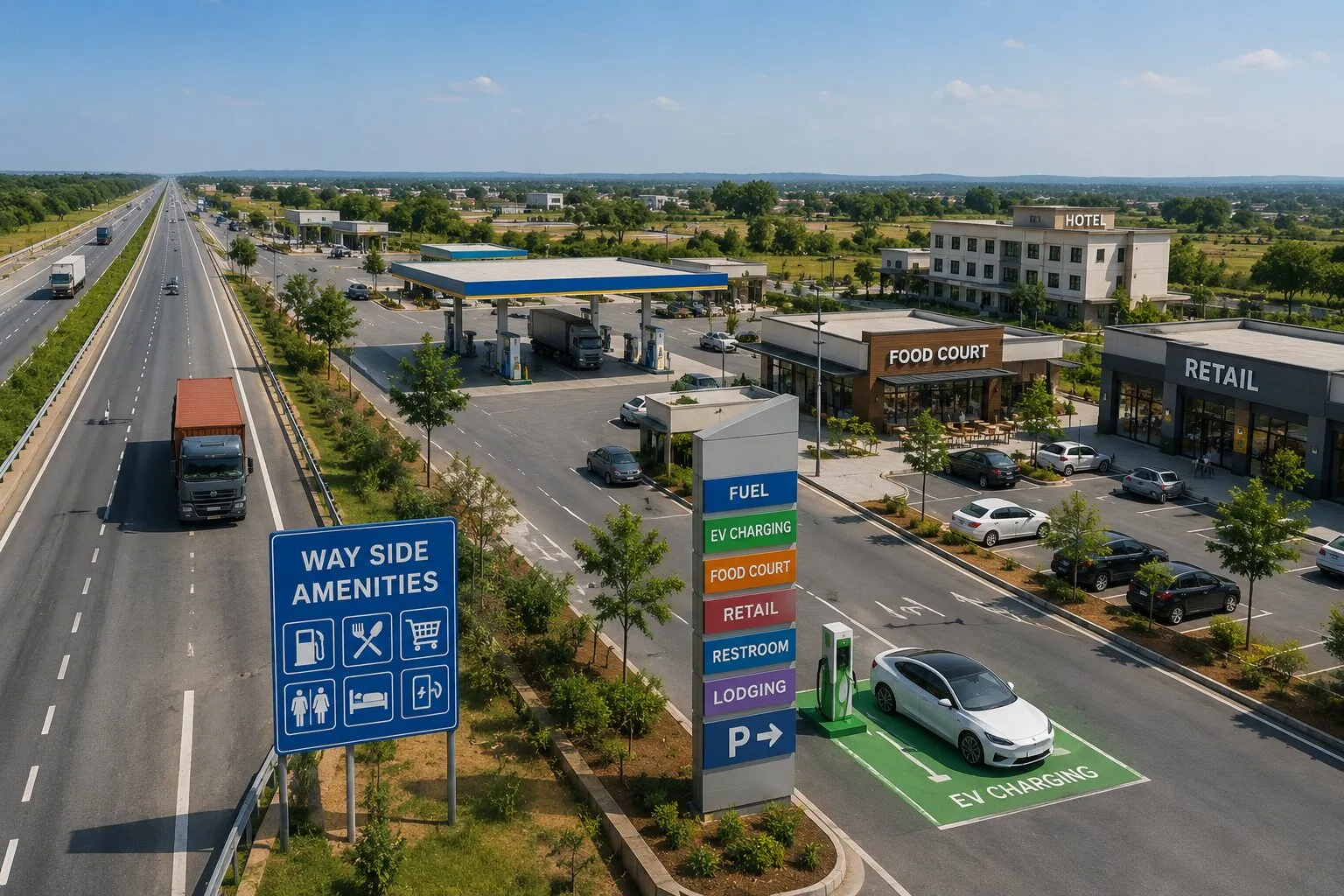
PVV Infra has signed a strategic collaboration with Reliance BP Mobility Ltd to build a modern wayside amenity complex in Jharkhand. Operating under a 29-year BOT license across 8,871 square meters with an 8-year lock-in period, the project will bring premium fuel and rest infrastructure to vital industrial freight corridors.
RANCHI — In a major development for eastern India’s highway transport infrastructure, domestic construction engineering firm PVV Infra Ltd has formally entered into a strategic collaboration with Reliance BP Mobility Ltd (operating under the joint-venture brand Jio-bp). The long-term corporate alliance targets the development and operational execution of a major wayside amenity project along prominent transit corridors in Jharkhand. Announced on June 5, 2026, the strategic pact relies on a multi-decade licensing framework designed to introduce modern commuter halt facilities, alternative fuel provisions, and vehicle upkeep infrastructure to the region's high-traffic logistics channels.
Strategic Partnership Settles 29-Year Operating License
According to regulatory disclosures submitted by the company to domestic stock exchanges, the contractual agreement is structured as a 29-year Build-Operate-Transfer (BOT) license. Under this framework, PVV Infra retains complete civil engineering, physical deployment, and structural execution obligations for an expansive land allotment measuring 8,871 square meters.
The corporate contract also features a strict eight-year lock-in period. This provision ensures long-term operational consistency and guarantees dedicated capital application from both signing entities before any adjustments to ownership structures can take place. By combining PVV Infra’s localized urban development expertise with Reliance BP Mobility’s extensive clean energy and commercial fuel retail networks, the joint venture seeks to establish a high-performance roadside destination catering to inter-state fleet operators.
Restructuring Jharkhand's Freight Transport Landscape
The selection of Jharkhand as the focal point for this deployment highlights the state's geographic importance in India's industrial supply lines. As a central corridor for heavy mineral extraction and steel logistics, local freight highways manage severe, round-the-clock commercial transport stress.
Planned Infrastructural Layouts Include:
Integrated Fuel Ecosystems: Turnkey deployment of standard petroleum pumps alongside compressed natural gas (CNG) dispensing setups managed by Jio-bp.
Heavy Freight Parking & Laybys: Secure, organized staging spaces engineered to accommodate multi-axle cargo trailers and bulk carrier trucks.
Commercial Rest Plazas: Hygienic driver dormitories, retail food zones, emergency vehicle repair spaces, and modern public utility blocks.
Industry analysts suggest that formalizing land parcels of nearly 9,000 square meters into structured way stations directly improves road safety. It offers long-distance drivers predictable rest stop intervals, mitigating exhaustion-related accidents on national transport segments.
Official Sources Section
Regulatory filings delivered under standard compliance regulations confirm that the project designs comply with parameters instituted by the Ministry of Road Transport and Highways (MoRTH). All mandatory commercial development land clearances and right-of-way permissions are being verified through national highway data networks, while stock performance details remain archived via the corporate governance boards of the Bombay Stock Exchange.
Quote Section
"According to officials familiar with the partnership terms, the execution of the 29-year BOT license provides the fiscal stability necessary to absorb upfront capital costs. Organizers stated that the 8,871 square meter footprint will establish a template for automated wayside amenity integration along secondary and primary transit corridors across neighboring eastern states."
Why It Matters
For regular travelers, institutional fleet investors, and logistics enterprises, the introduction of a premium wayside amenity center carries practical operational advantages. Instead of relying on fragmented, unorganized local rest stops, commercial truck operators gain access to secure overnight parking and standardized maintenance hubs.
On a broader scale, the long-term investment boosts regional economic activity inside Jharkhand by introducing construction and engineering demands. As the multi-year asset deployment proceeds past the initial eight-year lock-in window, the presence of stable EV charging networks and alternative clean fuels will make it easier for inter-state logistics fleets to phase out high-emission diesel models in favor of sustainable transport.
Key Facts at a Glance
Project Scope: Strategic collaboration between PVV Infra and Reliance BP Mobility (Jio-bp) for a modern wayside amenity hub.
Contract Matrix: A 29-year Build-Operate-Transfer (BOT) structure combined with an 8-year lock-in framework.
Spatial Footprint: The planned highway transit complex covers a total area of 8,871 square meters.
Geographic Target: High-volume commercial freight highways traversing the state of Jharkhand.
FAQ Section
What are the primary lease terms established for the PVV Infra project in Jharkhand?
The contract is finalized as a 29-year Build-Operate-Transfer (BOT) operational license, which features an eight-year absolute lock-in compliance clause.
How large is the upcoming highway transit hub?
The planned wayside amenity layout covers a total land development footprint of 8,871 square meters.
Where can public shareholders track the official disclosure documentation?
Corporate compliance filings regarding this joint venture are available on the Bombay Stock Exchange compliance archive under PVV Infra's ticker code.
Source: Ministry of Road Transport and Highways Infrastructure Circulars, Bombay Stock Exchange Corporate Action Disclosures, PVV Infra Investor Relations Board Release (June 2026).