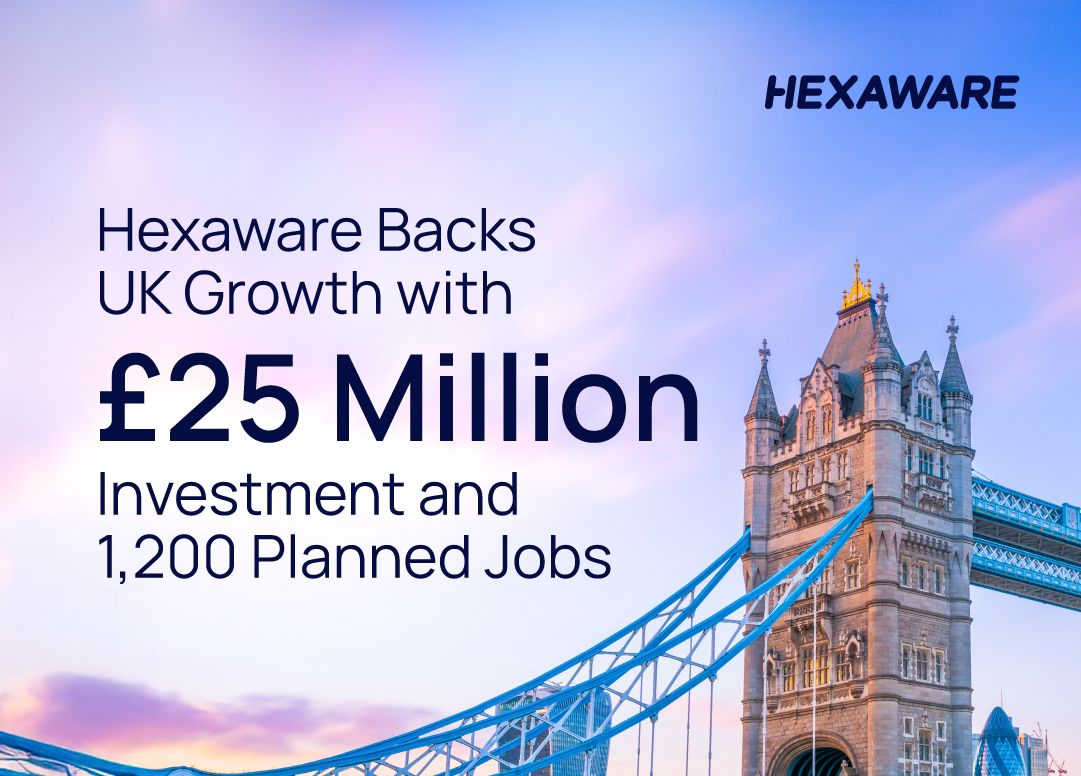
Quantum Leap: Hexaware Bags £25 Million UK Expansion to Code 1,200 High-Tech Jobs
Pearl Doshi - Gujarat Bureau Jun 18, 2026 1,400 Views
Global IT solutions firm Hexaware Technologies will invest £25 million to expand its UK footprint, creating 1,200 specialized jobs over three to five years. The strategy establishes new R&D facilities in Manchester and Leeds alongside an expanded Birmingham delivery hub, focusing heavily on AI, digital transformation, and quantum computing.
Global IT solutions provider accelerates regional footprint across Manchester, Leeds, and Birmingham to deploy advanced artificial intelligence and quantum computing research hubs.
LONDON, United Kingdom — Domestic technology corridors in the United Kingdom secured a substantial economic injection as Indian-based global IT solutions provider Hexaware Technologies officially announced a £25 million capital investment plan. Disclosed on June 17, 2026, alongside an international trade package recognized by the UK government at the G7 Summit, the strategic capital allocation will establish local research, development, and delivery facilities across England’s primary regional tech hubs over the next three to five years. The comprehensive expansion strategy is projected to generate roughly 1,200 highly skilled technical positions in the United Kingdom. It represents a fundamental shift for the multinational enterprise from a legacy, sales-oriented commercial presence toward dedicated local co-innovation in frontier software engineering.
Strategic Shift Targets Regional Tech Corridors Outside London
The capital deployment is structurally distributed across three primary metropolitan areas in Northern England and the Midlands, diffusing localized tech employment beyond the traditional London financial circuits. Under the framework approved by corporate and state officials, the multinational firm will significantly scale up its existing delivery operations while introducing completely new specialized technology laboratories.
According to technical planning data released by Hexaware Technologies, the enterprise will construct new research and development (R&D) facilities in Manchester and Leeds. Concurrently, the firm's operational delivery center in Birmingham will undergo an infrastructure expansion to absorb a higher volume of localized enterprise service contracts.
The investment model shifts Hexaware's long-term regional framework. While the company established its central UK headquarters at Canary Wharf, London, in 2025, the new investment prioritizes localized, regional hubs. This allows engineering teams to collaborate on-site with local enterprise clients and academic research departments.
Driving Public Innovation via AI and Quantum Computing
The new operations will focus on emerging computing verticals, moving away from commoditized back-office software maintenance to accelerate innovation at scale. The company's technical mandates prioritize three main areas:
Artificial Intelligence (AI): Building localized AI engineering clusters to process unique public and private datasets while complying with domestic data privacy laws.
Quantum Computing: Constructing experimental algorithmic models designed to optimize logistics, systemic financial risk assessments, and cryptography.
Digital Services: Developing modern cloud interfaces and automated applications to assist regional government councils in updating citizen-facing public systems.
The focus on frontier technologies lines up directly with the UK Government's modern Industrial Strategy. The initiative aims to lower operational costs for domestic public services while building a robust framework for ethical, inclusive AI.
Economic Implications for Local Talent and Tech Markets
For domestic professionals, engineering graduates, and corporate businesses, the creation of 1,200 specialized positions helps stabilize the regional tech labor pool after consecutive fiscal cycles marked by corporate corrections. The hiring program will focus heavily on talent incubation, developing local junior engineers through structured internal training modules centered on advanced cloud architectures and quantum data patterns.
Industry analysts indicate that this "local-for-local" delivery model mitigates traditional visa-related constraints while offering shorter latency periods for enterprise software deployments. By placing developers in close geographical proximity to regional business clusters, the technology firm expects to increase its market share among European enterprise segments seeking real-time system modernization.
Official Sources Section
The financial parameters of the investment, regional job distributions, and project timelines are derived from official corporate disclosure filings published by Hexaware Technologies (NSE: HEXT) and verified economic development briefs compiled by the UK Department for Business and Trade.
Quote Section
"Hexaware has worked alongside businesses in the UK for more than three decades. We have very high ambitions for our growth, creating impact in the UK and proudly supporting the Government's inclusive vision for AI," stated R. Srikrishna, Chief Executive Officer and Executive Director at Hexaware Technologies. "Our investments are focused on developing young talent, working with unique published datasets, and collaborating with government at all levels across the country to create a positive impact for the citizens of the UK."
Commenting on the deployment structure, Parameshwaran Iyer, Executive Vice President and Head of UK and Europe at Hexaware, added:
"The UK is one of our fastest-growing markets, and this investment reflects the confidence our clients and the UK Government place in Hexaware. Our UK clients are moving fast on AI, and having research and delivery talent on the ground here means we can build with them rather than for them."
Why It Matters
The £25 million commitment shows how international IT providers are changing their global delivery strategies. By setting up physical R&D centers inside regional UK tech hubs, the company moves beyond the traditional offshore outsourcing model. This transition helps protect corporate clients from cross-border data complications while providing high-paying tech jobs that support the UK’s goal of becoming a global hub for advanced scientific innovation.
Key Facts at a Glance
Total Capital Outlay: Hexaware Technologies is investing £25 million (~₹266 Crore) into expanding its United Kingdom operations.
Workforce Creation: The project will create approximately 1,200 specialized high-tech jobs over the next three to five years.
Target Locations: New R&D facilities will open in Manchester and Leeds, along with an expanded delivery hub in Birmingham.
Advanced Technology Sectors: Operational centers will focus on Artificial Intelligence (AI), quantum computing algorithms, and localized digital public services.
G7 Recognition: The expansion plan was highlighted by Prime Minister Keir Starmer at the G7 Summit as part of a £1.3 billion trade package.
FAQ Section
1. What types of positions will Hexaware create with this UK expansion?
The company will recruit for roughly 1,200 high-skilled positions, specializing in artificial intelligence engineering, quantum computing research, digital cloud transformation, and public services system design.
2. Why did Hexaware select Manchester, Leeds, and Birmingham instead of London?
While Hexaware maintains its commercial headquarters in London, selecting these three regional cities aligns with the UK's regional tech corridors, provides access to localized university talent pools, and places developers close to regional enterprise clients.
3. Over what timeframe will the £25 million investment be deployed?
According to official corporate roadmaps, the financial capital will be systematically deployed over a three-to-five-year phase to support facility construction and payroll scaling.
4. How does this expansion fit into the broader UK economic strategy?
The investment was included in the UK Government's G7 Summit announcements.It supports national initiatives focused on inclusive AI deployment, localized industrial growth, and the modern transformation of citizen-facing public infrastructure.