In his first news conference as Fed Chair, Kevin Warsh announced that the central bank will keep its benchmark interest rate steady at roughly 3.6%. Citing an energy-driven inflation spike to 4.2%, the Fed dropped all rate-cut guidance, while updated dot plots revealed nine officials favor upcoming rate hikes.
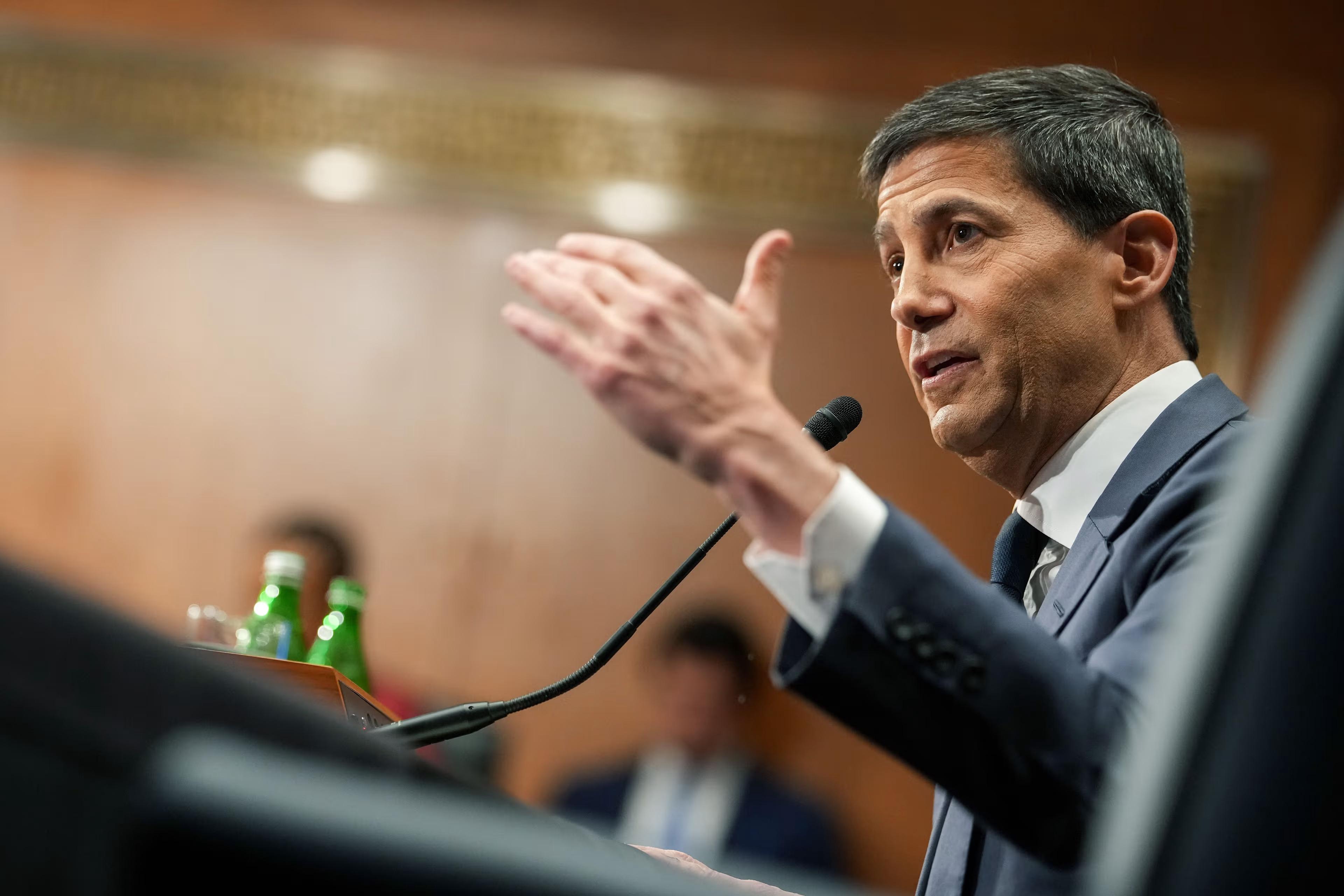
WASHINGTON, D.C. — In his highly anticipated debut on the global financial stage, newly confirmed Federal Reserve Chairman Kevin Warsh presided over his first monetary policy meeting and subsequent news conference today, June 17, 2026. Facing intense economic and political crosscurrents, the Federal Open Market Committee (FOMC) concluded its two-day session by holding its benchmark interest rate steady at approximately 3.6% for the fourth consecutive meeting. However, under Warsh's new leadership, the central bank issued an unusually brief policy statement that completely stripped out long-standing guidance hinting at future interest rate cuts. The hawkish shift comes as a direct response to a major energy shock stemming from the ongoing conflict in Iran, which has pushed U.S. inflation to a three-year high of 4.2%—well above the Fed's formal 2% target.
Central Bank slashes Statement Length and Softens Forward Guidance
The most immediate operational change of the Warsh era manifested not in the interest rate itself, but in how the Federal Reserve communicates with global markets. The FOMC released a drastically shortened, half-page policy statement that eliminated the predictive, forward-looking language favored by previous administrations.
According to official Federal Reserve documents, the revised text omitted previous assertions that the central bank’s next logical move would be to reduce borrowing costs. Instead, the streamlined statement offered a blunt commitment, noting simply that the Federal Reserve "will deliver price stability" despite elevated inflation.
During his news conference, Chairman Warsh defended the abrupt departure from traditional central bank transparency. He argued that exhaustive forward guidance frequently binds policymakers to stale economic forecasts, limiting their institutional flexibility when unexpected geopolitical shocks occur.
Hawkish Dot Plot Exposes Internal Divides Over Future Rate Hikes
While the benchmark interest rate remained unchanged today, the Fed's newly published Summary of Economic Projections (SEP) revealed an increasingly aggressive stance among policymakers. The updated "dot plot"—which maps out individual interest rate expectations—exposed a sharp division within the 12-member voting committee:
Rate Hike Proponents: Nine officials penciled in at least one interest rate hike through the remainder of 2026, with six supporting two or more hikes if inflation fails to cool.
Status Quo Adherents: Eight officials anticipated maintaining the current borrowing costs without further adjustments.
Rate Cut Proponents: Only one official signaled a desire to lower interest rates before the end of the year.
Notably, Chairman Warsh confirmed to reporters that he chose not to submit a personal data projection for the dot plot. He reiterated his long-standing institutional critique that publicizing individual, long-term rate projections creates unnecessary market noise and limits the committee's real-time responsiveness.
Navigating Political Pressures and an Unusual Leadership Dynamic
The policy shift sets up an immediate test of institutional independence between the newly sworn-in Fed Chair and the White House. President Donald Trump, who nominated Warsh to replace former Chair Jerome Powell, has repeatedly pressured the central bank to slash interest rates to spur domestic growth. Though the President moderated his tone following Warsh's confirmation, top White House trade adviser Peter Navarro publicly urged the Fed to hold off on rate hikes, claiming current inflation is narrowly restricted to supply-driven energy markets.
Adding to the complexity is a highly unusual leadership dynamic within the central bank itself. Former Chair Jerome Powell, whose term as chairman expired last month, has exercised his legal right to remain on the seven-member Federal Reserve Board of Governors until his separate governor term concludes in January 2028. Consequently, Warsh must build policy consensus while sitting at the same table as his immediate predecessor.
Impact on Consumers, Borrowers, and Financial Markets
The decision to hold rates steady while signaling potential future hikes has immediate practical implications for the broader American economy. For consumers and retail borrowers, the window for cheaper capital has effectively closed for the foreseeable future. Mortgage rates, auto loans, and credit card yields are projected to remain plateaued at their highest levels in years.
For investors and Wall Street traders, the shortened statement and reduced forward guidance mean markets must adjust to a less predictable Federal Reserve. Equity markets showed immediate volatility following the news conference as traders priced out any lingering expectations of an autumn rate cut. Conversely, robust domestic hiring data over the last two quarters has kept the labor market resilient, giving the Fed additional runway to keep rates elevated without immediately triggering a severe unemployment crisis.
Official Sources Section
The factual contents, interest rate figures, and policy details in this report are sourced directly from the official June 2026 policy statement, the Summary of Economic Projections published by the Board of Governors of the Federal Reserve System, and official transcript briefs compiled by the Associated Press domestic economics desk.
Quote Section
"We recognize that inflation has been running well ahead of the Fed's long-stated inflation goal of 2 percent," stated Federal Reserve Chairman Kevin Warsh during the news conference. "Persistently high prices are a burden for the American people. But the recent past need not be prologue. The Federal Reserve will remain strictly independent in overseeing monetary policy, and we are prepared to take whatever steps are required to restore total price stability."
Why It Matters
This development marks a fundamental shift in how the world's most powerful central bank interacts with global financial systems. By rolling back detailed forward guidance, Chairman Warsh is deliberately reducing the Fed’s public profile and forcing markets to rely strictly on raw economic data rather than central bank hints. With inflation driven by volatile Middle Eastern energy supplies, this data-dependent approach means consumers and businesses must brace for a prolonged period of high borrowing costs and less predictable interest rate adjustments.
Key Facts at a Glance
Rate Decision: The Federal Reserve kept its benchmark interest rate unchanged at approximately 3.6% for the fourth consecutive meeting.
Guidance Dropped: The FOMC issued a heavily condensed policy statement, removing all language that previously pointed toward future interest rate cuts.
Inflation Surge: U.S. consumer inflation reaccelerated to a three-year high of 4.2% in May, driven largely by high oil and gas prices linked to the Iran conflict.
Hike Projections: The Fed's updated "dot plot" reveals that nine out of seventeen participating officials now anticipate at least one interest rate hike later this year.
Historic Transition: This session marked Kevin Warsh’s first official policy meeting since being confirmed as the 17th Chair of the Federal Reserve, succeeding Jerome Powell.
FAQ Section
1. Why didn't the Federal Reserve cut interest rates at this meeting?
Although there was significant political pressure to lower rates, a recent energy shock linked to the war in Iran pushed annual U.S. inflation up to 4.2%. The Fed cannot safely lower interest rates while consumer prices are rising significantly above its 2% stability target.
2. What does the shorter Fed statement mean for regular investors?
Chairman Kevin Warsh believes that detailed "forward guidance" limits the Fed's flexibility and misleads markets when economic conditions change. Investors can expect much shorter, less predictive statements moving forward, requiring markets to focus more on real-time data releases.
3. Will interest rates go up later this year?
It is a strong possibility. The Federal Reserve's latest dot plot shows that nearly half of the policymaking committee (nine officials) expects that at least one interest rate hike will be necessary before the end of 2026 to bring stubborn inflation back under control.
4. Is Jerome Powell still involved in making interest rate decisions?
Yes. While his term as Fed Chair expired, Jerome Powell chose to remain on the Federal Reserve Board of Governors. He continues to serve as a voting member of the FOMC, creating a rare arrangement where the new chair must lead alongside his predecessor.
Source: Official monetary policy releases and June meeting minutes provided by the Federal Reserve Board System and verified macroeconomic data indices from the Associated Press corporate newsroom.