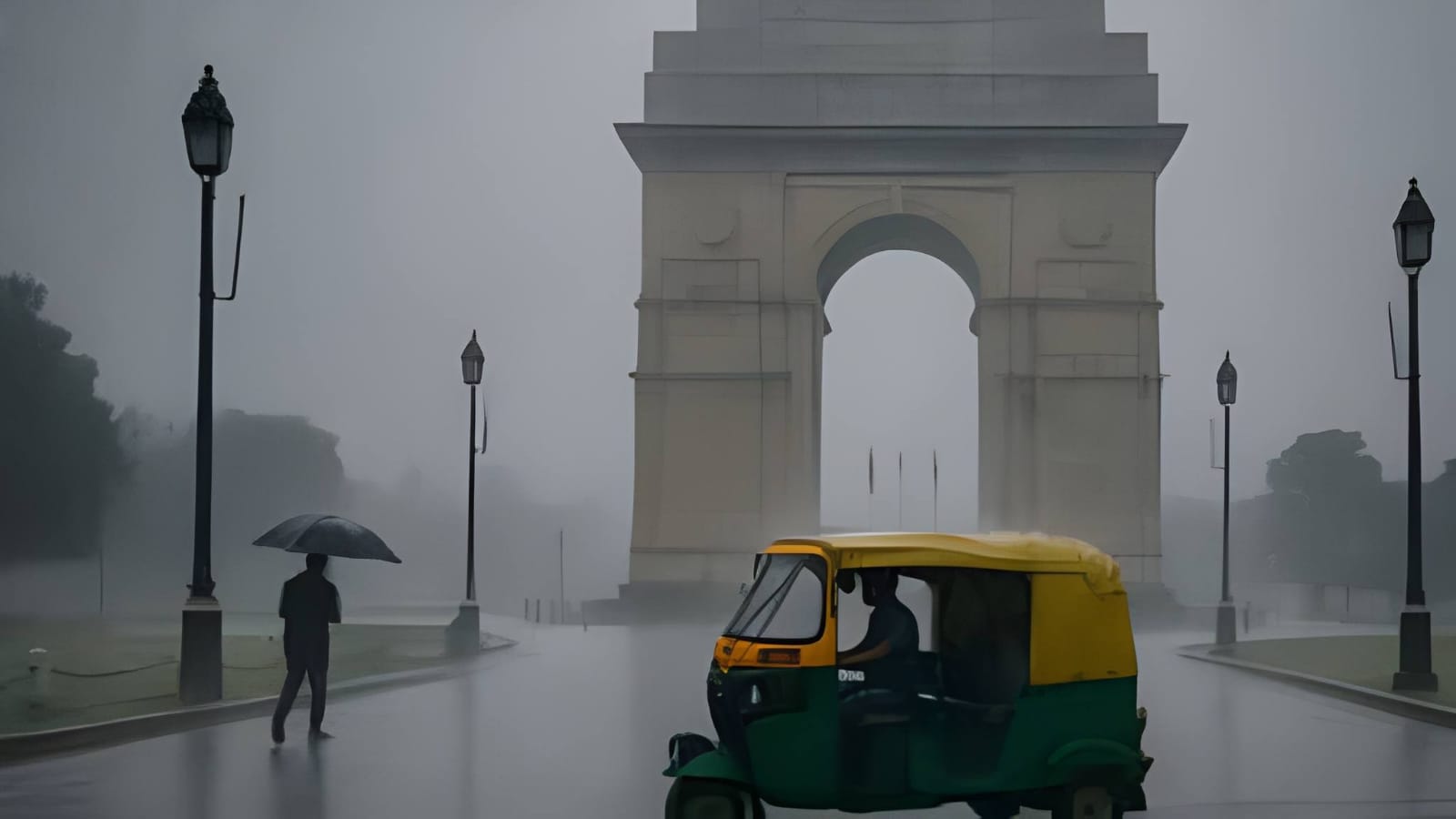
Monsoon showers lashed New Delhi, bringing down temperatures as the maximum settled at 33.6°C. According to the India Meteorological Department (IMD), light-to-moderate rain accompanied by gusty winds improved air quality while causing minor traffic disruptions. Weather officials forecast cloudy skies and continued wet spells over the coming days.
NEW DELHI — Heavy spell of rain lashed several parts of the national capital, offering respite from humid conditions as the maximum temperature settled at 33.6°C, slightly below the seasonal average.
According to official weather updates from the India Meteorological Department (IMD), the precipitation was accompanied by gusty surface winds and thunderstorm activity across central and outer Delhi districts. The downpour led to noticeable drops in daytime temperatures, providing relief to residents while momentarily disrupting evening road traffic across key arterial routes.
Meteorological Data and Temperature Breakdowns
Data recorded at the Safdarjung Observatory, Delhi's primary weather station, showed the maximum temperature settling at 33.6°C, approximately 1 to 1.3 degrees below normal. The minimum temperature settled at 23.3°C, nearly two notches below average for this period.
Relative humidity levels fluctuated significantly throughout the observation window, ranging between 68% and 90%. Rainfall distribution varied across different sectors of the National Capital Region (NCR):
Ayanagar: 20.1 mm
Palam: 18.7 mm
Lodhi Road: 9.8 mm
Pragati Maidan: 5.8 mm
Environmental Impact and Urban Mobility
The atmospheric cleansing caused by precipitation led to an immediate improvement in environmental indicators. The Central Pollution Control Board (CPCB) reported Delhi’s 24-hour Air Quality Index (AQI) in the 'satisfactory' category, registering a reading of 83.
While the rain improved air quality, it created localized traffic slowdowns. Traffic police advisories noted water accumulation at critical underpasses and busy intersections, prompting civic authorities to deploy drainage pumps to maintain traffic flow during peak hours.
Official Sources Section
According to official announcements by the India Meteorological Department (IMD) and bulletins issued by the Central Pollution Control Board (CPCB), monsoon conditions are expected to remain active over North India for the next 48 to 72 hours. The weather department maintains a generally cloudy sky forecast with spells of light to moderate rain across Delhi-NCR.
Quote Section
"According to officials at the India Meteorological Department, light to moderate rainfall accompanied by thunderstorms and lightning is likely to persist over the capital over the coming days, keeping daytime temperatures below normal thresholds."
Why It Matters
For Residents & Consumers: Reduced ambient temperatures offer relief from high humidity, lowering home cooling demands.
For Commuters: Evening travel across key corridors in Delhi-NCR may experience minor delays due to wet road conditions and localized waterlogging.
For Public Health: The drop in AQI to 'satisfactory' levels provides short-term respiratory relief across urban zones.
Key Facts at a Glance
Maximum Temperature: Settled at 33.6°C (1.3 degrees below normal).
Minimum Temperature: Recorded at 23.3°C.
Air Quality: Standard AQI recorded at 83 ('satisfactory' category).
Top Rainfall Location: Ayanagar observatory registered 20.1 mm.
Frequently Asked Questions (FAQ)
What was the maximum temperature recorded in Delhi today?
The maximum temperature in New Delhi settled at 33.6°C, which is roughly one degree below the seasonal average according to the IMD.
How did the rain impact Delhi's air quality?
The rainfall cleared atmospheric pollutants, bringing the Air Quality Index (AQI) down to 83, placing it in the 'satisfactory' range.
What is the weather forecast for Delhi over the next few days?
The IMD forecasts generally cloudy skies with periodic spells of light to moderate rain and thunderstorms, keeping maximum temperatures between 32°C and 34°C.
Source: India Meteorological Department (IMD), Central Pollution Control Board (CPCB)