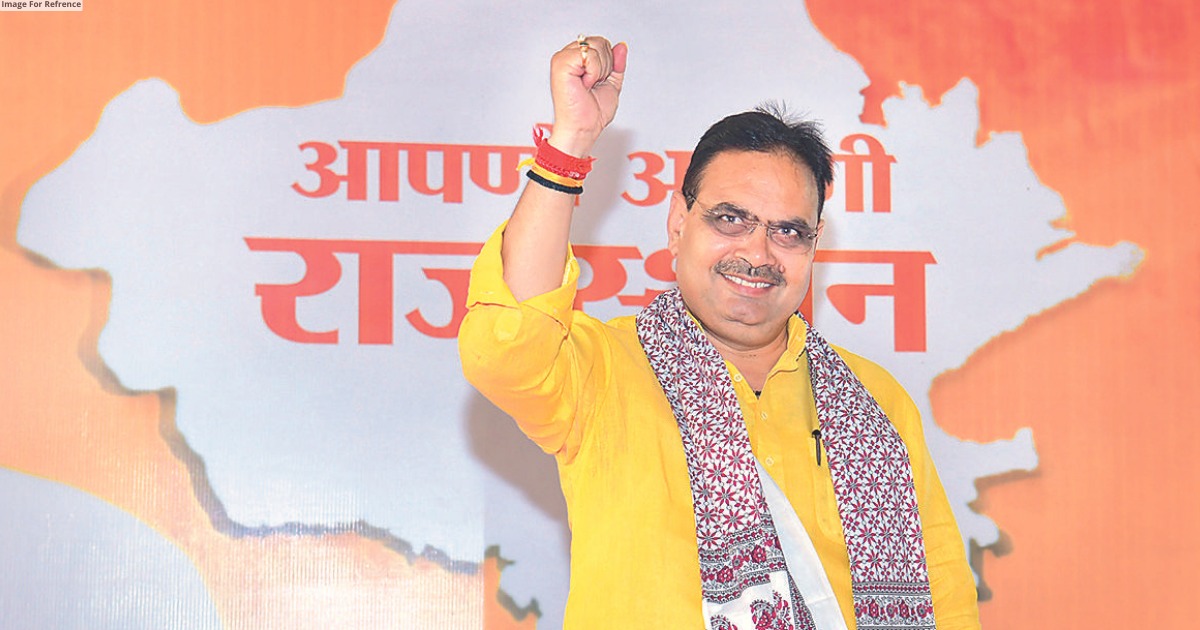
Rajasthan Chief Minister Bhajan Lal Sharma announced a major push to expand basic infrastructure across the state. Backed by a ₹33,195 crore investment that successfully developed 48,748 km of roadways, the administration is focusing on rural connectivity, school infrastructure funds, and a new industrial park policy to drive sustainable economic growth.
JAIPUR — The Government of Rajasthan is systematically prioritising the expansion of basic infrastructure across the state to drive comprehensive industrial growth and modernise civic amenities. Chief Minister Bhajan Lal Sharma affirmed that robust foundational utilities, reliable road networks, and expanded public services remain the key operational focus of the state administration to foster a long-term, multi-sector economic ecosystem.
This state policy deployment marks a major shift in public asset management, combining high-capital highway engineering with a massive financial allocation for urban local bodies, school facilities, and clean energy distribution channels. By synchronising state infrastructure with central welfare programmes, the administration intends to expand rural connectivity and establish Rajasthan as a highly attractive hub for domestic and global corporate investments.
₹33,195 Crore Invested to Modernise State Road Networks
At the core of Rajasthan’s asset strategy is an aggressive overhaul of the state's surface transport corridors. Reviewing the performance of the Public Works Department (PWD) and the National Highways Authority of India (NHAI), Chief Minister Sharma confirmed that the state has completed road development works covering 48,748 kilometres during the current government’s tenure of two years and five months. This rapid expansion represents a total capital layout of ₹33,195 crore.
The completed works include 17,934 kilometres of newly constructed roads, effectively linking 1,756 previously isolated villages to regional market lines. Additionally, 6,184 kilometres of rural and district routes have been upgraded to major district roads to sustain heavier logistics volume. Under the state’s flagship Atal Pragati Path programme, 378 kilometres of specialized roadways were rapidly built, integrating an additional 256 villages into the mainstream transport grid.
The state is now transitioning toward greenfield expressways, reviewing connectivity proposals spanning major trade routes between Jalore and Jhalawar, Sri Ganganagar and Kotputli, and Ajmer and Banswara, alongside the northern loop of the Jaipur Ring Road.
Fiscal Boost for Schools and Urban Local Governance
Beyond large-scale logistical networks, the infrastructure push targets civic amenities and local municipal assets. The state government has directed ₹9,200 crore to Panchayati Raj Institutions and Urban Local Bodies based on the explicit guidelines of the State Finance Commission. These funds are mandated for the immediate upgrade of primary urban systems, specifically targeting automated waste management, clean drinking water supply pipelines, structured sewerage networks, and energy-efficient street lighting grids.
Simultaneously, the administration has established a dedicated ₹2,000 crore School Infrastructure Fund aimed exclusively at upgrading educational facilities across the state's rural and semi-urban perimeters. To support technical industries, the state has also laid the foundation for the Atal Bihari Vajpayee Global Center of Advanced Skilling in Jaipur with an estimated investment of ₹450 crore to supply a highly trained workforce to future-ready industrial parks.
Industrial Park Promotion Policy Drives Manufacturing Inflow
The infrastructural expansion is legally backed by the notification of the Rajasthan Industrial Park Promotion Policy 2026. Designed by the state's premier industrial body, the Rajasthan State Industrial Development and Investment Corporation (RIICO), the policy provides structural exemptions, interest subsidies, and land procurement relaxations for private and public sector entities developing parks over a minimum layout of 50 acres.
The policy introduces plug-and-play manufacturing units, multi-modal logistics facilities, and dedicated digital utilities. Through the automated Raj Nivesh single-window clearance engine, the state is enforcing strict time-bound approvals to prevent capital lock-in and encourage global manufacturers to build multi-tier supply ecosystems within Rajasthan.
Official Sources Section
The performance parameters, budget layouts, and policy goals stated by the administration have been formally verified through notifications released by the Government of Rajasthan Portal and regulatory updates from the following administrative departments:
Public Works Department (PWD): Asset audit reviews and highway expenditure registries filed at the Chief Minister’s Residence.
RIICO & DIPAM: Technical drafts detailing the operational frameworks of the newly active Industrial Park Promotion Policy 2026.
State Legislative Assembly Filings: Appropriation bills confirming the capital allocation for the School Infrastructure Fund and Urban Governance schemes.
Quote Section
"The construction of world-class infrastructure must be accompanied by absolute quality control and transparency," stated Chief Minister Bhajan Lal Sharma during an executive review. "Departments have been instructed to conduct regular technical inspections and fix strict institutional accountability to ensure every rupee spent translates into enduring public assets."
Why It Matters
The continuous focus on expanding basic infrastructure directly impacts citizens and institutional investors alike. For rural populations, the fast-tracked road networks drop transport costs and open access to urban healthcare and higher employment markets. For international enterprises, the deployment of structured industrial corridors, continuous power access via regional power utility expansions, and simplified SEBI-compliant land titles change Rajasthan from a transit route into a high-yield manufacturing center.
Key Facts at a Glance
Massive Road Layout: ₹33,195 crore deployed to build and improve 48,748 kilometres of highway and rural roads across the state.
Civic Funding: ₹9,200 crore dispatched to municipal and rural local bodies to upgrade sanitation, sewerage, and street utilities.
School Upgrade Fund: A capital layout of ₹2,000 crore set aside under a dedicated fund to modernise classroom infrastructure.
New Industrial Mandate: The 2026 Policy opens simple joint-venture pathways with RIICO for industrial parks exceeding 50 acres.
FAQ Section
Q1: What is the main goal of the Rajasthan Industrial Park Promotion Policy 2026?
The policy aims to accelerate industrialization by offering capital subsidies, regulatory exemptions, and plug-and-play infrastructure to developers building sustainable industrial parks.
Q2: How much has the Rajasthan government spent on road development recently?
The current administration has spent ₹33,195 crore over a span of two years and five months, completing 48,748 kilometres of roadway projects.
Q3: What is the School Infrastructure Fund?
It is a dedicated ₹2,000 crore financial fund announced by the state government to repair, expand, and upgrade the basic physical infrastructure of schools in Rajasthan.
Q4: Which new greenfield expressways are being planned by the state?
The government is actively reviewing expressway connectivity routes connecting Jalore to Jhalawar, Sri Ganganagar to Kotputli, and Ajmer to Banswara.
Source: Official Press Statements from the Chief Minister’s Office (CMO) Rajasthan, Public Works Department Asset Ledger, Rajasthan State Industrial Development and Investment Corporation (RIICO) Gazette Notification 2026.