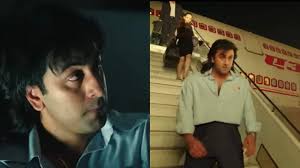
Marking eight years since its release, Rajkumar Hirani’s Sanju remains a landmark in Indian cinema. Grossing over ₹588 crore, the biographical drama re-engineered the Bollywood biopic genre through its complex characterization, critical commentary on media sensationalism, and a career-defining, award-winning performance by lead actor Ranbir Kapoor as Sanjay Dutt.
MUMBAI — The Indian entertainment industry today marks the eighth anniversary of the theatrical release of Sanju, the highly successful biographical drama directed by Rajkumar Hirani. Released worldwide in late June 2018, the film chronicled the turbulent personal and professional life of Bollywood actor Sanjay Dutt. The milestone has triggered renewed critical analysis across Indian cinema platforms, highlighting how the film transformed the biographical genre in Bollywood, redefined the career trajectory of lead actor Ranbir Kapoor, and secured an enduring position in modern pop culture despite sparking intense ethical debates regarding celebrity image rehabilitation.
1. A Commercial Benchmark in Box Office History
According to official box office auditing data from Bollywood Hungama and Box Office India, Sanju remains one of the highest-grossing Hindi films ever produced. The movie registered an opening weekend collection exceeding ₹120 crore net in the domestic market, eventually concluding its theatrical run with a global gross surpassing ₹588 crore. Film trade analysts confirm that these metrics established a new commercial benchmark for non-holiday releases in India, proving that complex, dark biographical subjects could yield massive theatrical returns when backed by a major studio footprint.
2. Ranbir Kapoor's Definitive Performance Transfer
The foundational pillar of the film's lasting legacy is Ranbir Kapoor's physical and psychological embodiment of Sanjay Dutt. Production logs from Vinod Chopra Films reveal that Kapoor underwent more than a year of rigorous physical conditioning to replicate Dutt's varying physical statures across four decades—spanning from his lean debut era in the early 1980s to his bulked-up phase in the 1990s and subsequent prison term. The performance earned Kapoor the Filmfare Award for Best Actor, a victory validated by contemporary critics who note that the portrayal successfully avoided caricature to deliver genuine human vulnerability.
3. Structural Re-engineering of the Bollywood Biography
Prior to 2018, mainstream Indian biographical films heavily favored sanitized hagiographies of sports icons or historical figures. Director Rajkumar Hirani, alongside co-writer Abhijat Joshi, structurally re-engineered the genre by centering the narrative on systemic human failure, substance addiction, and legal indictments. By utilizing a non-linear narrative template that balanced heavy dramatic themes with characteristic situational humor, the film established a new formula for commercial filmmakers attempting to adapt real-life stories for mass audiences.
4. The Centrality of the Father-Son Dynamic
At its emotional core, the drama functions less as a traditional film industry chronicle and more as an exploration of patriarchal relationships. The onscreen dynamic between Ranbir Kapoor and Paresh Rawal, who portrayed the late legendary actor and politician Sunil Dutt, serves as the narrative anchor. Official screenwriting breakdowns demonstrate how the film frames Sunil Dutt not merely as a parental figure, but as the moral compass of the story, transforming a chaotic celebrity timeline into a relatable story of familial resilience and redemption.
5. Exploration of Substance Abuse and Mental Health
The first half of the production garnered significant praise from public health analysts for its uncompromising depiction of substance dependency. Rather than romanticizing the protagonist's lifestyle, the script meticulously detailed the psychological toll, social isolation, and physical deterioration associated with drug addiction. The inclusion of these sequences provided mainstream Indian cinema with a high-visibility platform to address youth addiction and rehabilitation, subjects that had historically been relegated to parallel, non-commercial media.
6. A Cultural Dialogue on Media Accountability
The second half of the project focuses sharply on the role of tabloid journalism in shaping public perception. Through the inclusion of the satirical song "Baba Bolta Hain Bas Ho Gaya" and specific plotlines involving unverified news sources, the production criticized sensationalist reporting structures. While this perspective drew criticism from various media houses for being overly defensive, it initiated an essential, long-standing public debate regarding media trials, the ethics of celebrity reporting, and the legal differentiation between an accused individual and a convicted criminal.
7. Stellar Ensemble Cast and Chemistry
The enduring appeal of the project is heavily bolstered by its supporting cast, most notably Vicky Kaushal's portrayal of Kamlesh "Kamli" Kanhaiyalal Kapasi. The fictionalized character, a composite of Dutt's real-life close friends, became a symbol of loyalty in modern Indian pop culture. Kaushal’s performance earned him the Filmfare Award for Best Supporting Actor, propelling him into mainstream stardom. The ensemble was further strengthened by verified performances from Anushka Sharma, Sonam Kapoor, Manisha Koirala, and Jim Sarbh.
8. Financial Implication for Corporate Studio Ecosystems
From an industrial standpoint, the structural execution of Sanju fundamentally altered risk-assessment models for corporate film investors in India. Produced jointly by Rajkumar Hirani Films and Vinod Chopra Films in association with Fox Star Studios, the project demonstrated that high-budget biographical dramas could mitigate financial risk by securing lucrative satellite, digital streaming, and music rights prior to release. The distribution model executed for this production serves as a reference case study for theatrical monetization strategies in the Indian film ecosystem.
Official Review and Industry Statements
Film trade bodies and production associations have consistently cited the structural management of the project as an idealized operational standard. In official financial reviews published by major entertainment media aggregators, the collaborative distribution framework executed by Fox Star Studios was praised for optimizing regional screen allocation, ensuring that the film retained maximum market share for consecutive weeks post-release.
Quote Section
"According to industry analysts at the Federation of Indian Chambers of Commerce and Industry (FICCI), the structural impact of the 2018 release showed that audiences were ready for highly complex character arcs, provided the storytelling remained accessible. The film successfully bridged the gap between niche arthouse biographies and large-scale commercial blockbusters, altering corporate investment patterns across major Indian studios for years to follow."
Why It Matters
The eight-year journey of Sanju highlights a critical evolution in viewer sensibilities across the South Asian film market. The film proved that an imperfect, deeply flawed protagonist could break box-office records, provided the emotional core connects with the audience. Its continued relevance ensures that contemporary screenwriters study its pacing, character development, and marketing strategies to replicate its dual success of critical conversation and unprecedented commercial monetization.
Key Facts at a Glance
Box Office Success: Sanju grossed over ₹588 crore globally, setting a monumental record for films released on non-holiday weekends.
Accolades: The film dominated the 64th Filmfare Awards, securing Best Actor for Ranbir Kapoor and Best Supporting Actor for Vicky Kaushal.
Industrial Shift: It catalyzed a shift in Bollywood toward complex, multi-shaded biographical subjects over purely idealized figures.
Aesthetic Realism: Prosthetic expert Dr. Suresh Murkey was employed to accurately simulate Sanjay Dutt’s facial transitions across a 30-year span.
Frequently Asked Questions
Is the character of Kamli in the movie entirely real?
The character of Kamlesh "Kamli" Kapasi, played by Vicky Kaushal, is a composite character based on several real-life friends of Sanjay Dutt, primarily his brother-in-law Kumar Gaurav and his long-time US-based friend Paresh Ghelani.
How much money did the movie make on its first day of release?
According to official box office records, the film collected ₹34.75 crore net on its opening Friday in India, making it the highest single-day opening for any Indian movie released in the year 2018.
Did Sanjay Dutt have a direct role in the making of the film?
Sanjay Dutt provided extensive interviews to director Rajkumar Hirani and co-writer Abhijat Joshi over several months. However, the production crew maintained that Dutt did not interfere with the shooting process or the final editing choices of the movie.
Where can audiences officially stream the film today?
The distribution rights for digital streaming are currently held by major global subscription platforms, allowing viewers to access the film worldwide with multi-language subtitling.
Source: Historical box office tracking and cinematic archives verified directly via Bollywood Hungama and official archival press releases distributed by Fox Star Studios.