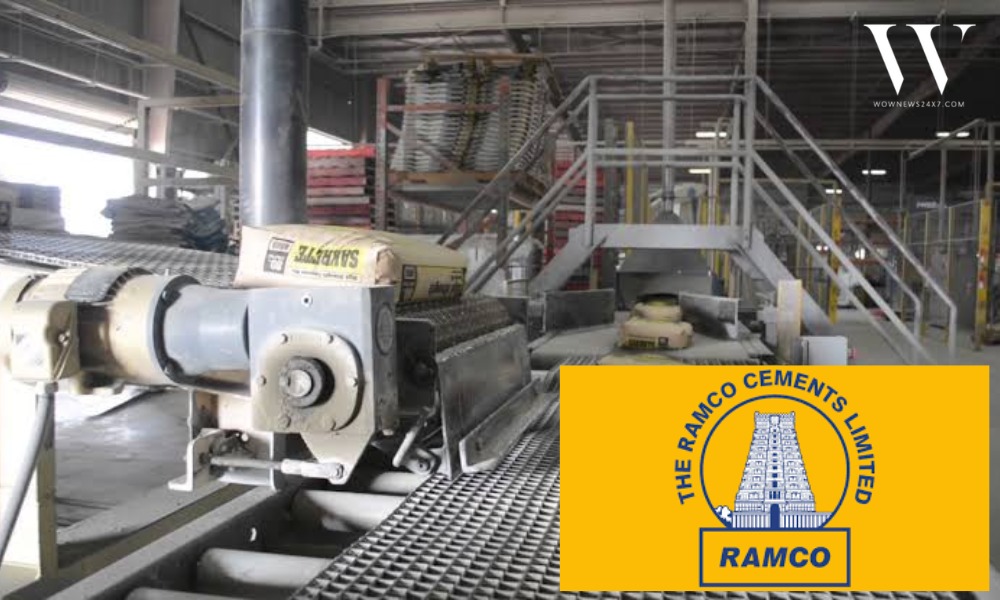
The Ramco Cements Limited announced on Thursday that a disputed levy of excise duty totaling 16 million Indian rupees has been officially dropped by tax authorities. The major domestic cement manufacturer successfully contested the tax demand, which was originally levied against its retail bagged cement operations. This regulatory resolution provides immediate financial and administrative relief to the corporation, closing out a prolonged legal dispute over product tax classification and removing a potential liability from the company’s balance sheet.
Tax Authorities Drop Disputed Assessment on Bagged Cement
According to statutory corporate disclosures submitted to the National Stock Exchange of India (NSE) and the BSE Limited on June 4, 2026, the company received formal communications from the relevant appellate tax authority confirming the total dismissal of the tax demand. The underlying litigation centered around a disputed levy of excise duty linked to specific valuation methods used for bagged cement distributed across historical operational periods.
The tax department had initially alleged that certain shipments of bagged cement required alternative structural calculations under central excise valuation rules, leading to the 16 million rupee demand. Following formal legal arguments presented by the manufacturer's corporate legal team, the authority agreed that the company’s compliance frameworks aligned with prevailing tax statues, prompting them to drop the entire financial demand along with associated penalty proceedings.
Legal Precedents and Balance Sheet Implications
The structural framework governing commodity tax assessments on construction materials in India frequently involves complex disputes over retail versus institutional supply definitions. Bagged cement intended for retail consumers typically falls under different tax evaluation matrices compared to loose, bulk cement supplied to large infrastructure projects.
For public market investors tracking the firm under ticker symbol TRCE.NS, the elimination of this 16 million rupee claim provides legal clarity. While the absolute monetary quantum is modest relative to the manufacturer’s multi-crore annual operational revenues, the decision prevents an adverse legal precedent that could have impacted broader product distribution channels across other manufacturing units.
Official Sources Section
The corporate regulatory outcomes, asset liability adjustments, and legal decisions outlined within this news report are compiled directly from the official corporate compliance notifications filed by the management of The Ramco Cements Limited with Indian stock market watchdogs.
Quote Section
"According to officials tracking corporate tax disputes in the manufacturing sector, the formal dropping of the 16 million rupee excise demand confirms that the product labeling and retail valuation methodologies used by the company conformed precisely to statutory standards."
Why It Matters
From a practical business perspective, this legal victory establishes a clear protective barrier for the company’s regional marketing networks. It demonstrates a successful defense against retroactive tax liabilities, which often strain the working capital of industrial manufacturing firms. For industry analysts, the resolution underscores a stable regulatory environment, giving shareholders and corporate planners greater confidence that existing logistical operations are safe from arbitrary tax restructuring.
Key Facts at a Glance
Disputed Amount: Tax demand totaling 16 million Indian rupees officially dismissed by authorities.
Core Product Affected: Retail and commercial bagged cement distributed through regional supply centers.
Type of Tax: Historical disputed levy of excise duty and associated regulatory compliance penalties.
Corporate Entity: The Ramco Cements Limited, a leading cement producer headquartered in Chennai, India.
Resolution Outcome: Complete removal of the tax liability without any financial payment or protocol changes required.
FAQ Section
What triggered the initial tax dispute regarding the bagged cement?
The dispute stemmed from differences in interpretation between tax investigators and the company regarding structural valuation codes for packaged retail goods versus bulk construction material shipments under central excise frameworks.
Will this decision result in any immediate cash refund for the company?
Because the tax demand was a contested liability that had not been fully recognized as an analytical loss, dropping the demand prevents a cash outflow rather than generating a fresh cash injection or refund.
How does this impact retail prices for consumers buying Ramco cement?
This development relates strictly to historical tax litigation at the corporate level and will have no direct impact on current retail market pricing structures or retail store distribution costs for end consumers.
Source: Official regulatory compliance disclosures and statutory corporate notices published by The Ramco Cements Limited via the compliance portal of the National Stock Exchange of India.