India recently averted what could have been a crippling shortage of rare earth minerals—vital components for electric vehicles (EVs), wind turbines, consumer electronics, and advanced military systems. This “near-disaster” was narrowly avoided through a combination of strategic...
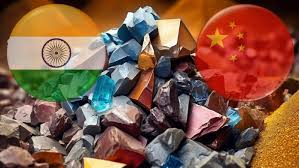
India recently averted what could have been a crippling shortage of rare earth minerals—vital components for electric vehicles (EVs), wind turbines, consumer electronics, and advanced military systems. This “near-disaster” was narrowly avoided through a combination of strategic policy interventions, domestic production boosts, and international diplomatic maneuvers, marking a pivotal moment in India's quest for self-reliance in critical minerals.
The Rare Earths Crisis: Why It Mattered
Rare earth elements (REEs) are a set of 17 metallic elements crucial to modern technologies, including neodymium and praseodymium used in permanent magnets. Despite their name, these elements are relatively abundant in the earth’s crust but rarely occur in economically exploitable concentrations. China dominates the global supply chain, controlling about 90% of rare earth refining and 70% of mining as of recent years. This near-monopoly left countries like India vulnerable to supply disruptions.
In 2024 and early 2025, China tightened its export restrictions on rare earths, disrupting global industries and raising alarms about potential shortages. For India, a rapidly growing EV market and high-tech manufacturing sectors stood at risk of being crippled due to these supply chain shocks.
India's Rare Earths Profile and Dependencies
India holds the world’s fifth-largest reserves of rare earth elements, estimated at about 6.9 to 8.5 million metric tonnes, primarily along coastal states such as Tamil Nadu, Kerala, and Odisha, and inland areas including coal-rich regions of Madhya Pradesh and Assam. Despite this abundance, India was producing less than 1% of the global output due to under-developed mining and refining capacity, relying heavily on imports—about 85-90% from China in raw magnet imports alone in FY25.
The gap between large reserves and scant production heightened risks, making India increasingly susceptible to external shocks threatening domestic industries tied to critical minerals.
Averting the Crunch: Government Push and Strategic Moves
To combat these vulnerabilities, the Indian government launched the National Critical Mineral Mission (NCMM) in 2025 with an ambitious budget allocation close to Rs 34,300 crore (approximately US$4.8 billion). This mission focuses on discovering, mining, processing, and producing rare earth elements and magnets domestically.
Key initiatives include:
-
Incentive schemes worth Rs 3,500–5,000 crore to boost local production of rare earth minerals and permanent magnets.
-
Regulatory reforms aimed at easing mining and production processes.
-
State-backed research and innovation hubs to develop advanced extraction and refining technologies.
-
Partnerships with Indian corporates, public sector enterprises, and academia to cultivate indigenous manufacturing ecosystems.
-
An emphasis on recycling rare earths to secure secondary supplies.
Additionally, India has moved to terminate export deals of strategic minerals like neodymium with other countries, such as Japan, to secure domestic availability for EV motors and other critical applications.
Diplomatic Diversification and International Alliances
Recognizing the risks of over-reliance on China, India has intensified diplomatic efforts to diversify rare earth supply lines. Negotiations with Central Asian countries, Australia, Chile, and Peru aim to unlock new deposits and develop resilient supply chains outside Chinese control.
India’s recent participation and leadership in international forums focused on critical minerals signal a shift from passive consumer to proactive player. These diplomatic ventures complement domestic capacity-building to secure uninterrupted mineral supplies.
Early Outcomes and Industry Impact
The government’s policy momentum and incentives are showing early success. Several major Indian companies have expressed interest in rare earth mining and magnet production. Indigenous production of magnets, crucial for EV motors and wind turbines, is expected to commence soon, reducing import dependence.
Public sector enterprises are slated to invest nearly Rs 18,000 crore in upcoming years toward exploration and infrastructure. This coordinated approach strengthens India’s capability to keep pace with surging global demand for green technologies and electric mobility.
Challenges and the Road Ahead
Despite progress, India continues to face challenges due to the infancy of its processing and refining capabilities compared to mature global players. Supply chain resilience requires sustained investment, innovation in alternate materials, and strategic stockpiling to hedge against future disruptions.
Experts emphasize the importance of balancing diplomacy with science-led innovation to develop new materials and reduce reliance on traditional rare earth elements. The government is pushing for ecosystem coordination through dedicated agencies and policy certainty to attract private investment and scale up production at a global competitive level.
India’s success in averting a rare earth crunch is not just a supply chain win, but a strategic turning point in its journey toward technological sovereignty and sustainability. With persistent efforts, India is poised to transform from a dependent importer to a key global supplier and manufacturer in the critical minerals landscape powering tomorrow’s green economy.
Relevant Sources: Reuters, IBEF, DD News, Economic Times, Times of India