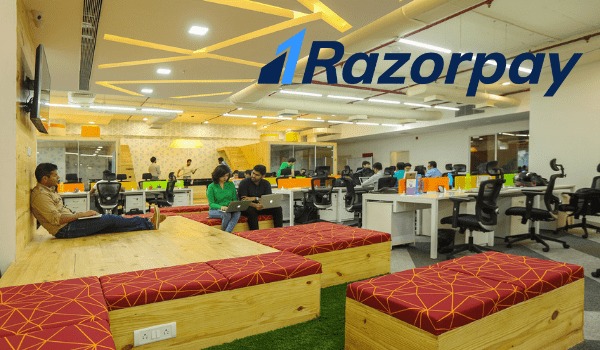
Razorpay has confidentially filed for a $600M–$700M IPO with SEBI, targeting a valuation of $5–6 billion. Following a successful redomiciliation to India and achieving EBITDA profitability in its core payments segment, the fintech leader aims for a late 2026 listing to fund its AI and banking expansion.
BENGALURU — Razorpay Software Limited, India’s leading digital payments and business banking platform, has officially moved toward the public markets by confidentially filing its Draft Red Herring Prospectus (DRHP) with the Securities and Exchange Board of India (SEBI). According to people familiar with the matter and recent regulatory filings, the fintech unicorn aims to raise between $600 million and $700 million (approximately ₹5,000 to ₹5,800 crore) in an initial public offering (IPO) expected to debut by late 2026.
The confidential filing route—a framework introduced by SEBI in 2022—allows the Bengaluru-based firm to submit its financials for regulatory review without immediate public disclosure. This strategy enables Razorpay to refine its offer structure and gauge investor demand privately before a formal public launch.
Strategic Shift and Valuation Realignment
The IPO move follows a multi-year corporate restructuring effort often referred to as a "reverse flip." In early 2025, Razorpay successfully shifted its corporate headquarters from the United States to India, a prerequisite for a domestic listing. This transition incurred a one-time tax outgo estimated at nearly $300 million to $400 million, funded through the company's internal cash reserves.
Market observers note that the company is likely targeting a valuation in the $5 billion to $6 billion range. While this represents a markdown from its peak valuation of $7.5 billion achieved in 2021, it reflects a broader industry-wide correction where investors now prioritize profitability and sustainable growth over aggressive cash-burning expansion.
Financial Performance and Operational Milestones
Razorpay’s decision to go public is backed by a significant surge in its operational metrics. For the financial year ending March 31, 2025 (FY25), the company reported a consolidated revenue of ₹3,783 crore, marking a 65% year-on-year increase.
Gross Profit: Rose by 41% to reach ₹1,277 crore in FY25.
Segment Profitability: The core online payments business has achieved EBITDA-level profitability, generating positive operational cash flows.
Net Loss: Despite operational gains, the firm reported a consolidated net loss of ₹1,209 crore in FY25, primarily due to one-time restructuring costs, employee stock ownership plan (ESOP) expenses, and the tax liabilities associated with its domicile shift.
Razorpay currently processes an estimated $180 billion in total payment volume annually. Beyond its core payment gateway, the company has diversified into point-of-sale (POS) hardware, business banking through RazorpayX, and international markets including Malaysia and Singapore.
Impact on the Indian Fintech Ecosystem
The Razorpay IPO is viewed as a landmark event for the Indian startup sector. If successful, it will be one of the largest technology listings in India since the market correction of 2022. A strong performance could reopen the floodgates for other "reverse flipped" unicorns, such as Zepto and Pine Labs, which are also reportedly weighing domestic listings.
For consumers and small businesses, the public listing is expected to accelerate Razorpay's AI-first product roadmap. Recently, the company announced a partnership with OpenAI to explore agentic payments on ChatGPT, signaling its intent to dominate the next generation of conversational commerce in India.
Official Sources Section
Details regarding the IPO filing are based on:
Intimation notices and regulatory filings with the Securities and Exchange Board of India (SEBI).
Corporate registrar data from the Ministry of Corporate Affairs (MCA) regarding the conversion to a public limited entity.
Official financial statements for FY2024-25 released by Razorpay Software Limited.
Public notices regarding the transfer of payment aggregation licenses approved by the Reserve Bank of India (RBI).
Quote Section
"According to officials familiar with the pre-filing, the choice of the confidential route provides the company with the flexibility to navigate market volatility while ensuring all regulatory benchmarks are met before the financial data becomes part of the public record."
Why It Matters
Razorpay’s IPO is a litmus test for the maturity of India’s digital economy. As the first major "payment aggregator" of its scale to attempt a domestic listing post-redomiciliation, its success will validate the "Make in India, List in India" sentiment. For investors, it offers a rare opportunity to gain exposure to a high-growth, infrastructure-level player that sits at the intersection of e-commerce, banking, and SaaS.
Key Facts at a Glance
Issue Size: Targeting $600M – $700M via a mix of fresh issue and offer-for-sale (OFS).
Route: Confidential DRHP filing with SEBI (Pre-filing framework).
FY25 Revenue: ₹3,783 crore (up 65% YoY).
Core Profitability: Online payments business is now EBITDA profitable.
Lead Managers: Reportedly in discussions with Kotak Mahindra Capital and Axis Capital.
FAQ Section
What is a "confidential IPO filing"?
Under SEBI’s 2022 rules, a company can file its draft prospectus for review without making it public. This allows the company to keep sensitive financial data private for a longer period and potentially withdraw the IPO without public scrutiny if market conditions sour.
Why did Razorpay move its headquarters to India?
To list on Indian stock exchanges like the NSE and BSE, a company must be domiciled in India. Razorpay moved from the U.S. to comply with these regulations and align its corporate structure with its primary market.
When will the public be able to see the full DRHP?
If Razorpay decides to proceed after the confidential review, it must file an "Updated DRHP," which will be made public for at least 21 days for investor comments before the final IPO dates are set.
Source: Securities and Exchange Board of India (SEBI), Ministry of Corporate Affairs (MCA), Razorpay Corporate Disclosures