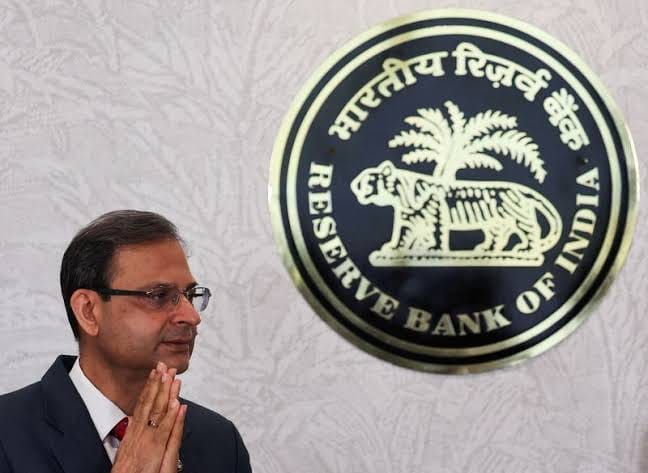
The Reserve Bank of India kept its key repo rate unchanged at 5.25% on August 5, 2026, retaining a neutral monetary policy stance. The decision reflects comfort with modest inflation levels and resilient domestic economic growth, keeping borrowing costs and home loan EMIs stable across the country.
MUMBAI — The Reserve Bank of India (RBI) decided to keep its benchmark interest rate unchanged on Wednesday, August 5, 2026, as the Indian central bank holds rates as expected in response to moderate consumer inflation and steady domestic economic growth. Following its three-day Monetary Policy Committee (MPC) meeting chaired by RBI Governor Sanjay Malhotra, the central bank maintained the repo rate at 5.25% for the fourth consecutive policy review. The decision reflects policymaker confidence in tame inflation figures alongside resilient domestic consumption, providing the monetary authority room to sustain liquidity without adding immediate borrowing costs to the economy.
Monetary Policy Committee Retains Neutral Stance
The six-member Monetary Policy Committee voted unanimously to keep the policy repo rate at 5.25%, keeping the Standing Deposit Facility (SDF) rate at 5.00% and the Marginal Standing Facility (MSF) rate at 5.50%. The panel chose to retain its neutral monetary stance, signaling that future policy adjustments will remain strictly data-dependent.
According to the official policy statement, the central bank's decision was supported by manageable domestic price trends despite lingering external volatility. As the Indian central bank holds rates, policymakers emphasized that current monetary settings strike a balance between anchoring inflation expectations and supporting economic expansion.
Key macroeconomic metrics highlighted during the announcement include:
Benchmark Repo Rate: Maintained at 5.25%.
Policy Stance: Retained as Neutral.
Real GDP Growth Projection: Projected at 6.8% to 6.9% for the fiscal year.
Consumer Price Index (CPI) Target: Maintained at 4.0% with a tolerance band of 2% to 6%.
Inflation Outlook and Global Commodity Risks
Domestic retail inflation has remained relatively modest in recent months, staying within the central bank's medium-term target range. Core inflation, which excludes volatile food and energy categories, has shown sustained softening due to stabilized supply chains and domestic food management policies.
However, the central bank cautioned that potential supply-side shocks from weather fluctuations and volatile international crude oil prices require continued monitoring. While headline inflation remains manageable, elevated global energy prices driven by geopolitical friction in the Middle East and currency shifts present potential upside risks to the domestic price trajectory. By retaining policy rates, the central bank aims to prevent secondary inflationary pressures from embedding into consumer price expectations.
Economic Growth and Financial Sector Impact
India's broader economy continues to demonstrate structural resilience. Robust urban demand, steady private capital expenditure, and healthy bank balance sheets have sustained economic output. Financial institution lending growth remains strong across industrial, commercial, and retail loan segments.
The policy hold directly impacts millions of commercial and retail borrowers across India. Because the Indian central bank holds rates, floating-rate retail loans—such as home loans and auto loans linked to the External Benchmark Lending Rate (EBLR)—will see equated monthly installments (EMIs) remain stable in the near term. Deposit rates at commercial banks are also expected to remain steady, offering predictable yield profiles for individual fixed-deposit investors.
Official Sources Section
Details regarding the August 2026 monetary policy decisions were formally announced by the Reserve Bank of India (RBI) following the conclusion of the Monetary Policy Committee meeting held from August 3 to August 5, 2026. Official statistics and policy documentation are released directly on the central bank's public repository, alongside financial market disclosures on BSE Limited and the National Stock Exchange of India (NSE).
Quote Section
During the post-policy press conference in Mumbai on August 5, 2026, central bank leadership detailed the reasoning behind the committee's decision.
RBI Governor Sanjay Malhotra stated:
"Domestic economic activity continues to maintain its momentum, supported by resilient demand conditions and strengthening investment. As the Indian central bank holds rates in this review, our neutral stance allows us the flexibility to respond to evolving macroeconomic conditions while ensuring inflation aligns durably with our target."
Why It Matters
The central bank's decision to maintain key interest rates offers policy consistency for businesses, financial institutions, and household budgets. For industry, unchanged borrowing rates reduce financing uncertainty for capital projects. For consumers, rate stability prevents instant hikes in monthly mortgage outlays during a period of moderate economic expansion. Additionally, maintaining a steady repo rate reinforces international investor confidence in India's macroeconomic management.
Key Facts at a Glance
Policy Repo Rate: Kept unchanged at 5.25%.
Monetary Policy Stance: Maintained as neutral to allow data-dependent adjustments.
Impact on Loans: Floating-rate home and vehicle loan EMIs remain unchanged.
GDP Growth Outlook: Projected at approximately 6.8% to 6.9% for the fiscal year.
Inflation Target: Benchmark CPI target stands at 4.0%.
Frequently Asked Questions (FAQ)
Q1: Why did the RBI choose to keep the repo rate unchanged?
The RBI kept the repo rate unchanged because domestic inflation remains within tolerable limits while economic growth continues to be resilient.
Q2: How does this decision affect existing home loan EMIs?
For borrowers with floating-rate home loans linked to the EBLR, monthly EMIs will remain stable without immediate cost increases or reductions.
Q3: What is the current repo rate set by the RBI?
The policy repo rate stands at 5.25%.
Q4: Will bank fixed deposit (FD) rates change after this meeting?
Fixed deposit rates across major commercial banks are expected to stay relatively stable due to unchanged benchmark lending rates.
Source: Reserve Bank of India (RBI), National Stock Exchange of India (NSE), BSE Limited