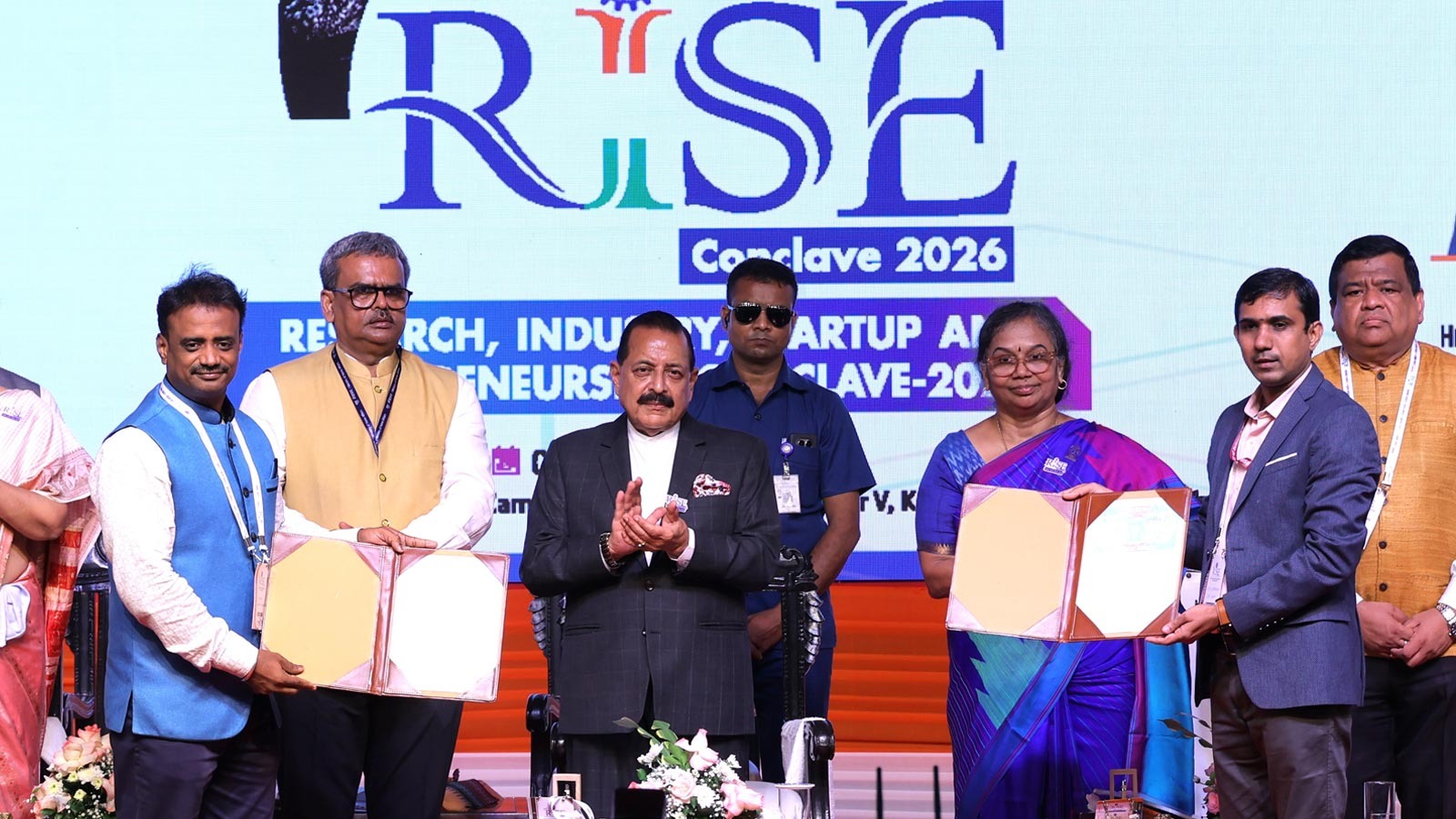
Union Minister Dr. Jitendra Singh called for restoring Bengal's scientific and intellectual heritage during the RISE Conclave 2026 in Kolkata. Emphasizing the state's historic role as an innovation pioneer, he advocated for stronger convergence among CSIR labs and regional universities to fuel India's modern startup ecosystem.
Union Minister Dr. Jitendra Singh has urged leaders and academics to reclaim Bengal's rich scientific and intellectual heritage, emphasizing Kolkata's historic role as a national trendsetter.
Kolkata — Asserting that Kolkata has historically functioned as a foundational trendsetter in national progress, Union Minister of State (Independent Charge) for Science and Technology Dr. Jitendra Singh called for the active restoration of West Bengal's scientific and intellectual legacy. Addressing the inaugural session of the RISE (Research, Innovation, Start-up and Entrepreneurship) Conclave 2026 in Kolkata, Singh emphasized that India's ongoing trajectory toward becoming a global technology and startup powerhouse requires actively reclaiming the heritage of its historic centers of academic and scientific excellence. The conclave was jointly organized by four major Council of Scientific and Industrial Research (CSIR) laboratories, underlining a collaborative push toward regional research development.
Reclaiming a Legacy of Excellence
According to official addresses delivered during the summit, Bengal's historical contributions span across diverse domains, including medicine, fundamental sciences, literature, arts, and technological institution-building.
Historical Pioneers: Singh invoked the monumental legacies of Dr. Bidhan Chandra Roy, Prof. U.N. Brahmachari, Sir C.V. Raman, and Dr. Syama Prasad Mukherjee, noting that these figures shaped India's early scientific framework.
Current Responsibility: He stated that the present generation bears a collective obligation to build upon this deep-rooted foundation to restore Kolkata's premier position in modern research.
Startup Ecosystem Integration: Highlighting national advancements, Singh noted that India has grown into the world's third-largest startup ecosystem, boasting nearly 40,000 active startups, which must now serve as direct conduits for lab-to-market technology transfers.
The minister also underscored the potential of building a robust knowledge corridor across eastern India through closer operational convergence between CSIR laboratories and elite regional institutions such as IIT Kharagpur, IISER Kolkata, and NIT Durgapur.
Institutional Synergy and Regional Growth
The push to revitalize West Bengal's research framework aligns with recent administrative rollouts integrating central science schemes with state educational bodies. By expanding flagship initiatives—such as INSPIRE, Vigyan Jyoti, and KIRAN—the central and local agencies aim to nurture scientific temper and broaden participation among students and women in technology sectors. Furthermore, specialized regional efforts, including targeted studies on public health challenges like arsenic mitigation and collaborative clinical cancer research, are being deployed through state medical networks.
Impact on Citizens, Researchers, and Industry Stakeholders
For young researchers, academics, and tech entrepreneurs in eastern India, the renewed focus on institutional collaboration translates to enhanced funding pathways, improved lab infrastructure, and direct mentorship. Strengthening the regional knowledge ecosystem ensures that local talent can innovate locally while feeding into national technological missions.
Official Sources Section
Information regarding the ministerial addresses, institutional frameworks, and regional scientific initiatives is sourced from official announcements and releases by the Ministry of Science and Technology, the Council of Scientific and Industrial Research (CSIR), and the Press Information Bureau (PIB).
Quote Section
"According to officials," India's journey toward becoming a global technology and startup powerhouse must involve reclaiming the legacy of its historic centers of excellence through a unified 'Whole-of-Science' approach.
Why It Matters
Reconnecting modern technological initiatives with historical scientific hubs ensures balanced regional development and optimizes national research output. Aligning local academic talent with central innovation schemes bridges long-standing institutional gaps and drives high-value economic growth.
Key Facts at a Glance
Event: RISE (Research, Innovation, Start-up and Entrepreneurship) Conclave 2026.
Location: Kolkata, West Bengal.
Key Speaker: Union Minister Dr. Jitendra Singh.
Organizing Bodies: CSIR-CGCRI, CSIR-IICB, CSIR-CMERI, and CSIR-IMMT.
Frequently Asked Questions
What was the primary focus of Dr. Jitendra Singh's address at the Kolkata conclave?
The minister called for restoring Bengal's historic scientific and intellectual heritage while integrating regional institutions into India's expanding startup and technology framework.
Which institutions organized the RISE Conclave 2026?
The event was jointly organized by four key CSIR institutions operating in the region.
How is the government supporting scientific research development in West Bengal?
Central science schemes, innovation programs, and targeted regional studies—such as research on arsenic mitigation and clinical trials—are being rolled out across state institutions.
Where can official updates on science and technology initiatives be tracked?
Updates and policy documents are published via the official portals of the Ministry of Science and Technology and the Press Information Bureau (PIB).
Source: Ministry of Science and Technology, Council of Scientific and Industrial Research (CSIR), Press Information Bureau (PIB)