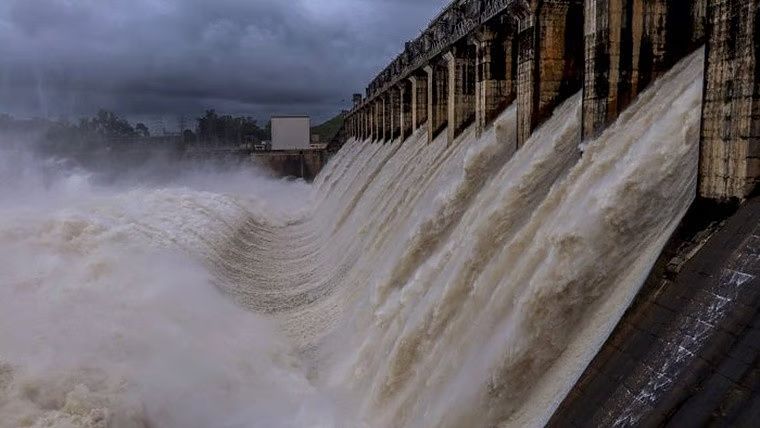
Mumbai’s collective water reservoir levels surpassed 50% on July 18, 2026, following steady monsoon rains. While current stocks are at 50.77%, reflecting a 0.98% increase in 24 hours, the city remains below historical year-on-year averages. The BMC continues to monitor the seven-lake system as recovery efforts from earlier shortages persist.
Steady monsoon rainfall has revitalized Mumbai's critical water reservoirs, bringing the city's total storage capacity back to a more stable level.
MUMBAI — Mumbai’s water supply situation has reached a significant turning point as the collective storage in the seven reservoirs that feed the city surpassed the 50% mark on July 18, 2026. This recovery follows a prolonged period of concern earlier in the season, when critically low lake levels forced the Brihanmumbai Municipal Corporation (BMC) to implement water supply cuts and restrict industrial usage.
According to the latest 24-hour monitoring report released by the BMC, the total water reserves stood at 50.77% of the system’s total useful live storage capacity as of 6:00 a.m. on Saturday. This represents a 0.98% increase in overall stock over the preceding 24-hour period, a testament to consistent rainfall in the catchment areas of Thane and Nashik.
Reservoir Performance and Operational Updates
The city’s seven reservoirs—Bhatsa, Upper Vaitarna, Middle Vaitarna, Modak Sagar, Tansa, Tulsi, and Vihar—hold a total combined capacity of 14,47,363 million litres. Recent data indicates a varied but positive trend across these critical assets:
Leading Reservoirs: The two smaller, city-based reservoirs, Vihar and Tulsi, have performed exceptionally well, with Vihar reaching 100% capacity and Tulsi holding steady at approximately 98.02%.
Major Sources: Tansa and Modak Sagar have seen substantial improvements, recording 80.41% and 77.44% of their capacities, respectively.
Critical Contributors: Bhatsa, the largest supplier of water to the city, is currently at 45.35%, while Middle Vaitarna stands at 45.47%. Upper Vaitarna, which had faced severe depletion earlier in the season, has risen to 30.66%.
The BMC has been actively adjusting reservoir operations based on inflow levels, including closing gates at Middle Vaitarna and halting releases from Upper Vaitarna to maximize storage retention.
Contextualizing the Recovery
The 2026 monsoon season began with unprecedented challenges. In mid-June, combined reservoir levels had plummeted to roughly 8.3%, the lowest in recent memory for that time of year. This prompted the BMC to mandate 20% supply cuts for industrial and commercial entities and suspend municipal supply to construction sites to preserve dwindling stocks.
While the current 50.77% level marks a significant departure from those crisis levels, it remains below the more comfortable percentages seen in previous years, such as the 81.47% recorded on the same date in 2025.
Official Perspective
According to officials from the BMC, the city is no longer in an immediate state of water crisis, though vigilant monitoring continues. The municipal body maintains that while the current storage of roughly 7.35 lakh million litres provides a necessary buffer, residents should continue to use water judiciously. The India Meteorological Department (IMD) has forecasted light to moderate rainfall for Mumbai and its suburbs through July 21, which meteorologists expect will further support the steady replenishment of the catchment areas.
Key Facts at a Glance
Total Reservoir Stock: 50.77% as of July 18, 2026.
24-Hour Growth: Total storage increased by 0.98% due to steady monsoon showers.
Top Performers: Vihar and Tulsi lakes are nearly full, both having commenced overflowing in early July.
Combined Capacity: The seven-lake system has a total useful capacity of 14,47,363 million litres.
Frequently Asked Questions (FAQ)
Is the current water supply still under restrictions?
The BMC has not yet announced a full withdrawal of previous restrictions, though the city is in a much safer position than it was in June. Updates regarding supply adjustments are typically communicated by the BMC via official channels.
Why is Mumbai’s water level still lower than last year?
Despite the recent recovery, the delayed onset of the monsoon in 2026 resulted in a deficit that the system is currently working to offset. While the reservoirs are recovering, they have not yet caught up to the year-on-year historical averages.
How can I monitor the water levels daily?
The BMC provides daily updates on the combined water stock of the seven lakes. Residents can follow the official BMC Twitter/X account or visit the Mumbai Lake Water Level dashboard for real-time data.
Source: Brihanmumbai Municipal Corporation (BMC), Mumbai Lake Water Level Dashboard, NDTV Profit Water Report