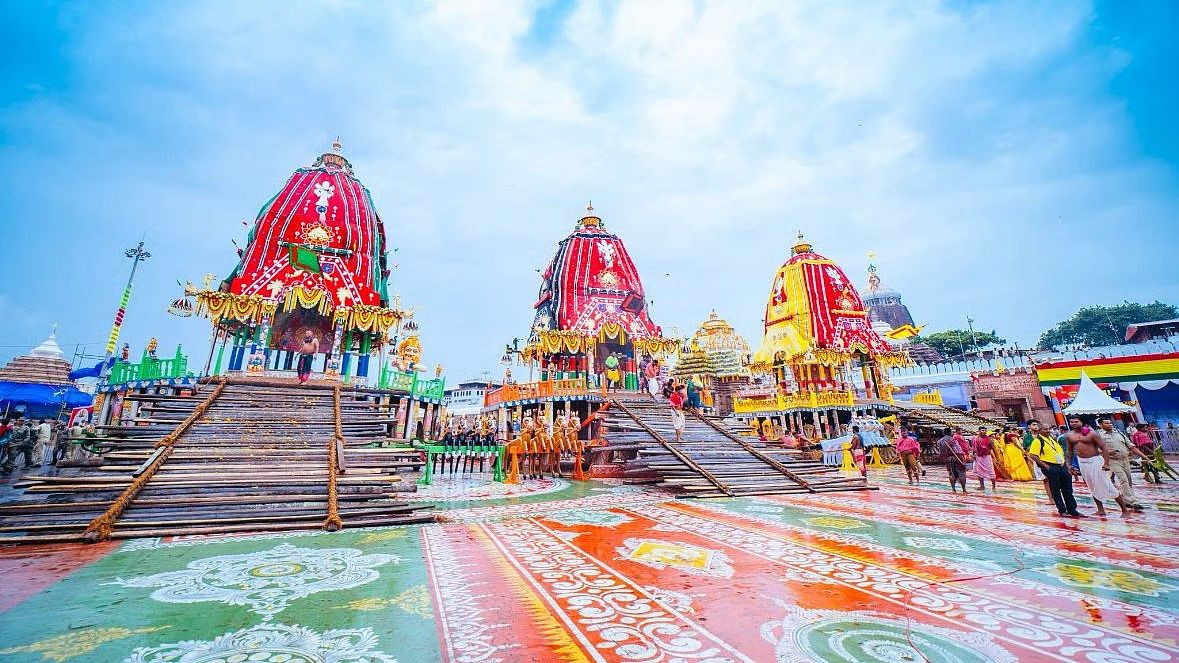
The world-famous Shree Jagannath Rath Yatra 2026 will officially begin in Puri, Odisha, on Thursday, July 16. The massive festival celebrates the annual journey of Lord Jagannath and his divine siblings to the Gundicha Temple, signaling the start of major global pilgrim transits and extensive state infrastructural deployment.
PURI — The Shree Jagannath Temple Administration officially confirmed the schedule for the upcoming Shree Jagannath Rath Yatra 2026, which is set to commence on Thursday, July 16, 2026. This mega-religious event, held annually on the Dwitiya Tithi (second day) of the Shukla Paksha (bright fortnight) in the traditional Hindu calendar month of Ashadha, marks the historic chariot journey of Lord Jagannath, his elder brother Lord Balabhadra, and their sister Devi Subhadra. The announcement triggers extensive security, logistical, and transport preparations by the Odisha state government and local civic bodies, as the seaside town expects over one million pilgrims from across the globe to converge along the historic Grand Road (Bada Danda).
Complete Multi-Day Ritualistic Schedule Confirmed by Temple Priests
According to administrative orders and Vedic calculations finalized by the temple's pandits, the 2026 Rath Yatra is not a single-day event but a continuous spiritual cycle spanning nearly a month. The process begins weeks prior with the ceremonial bathing of the wooden deities and includes a strict sequence of ancient rituals.
On June 29, the deities will undergo the Snana Yatra, after which they are traditionally believed to fall ill, entering a 15-day isolation period known as Anasara. They will emerge fully recovered just in time for the main chariot procession on July 16.
Three Massive Custom Chariots Built Annually From Scratch
A remarkable aspect of the Rath Yatra is the construction of three new, towering wooden chariots every year, a process that relies entirely on traditional carpentry blueprints passed down through generations without modern measuring tools.
The three distinct chariots feature specialized configurations:
Nandighosha: The chariot of Lord Jagannath, standing 45 feet high, featuring 16 massive wheels and draped in traditional red and yellow fabric.
Taladhwaja: Built for Lord Balabhadra, standing 44 feet high with 14 wheels, adorned in red and bluish-green cloth.
Darpadalana: The chariot of Devi Subhadra, standing 43 feet high with 12 wheels, wrapped in red and black coverings.
The construction of these structures consumes thousands of pieces of sacred timber, meticulously overseen by hereditary craftsmen (Bhoi Servitors) whose families have held this construction mandate for centuries.
Ancient Origins, Radical Openness, and Royal Traditions
Rooted deeply in scriptures like the Skanda Purana and Brahma Purana, the Rath Yatra celebrates Lord Jagannath's journey to visit his maternal aunt at the Gundicha Temple, located roughly three kilometers away. Historically, the festival holds immense cultural weight due to its radical social inclusion. While the main inner sanctum of the Puri Jagannath Temple is traditionally accessible only to orthodox Hindus, the Rath Yatra represents the moment the Lord comes out into the open streets, offering universal darshan (divine viewing) to all humans regardless of caste, creed, or nationality.
The procession also features the highly symbolic Chhera Pahara ritual. During this ceremony, the titular King of Puri, the Gajapati Maharaja, uses a golden broom to sweep dust from the floors of the chariots. This ancient act serves as a public demonstration of humility, reinforcing the concept that even the highest political and royal authorities are merely humble servants before the divine creator.
Official Sources Section
The ceremonial timings, administrative protocols, and safety arrangements are authorized and distributed via official notices by the Shree Jagannath Temple Administration (SJTA) and backed by urban planning directives from the Government of Odisha District Administration.
"All departments have initiated coordinated setups to manage transit, water systems, and medical tents for the lakhs of expected devotees," stated senior district officials during an administrative review meeting in Puri. "We are working directly with the temple servitors to ensure all Vedic timings for the Pahandi and chariot pulling are executed with absolute precision."
Why It Matters
The annual chariot festival has direct, wide-ranging impacts on regional transport systems, local hospitality economies, and international tourism logistics. Indian Railways routinely routes over 150 special trains to Puri to manage the massive influx of passengers, while aviation hubs expand their flight schedules into Bhubaneswar. For local businesses, artisans, and hospitality providers, the month-long religious window serves as the primary economic driver of the fiscal year, demanding flawless coordination across civic infrastructure, digital payment networks, and emergency medical services.
Key Facts at a Glance
Confirmed Launch Date: The main Rath Yatra procession begins on Thursday, July 16, 2026, following the conclusion of the Anasara phase.
The Return Journey: The return leg of the festival, known as Bahuda Yatra, is scheduled for Friday, July 24, 2026.
Uniquely Handcrafted: All three massive chariots are built completely anew each year using ancient architectural manuals and zero metal fasteners.
Universal Access: The festival remains celebrated globally for its core philosophy of total equality, allowing the entire public to view and pull the deities through the city.
Frequently Asked Questions (FAQ)
Why does the date of the Jagannath Rath Yatra change every year?
The festival is determined by the traditional Hindu lunisolar calendar, which traces dates based on lunar cycles rather than the fixed 365-day Gregorian calendar. It always falls on the second day (Dwitiya) of the bright fortnight of Ashadha.
What happens during the 15-day Anasara period preceding the Yatra?
Following a massive ceremonial bath (Snana Yatra), the deities are traditionally said to contract a fever due to the heat. They are kept in a special isolation chamber where the public cannot see them, and they are treated with traditional herbal remedies by special temple physicians before re-emerging.
What is the significance of pulling the ropes of the chariots?
According to ancient Vedic scriptures, actively participating in pulling the thick ropes of the massive wooden chariots is believed to cleanse a person's negative karma and grant spiritual liberation (Moksha), symbolizing a shared communal journey toward higher truth.
Source: Shree Jagannath Temple Administration Official Portal, Odisha Tourism Department Announcements, Puri District Collectorate Civil Directives.