West Bengal Urban Development Minister Agnimitra Paul faced severe political backlash after admonishing a homeless woman for warming milk on a pavement stove during an anti-encroachment drive in Kolkata’s Park Street area. The viral video ignited intense debates concerning urban poverty, pedestrian safety, and humanitarian governance protocols.
Backed by official reports and viral video documentation, an on-camera confrontation during a Kolkata inspection drive has ignited a nationwide debate on urban poverty and municipal enforcement.
The Park Street Confrontation and Viral Footage
The intersection of urban governance and acute socio-economic vulnerability drew intense public scrutiny over the weekend of August 22–23, 2026, in Kolkata. According to official reports published by The Indian Express, West Bengal Minister for Urban Development and Municipal Affairs Agnimitra Paul encountered sharp criticism following an anti-encroachment inspection in the high-traffic Park Street district.
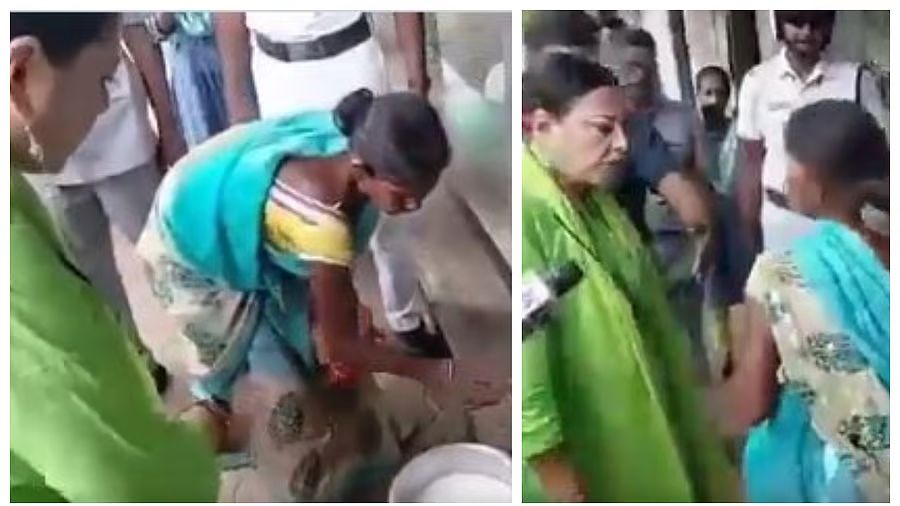
During the routine sweep, the minister noticed a lit stove on the pavement near Free School Street, where an elderly homeless woman was warming milk for a young child. Video footage circulating widely across digital platforms captured the minister questioning the individual: "Warming milk for a child on the pavement? In Park Street? Who gave you the right to set up a household here?" Promptly instructing accompanying police officers to clear the footpaths of all squatters, the incident swiftly escalated into a major political flashpoint.
Socio-Economic Realities and Political Repercussions
The confrontation opened a broader dialogue regarding the enforcement of sidewalk clearances versus the grim realities of urban displacement. Key background elements highlighted by civic analysts and political entities include:
Identity and Hardship: Local leaders who visited the site identified the elderly resident as Sita (also known as Rashida), a destitute scavenger who has lived on city pavements for years following family tragedies.
Opposition Condemnation: Left-leaning organizations, including the All India Democratic Women's Association (AIDWA), along with Trinamool Congress (TMC) figures, condemned the lack of empathy, arguing that administrative enforcement must incorporate humane rehabilitation frameworks rather than heavy-handed policing.
Ministerial Defense: Defending the operation, Minister Paul asserted that unauthorized pavement dwellings and open cooking present severe safety hazards to both vulnerable infants and walking pedestrians along busy thoroughfares.
Wider Civic Impact: Urban planners and civil rights advocates continue to debate how municipal authorities can balance pedestrian safety with the protection of marginalized citizens who lack alternative housing.
Official Sources Section
Ministerial statements, eyewitness accounts, and investigative summaries are referenced directly from verified news platforms and official municipal disclosures:
Eyewitness Reports & News Coverage: Comprehensive documentation is accessible through The Indian Express Kolkata Desk and The Times of India City Portal.
Official Municipal Documentation: Background on urban renewal and anti-encroachment guidelines is available via the Government of West Bengal Urban Development Department Portal.
Quote Section
According to officials: “Living like this on the pavement is not safe. Pavements are built for people to walk safely. A child crawling next to a busy road like Free School Street invites extreme danger, and every enforcement drive aims to prevent tragic accidents.” — State Urban Development Minister Agnimitra Paul
Why It Matters
The practical implications of this incident resonate across municipal administration, social welfare policy, and public safety enforcement. For city planners, law enforcement agencies, and vulnerable urban populations, balancing the imperative of clear, accessible pedestrian corridors with compassionate resettlement solutions remains one of the most complex governance challenges in metropolitan centers.
Key Facts at a Glance
Event Date: August 22–23, 2026, during weekend municipal inspections in Kolkata.
Key Figures: State Urban Development Minister Agnimitra Paul and local pavement residents.
Core Incident: An on-camera admonishment over a stove used to heat milk on the Park Street footpath.
Broader Debate: Balancing pedestrian safety and anti-encroachment laws with humanitarian support for homeless families.
FAQ Section
What triggered the recent controversy involving Minister Agnimitra Paul in Kolkata?
The controversy erupted after a video showed the minister reprimanding a homeless woman for using a pavement stove to warm milk for a child during an anti-encroachment sweep on Park Street.
What arguments were raised by opposition groups and critics?
Critics and women's associations condemned the lack of empathy, emphasizing that poverty forces marginalized individuals onto sidewalks and demanding compassionate rehabilitation rather than forced displacement.
How did the state government and the minister defend the action?
Minister Paul maintained that open cooking and unauthorized structures on heavy-traffic sidewalks pose grave safety risks to both pedestrians and young children living on the streets.
Where can readers find verified updates on Kolkata municipal policies?
Official notifications regarding urban development and civic regulations are published regularly on the Government of West Bengal Urban Development Department Portal.
Source: The Indian Express, The Times of India / BengalInfo, Government of West Bengal