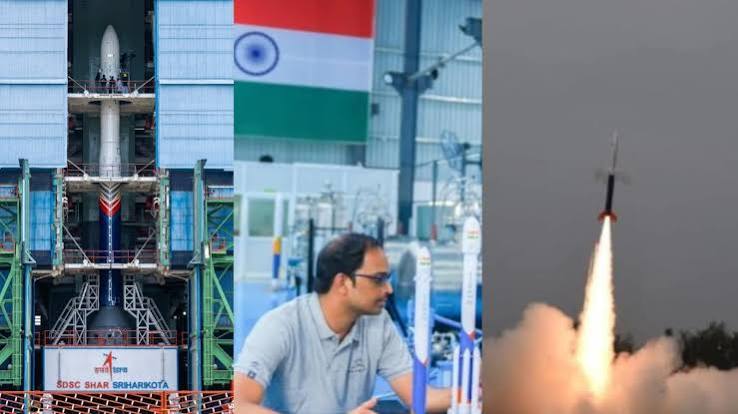
Hyderabad-based Skyroot Aerospace is set to launch India’s first privately developed orbital rocket, Vikram-1, on July 18, 2026. The Mission Aagaman test flight marks a historic shift in India’s space industry, aiming to demonstrate the company’s capability to provide affordable, on-demand satellite launch services to a global customer base.
SRIHARIKOTA – In a landmark development for India’s private space industry, Hyderabad-based startup Skyroot Aerospace is preparing to conduct the maiden test flight of its Vikram-1 rocket. Scheduled for lift-off at 11:30 a.m. on July 18, 2026, from the Satish Dhawan Space Centre (SDSC-SHAR), the mission—dubbed "Aagaman"—represents the first time a privately designed and developed orbital-class rocket will attempt to fly from Indian soil.
This mission is a major advancement following the company’s successful 2022 suborbital flight of the Vikram-S rocket. If successful, Vikram-1 will become the first Indian private rocket capable of placing satellites into orbit, significantly expanding India’s commercial launch capabilities and signaling the private sector’s formal entry into the global space economy.
Engineering a New Era in Spaceflight
Vikram-1 is a seven-storey-tall, multi-stage launch vehicle built entirely with a lightweight, all-carbon composite structure, which is reported to be five times lighter than traditional steel alternatives. The rocket is powered by in-house propulsion systems, including 3D-printed engines and high-thrust solid-fuel boosters.
Designed to carry small satellites weighing up to 350 kg into Low Earth Orbit (LEO), the maiden test flight aims to reach an altitude of 450 km with a 60-degree orbital inclination. According to Skyroot, the primary goal of Mission Aagaman is to collect vital in-flight data on propulsion, guidance, and stage separation systems.
Strengthening the Indian Space Economy
The launch aligns with the Indian government's strategic efforts to cultivate a $44 billion space economy by 2033. Since space sector reforms were introduced in 2020, the Indian National Space Promotion and Authorization Centre (IN-SPACe) has provided the regulatory support necessary for startups to build rockets and satellite services. Skyroot Aerospace, which recently reached a $1 billion valuation, is at the forefront of this industrial shift, competing with global entities to provide affordable, on-demand launch solutions.
Official Sources
Skyroot Aerospace: Responsible for the design, development, and operation of the Vikram-1 launch vehicle.
Indian National Space Promotion and Authorization Centre (IN-SPACe): The national regulatory body facilitating private sector space participation.
Satish Dhawan Space Centre (SDSC-SHAR): The Indian spaceport hosting the launch operations.
Quote Section
"According to Pawan Kumar Chandana, CEO and co-founder of Skyroot Aerospace, the team has completed all ground-based testing and is eager to observe the rocket’s performance in a real-world flight environment, which will serve as a foundation for establishing a regular launch cadence."
Why It Matters
The successful deployment of an orbital-class rocket by a private Indian firm would provide a critical alternative in a global launch market currently constrained by supply-side limitations. By offering localized, reliable access to space, Skyroot aims to support a growing demand for satellite-based services in communications, Earth observation, and defense, effectively positioning India as a global hub for space technology.
Key Facts at a Glance
Mission Name: Aagaman (Arrival).
Launch Vehicle: Vikram-1, a multi-stage orbital rocket.
Primary Objective: To validate flight performance and collect data for future commercial operations.
Payloads: Includes technology demonstrators from Grahaa Space, Cosmoserve, DCubed, and Skyroot’s own SCOPE, along with artistic pieces.
Frequently Asked Questions
1. Is Vikram-1 the first private rocket launched by India?
No, it is the first orbital rocket. Skyroot previously launched the Vikram-S, a suborbital rocket, in November 2022.
2. What is the goal of Mission Aagaman?
The mission aims to validate the vehicle's performance in a real flight environment to establish a reliable launch cadence for future commercial satellite deployments.
3. Why is this launch significant for the global space market?
It expands the supply of small-satellite launch services, providing a competitive, India-based option for global satellite operators.
Source: Skyroot Aerospace, The Hindu, Press Trust of India (PTI)