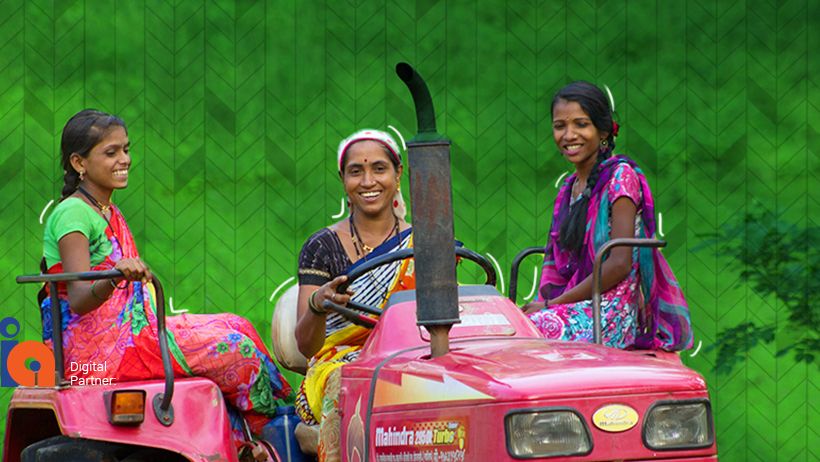
India is celebrating 2026 as the International Year of the Woman Farmer, prioritizing women-led agricultural growth. Flagship initiatives like "Namo Drone Didi" and MKSP are equipping women with advanced technology, financial support, and formal training, effectively transforming them into essential, tech-enabled leaders within the nation's critical and evolving agri-food systems.
As the world marks the International Year of the Woman Farmer in 2026, India is accelerating its "women-led development" agenda to transform the agricultural landscape.
NEW DELHI — Women are the backbone of India’s agricultural sector, yet their contributions have long been overlooked. In 2026, as the United Nations observes the International Year of the Woman Farmer (IYWF), India is shifting the narrative by positioning women not just as laborers, but as leaders, innovators, and decision-makers in the nation's agri-food systems.
With approximately 80% of rural women engaged in agriculture and allied sectors, their role in ensuring national food security and climate resilience has never been more critical. To bridge existing gender gaps, the Government of India has ramped up targeted interventions, moving beyond symbolic support to provide tangible access to technology, credit, and land titles.
Leading the Agri-Tech Revolution
A centerpiece of this empowerment drive is the integration of cutting-edge technology. The Namo Drone Didi scheme has become a flagship initiative, equipping thousands of women-led Self-Help Groups (SHGs) with agricultural drones. By training women to provide precision spraying services, the government is not only boosting rural incomes—potentially by over ₹1 lakh annually—but is also fundamentally changing the perception of women in farming from manual laborers to skilled tech-providers.
Furthermore, the Mahila Kisan Sashaktikaran Pariyojana (MKSP) remains a vital pillar of this transformation. As a sub-component of the Deen Dayal Antyodaya Yojana-National Rural Livelihoods Mission (DAY-NRLM), the scheme provides women farmers with free training in sustainable practices like organic farming and multi-cropping, alongside financial support for inputs through revolving funds.
Breaking Systemic Barriers
During the Global Conference on the Role of Women in Agri-Food Systems (GCWAS-2026) held in New Delhi this March, President Droupadi Murmu emphasized that the future of Indian agriculture is "women-led". Addressing the conference, she highlighted the need for:
Formal Land Titles: Addressing the historic disparity in land ownership, where women currently own only a small fraction of operational holdings.
Leadership Roles: Ensuring women have a seat at the table in policy formulation and Farmer Producer Organisations (FPOs).
Financial Inclusion: Streamlining access to Kisan Credit Cards and formal banking to reduce dependency on informal, high-cost credit.
Why It Matters
Empowering women farmers is not just a social imperative; it is an economic necessity. Data suggests that closing gender gaps in farm productivity could significantly boost GDP and eliminate over half of the food insecurity gap globally. In India, where rising male out-migration is driving a "feminisation of agriculture," providing women with the tools to succeed is essential for maintaining rural economic stability.
Key Facts at a Glance
Workforce Participation: Women constitute ~33% of the agricultural labour force and ~48% of self-employed farmers in India.
Global Recognition: The UN has declared 2026 the International Year of the Woman Farmer, spotlighting the need to close gender gaps in agrifood systems.
Tech Empowerment: The Namo Drone Didi scheme aims to provide 15,000 SHGs with agricultural drones to modernize farming practices.
Training Reach: Between 2022 and 2025, over 2.5 crore women farmers received training in agro-ecology and livestock management.
FAQ
1. What is the International Year of the Woman Farmer (IYWF 2026)?
It is a UN-declared observance aimed at raising awareness of the vital roles women play in agrifood systems and mobilizing action to close gender gaps in land, credit, and technology.
2. How does the 'Namo Drone Didi' scheme help women?
It trains women SHG members to operate agricultural drones for precision spraying of pesticides and fertilizers, creating a new revenue stream and reducing manual health hazards.
3. What is the Mahila Kisan Sashaktikaran Pariyojana (MKSP)?
MKSP is a government program under the DAY-NRLM that trains women farmers in sustainable agriculture and provides them with revolving funds for essential farming inputs.
4. How is India addressing land ownership for women?
The government is promoting policies that encourage formal land titles for women, including mandatory allocation of houses in female names under schemes like PMAY-G and prioritizing women in agricultural institutional support.
Source: Food and Agriculture Organization (FAO), Press Information Bureau (PIB), Schemes In India, Eicher Tractors