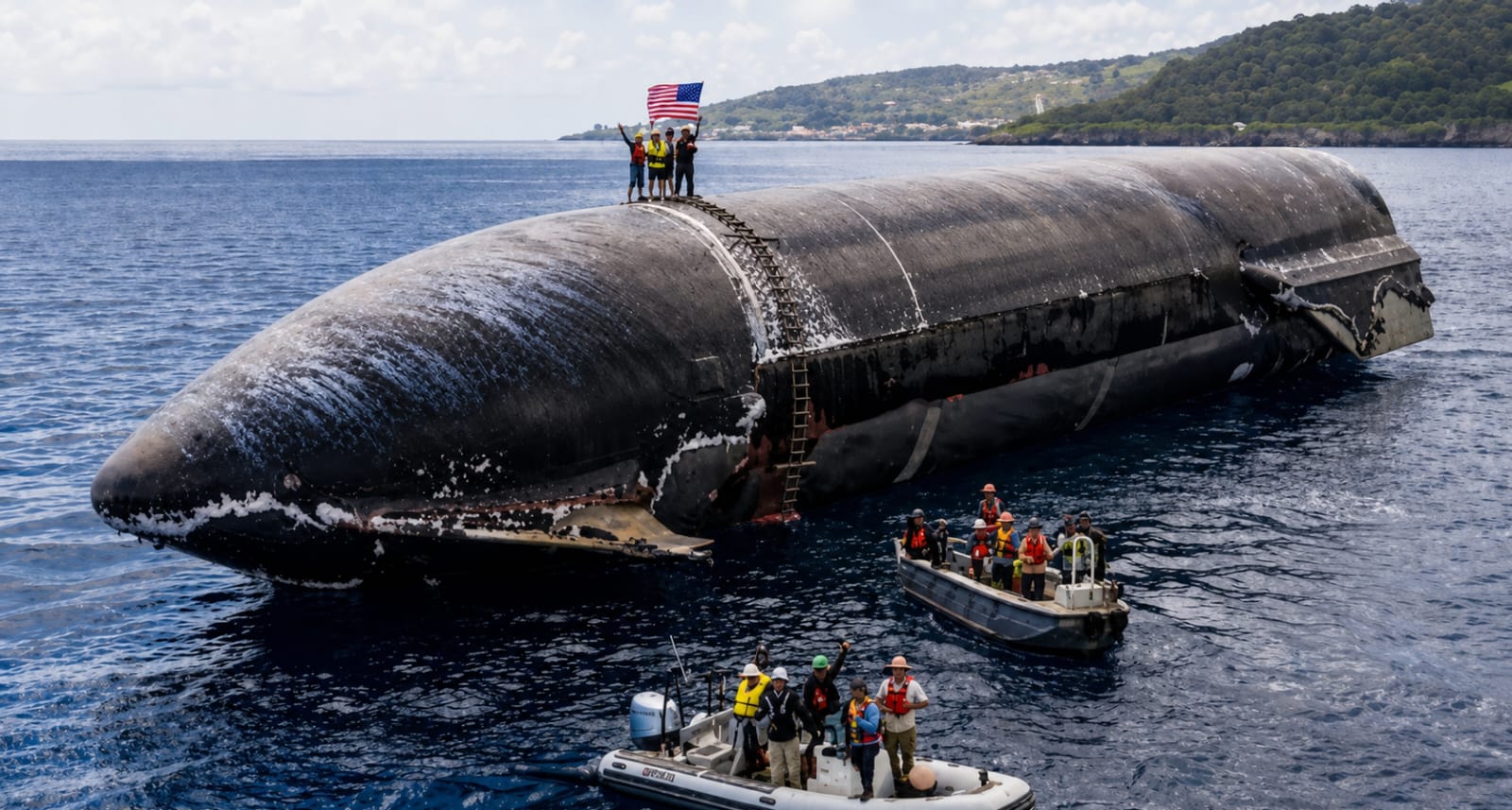
SpaceX has successfully recovered its Starship upper stage from the Indian Ocean following a month-long salvage operation. Launched on July 24, 2026, the 171-foot vehicle survived a controlled splashdown intact. It was towed to Christmas Island and will undergo transport to Texas for engineering analysis.
CHRISTMAS ISLAND, AUSTRALIA — Commercial spaceflight firm SpaceX has successfully completed the largest maritime salvage operation in its history, recovering the upper stage of its Starship spacecraft from the Indian Ocean. The 171-foot-tall (52-meter) vehicle remained intact following a controlled splashdown during its 13th orbital test flight, enabling specialized recovery crews to haul the vehicle through rough open waters to an Australian territory port near Christmas Island.
The recovery operation, which spanned nearly a month in challenging marine conditions, represents the first time SpaceX has retrieved a flown Starship upper stage from international waters. The spacecraft is currently undergoing preliminary structural evaluation by engineering teams before beginning a multi-month transport journey back to the company's Starbase production and launch facility in South Texas.
Maritime Salvage and Engineering Operations
The spacecraft, designated Ship 40, lifted off from South Texas on July 24, 2026, executing an hour-long suborbital trajectory that concluded with a controlled ocean landing. Unlike previous test vehicles that disintegrated upon impact or sank, Ship 40 remained floating and structurally stable.
Following the splashdown, SpaceX dispatched a specialized salvage fleet to secure the floating structure. Recovery teams spent 24 days navigating rough sea states in the remote Indian Ocean to guide the vehicle to calm waters.
| Operational Metric | Technical Specification |
| Vehicle Designation | Starship Upper Stage (Ship 40) |
| Vehicle Height | 171 feet / 52 meters |
| Launch Date | July 24, 2026 |
| Splashdown Location | Indian Ocean (near Christmas Island) |
| Recovery Duration | 24 days at sea |
| Transit Destination | Starbase Facility, South Texas |
Technical Value of Returned Hardware
While telemetry and onboard sensor feeds provide flight data during tests, physical access to a flown spacecraft yields critical insights into material degradation, thermal protection performance, and structural stress. Engineers plan to analyze heat shield tiles, engine manifolds, and atmospheric re-entry burn patterns across the steel hull.
The physical inspection will inform structural modifications for upcoming vehicles as SpaceX scales production. The hardware recovery supports ongoing development contracts with NASA, which relies on a modified Starship variant to serve as the Human Landing System (HLS) for the Artemis program aimed at returning crewed missions to the lunar surface.
Official Sources Section
According to official public announcements released by SpaceX on X (formerly Twitter) and regulatory filings with the Federal Aviation Administration (FAA), the recovery task force successfully guided the vehicle to port following coordination with regional authorities. Further details regarding hardware analysis will be published as structural assessments proceed at Starbase.
Quote Section
"Congratulations to the entire SpaceX Recovery team for battling through challenging conditions to give our engineers access to a wealth of data to continue rapidly developing Starship," stated SpaceX in an official update.
Why It Matters
The ability to recover and inspect flown upper-stage vehicles accelerates the development timeline for fully reusable super-heavy launch systems. Physical hardware evaluation allows aerospace engineers to validate digital simulations regarding heat distribution during atmospheric re-entry. For satellite operators, commercial spaceflight partners, and government agencies like NASA, rapid iteration of reusable launch technology reduces payload delivery costs to orbit and lunar trajectories.
Key Facts at a Glance
Milestone Salvage: SpaceX completed its largest maritime salvage operation to date, recovering an intact Starship upper stage from the ocean.
Extended Tow Operation: Recovery crews spent 24 days towing the 171-foot vehicle through rough seas in the Indian Ocean to a port at Christmas Island.
Return to Texas: The recovered spacecraft will undergo sea transport back to the Starbase facility in South Texas for detailed hardware inspection.
Lunar Support: Physical flight data gathered from the recovered vehicle will directly support development of NASA's Artemis lunar landing system.
Frequently Asked Questions (FAQ)
What was the purpose of the 13th Starship test flight?
The flight evaluated full-system integration, long-duration atmospheric re-entry profile survival, and controlled ocean splashdown capabilities.
Where was the Starship vehicle towed after splashdown?
The recovery crew towed the spacecraft to calm waters at an Australian territory port near Christmas Island in the Indian Ocean.
How long will it take to transport Starship back to Texas?
Transporting the 52-meter spacecraft by sea back to the Starbase facility in South Texas is projected to take several months.
Why is recovering the physical vehicle important for SpaceX?
Inspecting physical hardware allows engineers to assess heat shield wear, engine condition, and structural stress directly, complementing digital telemetry data.
Source: Official statements from SpaceX, the National Aeronautics and Space Administration (NASA), and maritime reports verified by The Associated Press.