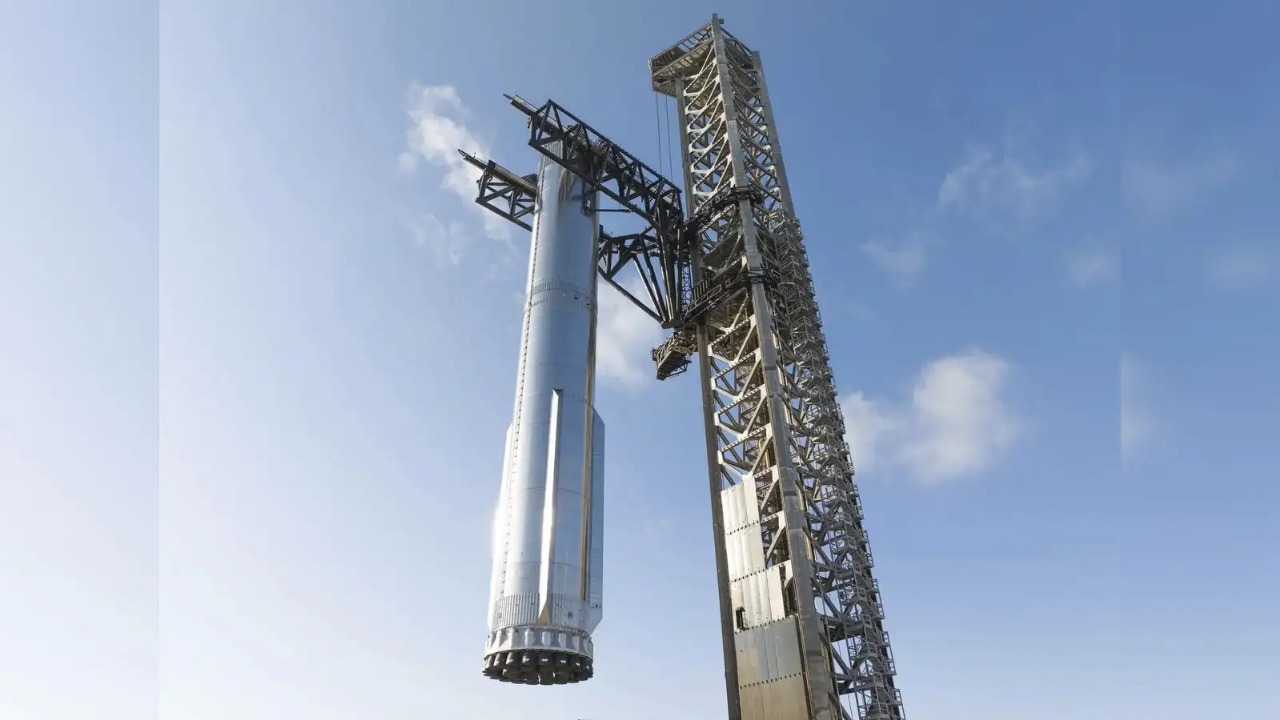
SpaceX’s Starship rocket has successfully completed its tenth integrated test flight, lifting off from Starbase in Texas and splashing down in the Indian Ocean after a transoceanic journey that lasted just over an hour. This flight marks a significant milestone for Elon Musk’s space a...
SpaceX’s Starship rocket has successfully completed its tenth integrated test flight, lifting off from Starbase in Texas and splashing down in the Indian Ocean after a transoceanic journey that lasted just over an hour. This flight marks a significant milestone for Elon Musk’s space ambitions, overcoming a string of past failures and delivering critical data for future missions to the Moon and Mars. Here’s a comprehensive breakdown of the mission and its implications.
1. Launch and Flight Overview
- The launch took place on August 26, 2025, at 6:30 pm CDT from SpaceX’s Starbase facility in Boca Chica, Texas
- After multiple delays due to technical issues and weather, the rocket finally lifted off, generating over 17 million pounds of thrust
- The Super Heavy booster executed a controlled splashdown in the Gulf of Mexico approximately six minutes into the flight
- The upper stage, Starship Ship 37, continued its flight path across the globe, culminating in a successful splashdown in the Indian Ocean northwest of Australia
2. Technical Objectives and Experiments
- The mission tested new heat shield tile configurations, with several sections intentionally left tile-less to stress-test vulnerable areas during reentry
- A single Raptor engine was reignited in space to evaluate in-orbit relight capabilities
- Eight Starlink satellite simulators were deployed using a Pez-dispenser-style mechanism, mimicking next-gen payload deployment
- The booster’s landing burn was executed using a modified engine configuration, disabling one of the center engines to test backup systems
3. Overcoming Past Failures
- Starship’s previous three flights in 2025 ended in upper-stage explosions, raising concerns about the vehicle’s reliability
- A static fire test in June also resulted in the destruction of Ship 36, prompting hardware and operational changes
- Flight 10 demonstrated improved structural integrity and thermal protection, with no mid-flight disintegration or loss of control
- The successful splashdown of both stages marks the first fully completed test flight of the year
4. Strategic Importance for NASA and Mars
- Starship is central to NASA’s Artemis III mission, which aims to land astronauts on the Moon by 2027 using a Starship-based lunar lander
- SpaceX plans to use Starship for future Mars missions, with orbital refueling and rapid reusability as key enablers
- The data from Flight 10 will inform design tweaks for Version 3 of Starship, expected to launch later this year from Kennedy Space Center
5. Public and Industry Reaction
- The launch was livestreamed on SpaceX’s platforms, drawing millions of viewers and widespread media coverage
- Aerospace analysts praised the flight as a turning point, though emphasized the need for consistent reliability
- Environmental groups continue to monitor the impact of launches near sensitive coastal zones in Texas and splashdown areas in the Indian Ocean
6. What’s Next for Starship
- SpaceX will analyze telemetry and onboard data to refine reentry profiles and engine configurations
- Future flights may attempt full orbital trajectories with return-to-launch-site landings
- Infrastructure expansion at NASA’s Kennedy Space Center is underway to support higher launch cadence and crewed missions
Sources: Digital Trends, Mathrubhumi, The Chandigarh News, SpaceX official site, Ars Technica, Tesla Oracle, MSN News