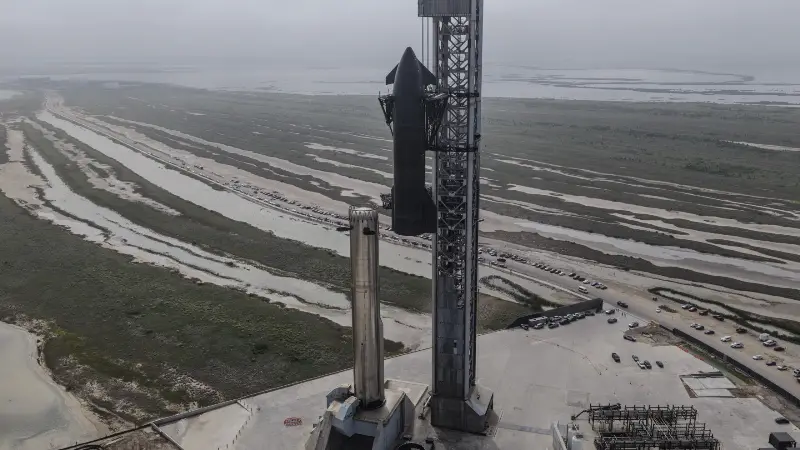
SpaceX's Starship Flight 12 has marked another breakthrough moment for space exploration, launching the most powerful and upgraded version of the Starship rocket to date. Stunning imagery from the test flight has captivated the world, offering a breathtaking front-row view of humanity's most ambitious deep-space vehicle in action.
A Rocket Like No Other Lifts Off
SpaceX successfully launched Starship Flight 12 from its Starbase facility in Boca Chica, Texas, continuing the programme's rapid development cadence. The flight featured the latest iteration of the full stack the Super Heavy booster paired with the Starship upper stage making it the most powerful rocket ever flown at the time of launch. Each successive Starship test has pushed the boundaries of reusability and payload capacity, reinforcing SpaceX's long-term vision of Mars colonisation and point-to-point Earth travel.
What Made Flight 12 Stand Apart
Flight 12 carried significant upgrades over its predecessors, including improvements to the Raptor engine configuration, heat shield tiles and propellant management systems. SpaceX's engineering team had incorporated lessons from Flights 7 through 11 to make this iteration more robust and flight-ready. The sheer scale of the rocket standing at approximately 123 metres tall continues to make every launch a jaw-dropping visual event for spectators and photographers worldwide.
The Imagery That Stopped The Internet
The photography emerging from Flight 12 captured the raw power of 33 Raptor engines igniting simultaneously during liftoff, painting the South Texas sky in a dramatic cascade of fire, light and exhaust plumes. Long-exposure shots and high-frame-rate cameras positioned across the launch site documented the booster's ascent in remarkable detail. The images quickly circulated across social media and space communities, drawing comparisons to the most iconic rocket launch photographs in NASA history.
The Road Ahead For Starship
With Flight 12 in the books, SpaceX is edging closer to achieving full and rapid reusability the cornerstone of its economics for future Mars missions. NASA is also closely tracking Starship's progress, given the rocket's designated role as the Human Landing System for the Artemis lunar programme. Each successful test brings both commercial spaceflight and interplanetary travel meaningfully closer to reality.
Key Highlights
- SpaceX launched Starship Flight 12 from Starbase, Boca Chica, Texas, marking the most advanced test flight in the programme's history
- The full stack comprising Super Heavy booster and Starship upper stage stands approximately 123 metres tall, the largest rocket ever built
- Flight 12 incorporated significant upgrades to Raptor engines, heat shield tiles and propellant systems based on prior flight data
- 33 Raptor engines firing simultaneously at liftoff produced extraordinary visual and photographic moments captured worldwide
- Stunning launch photography went viral across space and technology communities globally
- SpaceX continues to advance rapid reusability, a critical economic pillar for future Mars and lunar missions
- Starship is designated as NASA's Human Landing System under the Artemis programme for crewed Moon landings
- Flight 12 builds on lessons from Flights 7 to 11, demonstrating a steep and accelerating development trajectory
Sources: SpaceX | Space.com | NASA | The Verge | Reuters