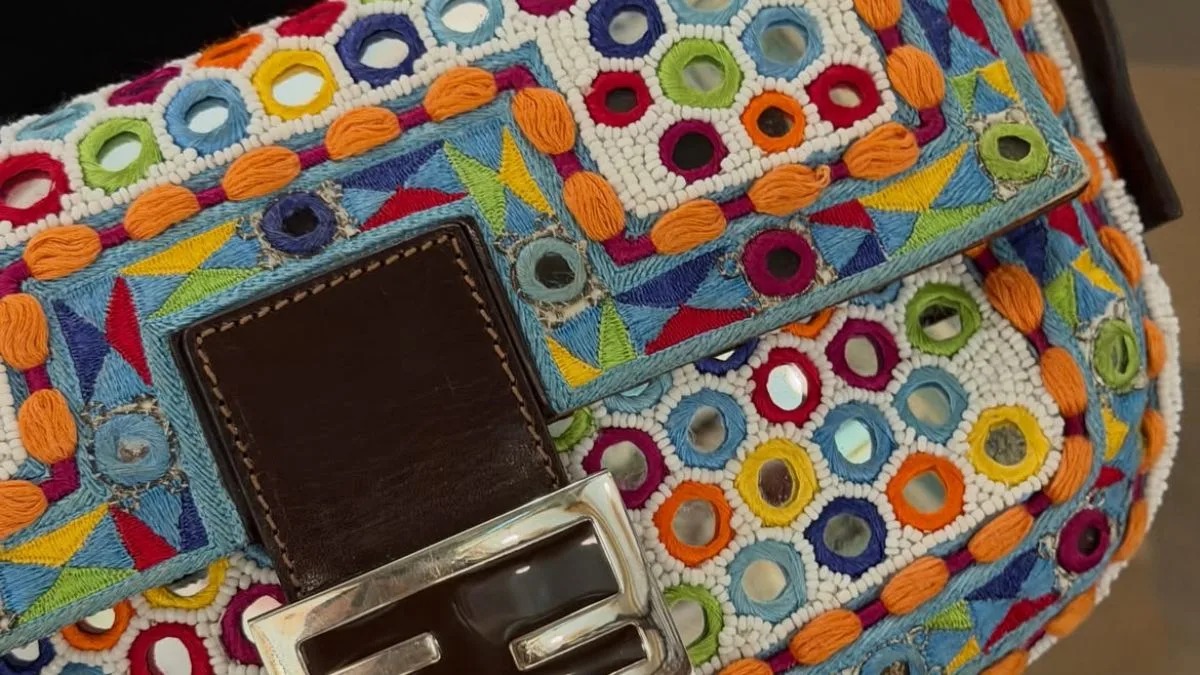
Fendi’s new embroidered Baguette bag has sparked an online debate over cultural representation and artisan credit. While social media users pointed out its striking resemblance to traditional Indian mirror work, investigations reveal the luxury piece was crafted in collaboration with Mumbai's renowned Chanakya atelier.
Fendi’s latest luxury baguette featuring intricate mirror work and vibrant embroidery has ignited an intense online debate regarding cultural representation and artisan attribution.
In New Delhi and Mumbai, viral social media discussions erupted over Italian luxury fashion house Fendi’s newly released "Baguette 26424" re-edition bag, which bears a striking resemblance to traditional Gujarati mirror-work aesthetics typically associated with Navratri celebrations. Priced at approximately 9.5 lakh rupees ($10,000), the heavily beaded accessory quickly drew widespread scrutiny because its official online product listing lacked explicit reference to its Indian design roots or manufacturing origins. The controversy highlights a recurring tension in global high fashion regarding the visibility of South Asian craftsmanship on international retail platforms.
Unpacking the Mumbai Atelier Connection and Artisan Labor
According to fashion industry analysts and background statements highlighted by platform commentators like Diet Paratha, the design is a remake of a vintage Fendi piece originally produced in 1995. Both the historical and contemporary versions were crafted by master artisans at Mumbai’s renowned Chanakya School of Craft, a premier embroidery and textile house that collaborates extensively with global luxury brands.
While social media users criticized the brand for cultural omission, fashion historians note that creative directors have increasingly partnered directly with Indian craft guilds to execute complex textile works. Official posts shared by Fendi on digital channels have occasionally spotlighted the intricate hand-embellished details involving thousands of mirrors and beads, though critics argue that direct attribution on commercial product description pages remains insufficient.
"According to organizers and artisan representatives, the creation of these high-end textile pieces involves hundreds of hours of intricate hand-embroidery executed by specialized craftspeople in Mumbai."
Why It Matters
For consumers and design purists, transparent labeling is vital to honoring the cultural heritage embedded in traditional motifs. For Indian artisans and domestic export houses, direct credit on global retail platforms ensures fair recognition, validation, and empowerment within the multi-billion-dollar luxury fashion ecosystem.
Key Facts at a Glance
Product Item: Fendi Baguette 26424 (Multicolor Re-Edition with embroidery and mirrors).
Craftsmanship Origin: Executed in collaboration with Mumbai-based artisan house Chanakya.
Retail Price Point: Approximately 9.5 lakh rupees ($10,000).
Design Background: Re-edition of a classic 1995 archive piece featuring mirror-work and bead embroidery.
Frequently Asked Questions
Why did Fendi's new Baguette bag spark controversy in India?
Social media users noted that its vibrant mirror work closely resembles traditional festive attire like Navratri wear, yet the official product listing omitted references to India or local artisan roots.
Who actually manufactured the embroidered Fendi bag?
The bags are hand-embroidered by skilled craftspeople at Chanakya, a prominent Mumbai-based atelier with a long-standing partnership with international luxury houses.
Is this a new design or a reissue?
The piece is a modern re-edition of a vintage Fendi Baguette design originally introduced in 1995.
How can global brands improve cultural transparency?
Fashion houses can explicitly credit partner ateliers and regional craft origins directly on e-commerce product pages to ensure proper attribution.
Source: Fendi Official Portal, Chanakya Atelier, India Today Fashion Desk