India is expanding its global cultural footprint through heritage diplomacy, with the recent inauguration of a conservation project at Indonesia's Prambanan Temple. Led by the Archaeological Survey of India, the mission builds on over a decade of restoration work in countries like Cambodia, Vietnam, and Nepal, strengthening regional civilizational bonds.
Prime Minister Modi’s latest initiative at the Prambanan Temple highlights India’s expanding role in preserving shared history across Asia.
YOGYAKARTA — In a move that underscores India’s growing influence in international cultural diplomacy, Prime Minister Narendra Modi and Indonesian President Prabowo Subianto officially inaugurated a major restoration project at the UNESCO World Heritage-listed Prambanan Temple complex on Wednesday, July 8, 2026. The launch of this joint conservation mission, spearheaded by the Archaeological Survey of India (ASI), marks a significant milestone in India’s long-standing commitment to reviving shared civilizational heritage beyond its own borders.
For nearly 12 years, India has utilized its technical expertise in material conservation and historical research to safeguard iconic landmarks across Asia. From the sprawling temple complexes of Southeast Asia to the historic sites of the Middle East and South Asia, these efforts serve as a cornerstone of New Delhi’s "civilizational diplomacy," fostering regional goodwill while ensuring the survival of ancient architectural legacies.
Expanding the Archaeological Footprint
The Prambanan project is the latest in a series of international heritage interventions. According to official reports, the restoration will focus on the "Perwara" temples—smaller structures surrounding the main site—using advanced technologies including LiDAR scanning, photogrammetry, and artificial intelligence-based structural analysis.
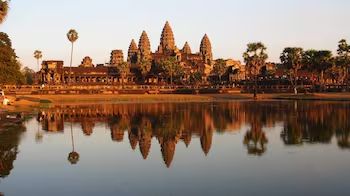
"India’s participation in the Prambanan Temple complex conservation reflects its enduring commitment to preserving shared civilizational heritage," stated officials from the Ministry of External Affairs. This effort mirrors past successful collaborations, such as the restoration of the My Son Sanctuary in Vietnam, key sections of the Angkor heritage complex in Cambodia, and the Ananda Temple in Myanmar.
A Strategy of Civilizational Ties
Since 2014, India has systematically expanded its heritage restoration portfolio, providing financial grants and expert technical support to numerous nations. The strategy is built on the vision of "Vikas Bhi, Virasat Bhi" (Development as well as Heritage), extending the domestic focus on national monuments to a global stage.
Other notable contributions include:
Nepal: The reconstruction and conservation of 28 post-earthquake cultural heritage sites, including the Seto Machhindranath Temple.
Sri Lanka: Grant assistance for the restoration of the historic Thiruketheeswaram Temple.
Bahrain: The $4.2 million redevelopment of the 200-year-old Shreenathji Temple in Manama.
Bangladesh: Financing the reconstruction of the Joy Kali Mata Temple and various other historic sites of spiritual significance.
Impact on Regional Cooperation
These conservation efforts go beyond the physical repair of stone and mortar. By serving as the lead technical agency, the ASI facilitates cross-border knowledge exchanges, capacity-building workshops, and archaeological research that strengthens historical ties between India and its neighbors.
"The conservation programme not only preserves history but serves as a model for subsequent restoration phases through the application of new-age technologies," noted an official representative involved in the project. For the host nations, the partnership provides access to world-class technical skills, while for India, it reinforces its role as a steward of a shared, deep-rooted regional history.
Why It Matters
This mission is vital as it bridges the gap between modern diplomatic engagement and ancient historical connections. By investing in the restoration of sites in Vietnam, Laos, Indonesia, and beyond, India is ensuring that its architectural and spiritual legacy—which influenced much of Southeast Asia—remains accessible to future generations. These projects effectively promote tourism, foster academic collaboration, and reaffirm shared identities in an increasingly connected Indo-Pacific region.
Key Facts at a Glance
New Project: Joint India-Indonesia conservation mission for the 9th-century Prambanan Temple.
Technical Lead: The Archaeological Survey of India (ASI) is the primary technical partner.
Scope: Restoration includes LiDAR-based digital mapping and AI-assisted reconstruction.
Diplomatic Reach: Since 2014, India has completed or initiated restoration projects in nine Asian countries.
Objective: Preserving ancient "Sanatan" architectural legacy while deepening bilateral strategic partnerships.
FAQ
What is the goal of India’s international heritage conservation?
The goal is to preserve shared civilizational heritage, provide technical expertise to partner nations, and strengthen historical and cultural ties through "civilizational diplomacy."
Which countries have benefited from India’s heritage expertise?
India has worked on heritage sites in Cambodia, Vietnam, Myanmar, Nepal, Sri Lanka, Bangladesh, Bahrain, Laos, and Indonesia.
What kind of technology does the ASI bring to these projects?
The ASI utilizes advanced techniques such as LiDAR scanning, photogrammetry, hydrological and geotechnical studies, and AI for digital structural reconstruction.
Source: Ministry of External Affairs, Press Information Bureau, Vietnam Plus, Sarkaritel