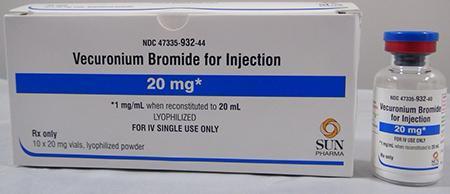
Sun Pharmaceutical Industries Ltd, one of India’s largest and most globally recognized pharmaceutical companies, has officially discontinued the manufacturing of Vecuronium Bromide Injection 20 mg. This neuromuscular blocking agent, widely used in surgical anesthesia and mechanical ventilat...
Sun Pharmaceutical Industries Ltd, one of India’s largest and most globally recognized pharmaceutical companies, has officially discontinued the manufacturing of Vecuronium Bromide Injection 20 mg. This neuromuscular blocking agent, widely used in surgical anesthesia and mechanical ventilation, will no longer be produced by the company, as confirmed by the U.S. Food and Drug Administration (FDA) and industry trackers.
The decision, announced on September 8, 2025, has stirred concern among healthcare providers who rely on this formulation for critical procedures. While Sun Pharma has not disclosed specific reasons for the discontinuation, the move is expected to impact procurement strategies and clinical protocols across hospitals and surgical centers.
Key Highlights of the Discontinuation
Sun Pharma has halted production of Vecuronium Bromide Injection 20 mg, a key anesthetic adjunct.
The FDA has acknowledged the discontinuation, updating its drug availability records accordingly.
No replacement product or alternative formulation from Sun Pharma has been announced.
Healthcare providers may need to source the drug from other manufacturers or switch to alternative neuromuscular blocking agents.
Clinical Relevance of Vecuronium Bromide
Role in Anesthesia Vecuronium Bromide is an intermediate-acting non-depolarizing neuromuscular blocker. It is primarily used to facilitate endotracheal intubation and provide skeletal muscle relaxation during surgery or mechanical ventilation.
Dosage and Administration The 20 mg vial format is preferred in high-volume surgical settings due to its efficiency and dosing flexibility. It is administered intravenously and requires reconstitution prior to use.
Safety and Monitoring The drug must be administered under the supervision of experienced clinicians, with continuous monitoring of neuromuscular function and respiratory status.
Implications for Healthcare Providers
Hospitals and anesthesiologists who routinely use Sun Pharma’s 20 mg vials will need to adjust inventory and sourcing strategies.
Alternative suppliers such as Mylan Institutional, Hikma, and Sagent continue to offer Vecuronium Bromide in various strengths, though supply disruptions have been reported across the board.
Clinicians must exercise caution when switching between vial sizes to avoid dosing errors, especially in time-sensitive surgical environments.
Industry Context and Strategic Considerations
Pharmaceutical companies routinely reassess their product portfolios to align with profitability, regulatory compliance, and market demand.
Sun Pharma’s decision may reflect a strategic pivot toward higher-margin or more innovative therapies.
The company has not indicated whether the discontinuation is linked to manufacturing challenges, regulatory issues, or commercial performance.
Historical Precedents and Market Trends
Sun Pharma previously issued a voluntary recall of Vecuronium Bromide Injection due to particulate contamination concerns in 2019.
Other manufacturers, including Pfizer and Teva, have also exited the Vecuronium market in recent years, citing supply chain and demand fluctuations.
The broader neuromuscular blocker category has seen increased demand, particularly in critical care settings during pandemic surges, contributing to periodic shortages.
Conclusion
The discontinuation of Vecuronium Bromide Injection 20 mg by Sun Pharma marks a significant shift in the availability of a key anesthetic agent. While the company has not provided a detailed rationale, the move underscores the dynamic nature of pharmaceutical manufacturing and its ripple effects on clinical practice. Healthcare institutions must now recalibrate their sourcing and dosing protocols to ensure uninterrupted patient care. As the industry adapts, vigilance and flexibility will be essential in maintaining procedural safety and therapeutic efficacy.
Sources: ScanX News, ASHP Drug Shortage Database, FDA Recall Archive