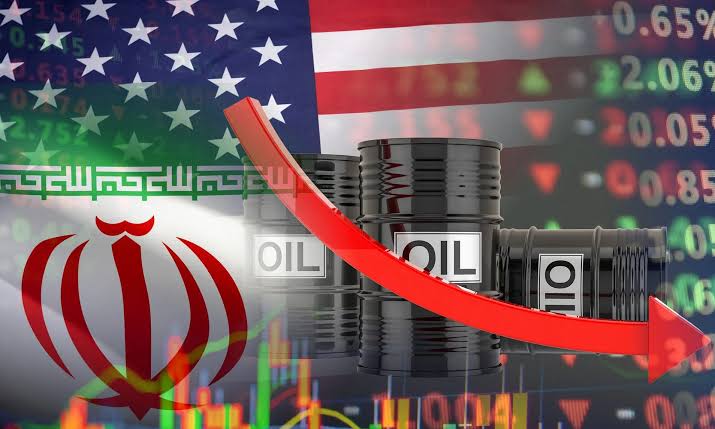
Global oil futures extended their losses as WTI and Brent crude prices plummeted by 5% to hit a three-month low. The sell-off follows a breakthrough preliminary peace deal between the U.S. and Iran, which is expected to reopen the vital, blockaded Strait of Hormuz to international shipping.
LONDON, United Kingdom — Global oil futures extended their sharp downward trajectory on Tuesday, with benchmark crude prices skidding by roughly 5% to tap their lowest levels in more than three months. The sweeping sell-off comes as energy markets rapidly unwind their geopolitical risk premiums in response to a surprise preliminary peace pact between the United States and Iran. The tentative accord aims to halt over 100 days of intense West Asian hostilities and lift the restrictive naval blockades currently choking the critical Strait of Hormuz maritime corridor.
With an official memorandum of understanding scheduled for formal signing this Friday, global energy traders are aggressively pricing in a massive return of pent-up Persian Gulf supply.
Crude Benchmarks Tumble on Supply Restoration Projections
The market’s reaction to the diplomatic breakthrough triggered immediate, successive drops across both major international crude benchmarks:
West Texas Intermediate (WTI): U.S. crude futures tumbled 5.49% to hover near $80.27 per barrel, extending an aggressive four-session losing streak.
Brent Crude: Global benchmark Brent futures shed 4.92%, sliding down to $83.03 a barrel, marking its lowest trading valuation since March 4.
According to financial exchange desks monitoring the automated sell-offs, the cascading declines follow a weekend announcement from U.S. President Donald Trump via social media. The administration claimed that "the deal with the Islamic Republic of Iran is now complete," signaling a toll-free opening of the Strait of Hormuz and a corresponding rollback of U.S. naval blockades.
De-escalating the History’s Greatest Energy Supply Crisis
The hostilities, which escalated into open conflict on February 28 following a collapsed diplomatic ultimatum regarding Iran’s nuclear arsenal, had previously forced the near-total closure of the Strait of Hormuz. Historically, the narrow waterway served as the transit artery for approximately 20% of the world's daily petroleum and liquefied natural gas (LNG) supplies, making its sudden closure the largest single energy supply shock on record.
While the preliminary agreement extends an immediate 60-day ceasefire to allow negotiators to thrash out structural terms regarding Iran's nuclear enrichment programs, shipping logistics firms remain highly cautious. Intelligence reports released by the U.S. Department of State previously indicated that extensive segments of the strait were heavily mined during the conflict.
Maritime security analysts at Morgan Stanley warned in a client memo that scouring the strait for naval mines could delay normal commercial tanker traffic by weeks. The bank projects that only 50% of the regional oil export capacity will be safely restored by September, with a scale-up to 80% by December.
Official Sources Section
The underlying parameters of the peace framework and the corresponding macro-energy assessments have been sourced directly via official statements released by the United States White House and public transcripts published by the Iranian Ministry of Foreign Affairs. Comprehensive commodity market data has been cataloged using transactional tracking systems maintained by Reuters Financial and the Intercontinental Exchange (ICE).
Quote Section
"According to officials and diplomatic briefs dispatched from the mediation desks in Pakistan, the United States and Iran are expected to formally execute the interim peace memorandum in Geneva, Switzerland, on Friday, June 19, 2026."
Commenting on the initial progress, Iranian President Masoud Pezeshkian cautiously stated:
"The U.S.-Iran pact is an important step toward stopping the fighting, but a final agreement for a lasting truce has yet to take shape."
Why It Matters
For global consumers and motorists, the sharp correction in crude futures promises near-term relief from inflationary retail fuel and energy bills that have plagued international economies since March. For multinational businesses, shipping conglomerates, and industrial manufacturers, the opening of the blockaded Persian Gulf removes a severe supply-chain bottleneck. However, for institutional investors, the lack of immediate fine print regarding compliance verification means oil prices will likely remain highly volatile until tankers safely traverse the waterway.
Key Facts at a Glance
Price Movement: Both WTI and Brent crude futures plunged by roughly 5% to reach their lowest levels since early March.
Geopolitical Catalyst: A preliminary U.S.-Iran peace breakthrough brokered to end the Middle East conflict and lift naval blockades.
Logistical Chokepoint: The Strait of Hormuz, responsible for transiting nearly 20% of global crude, will reopen toll-free.
Signing Venue: The formal memorandum of understanding (MOU) is slated to be signed in Geneva, Switzerland, on June 19, 2026.
Clearing Hurdles: Military and maritime experts estimate that clearing defensive mines from the strait will take several weeks before normal shipping fully resumes.
FAQ Section
Q1: Why did crude oil prices suddenly drop by 5%?
A1: Prices dropped because the U.S. and Iran reached an unexpected preliminary peace agreement, raising hopes that the blockaded Strait of Hormuz will reopen and restore major global oil supplies.
Q2: How long will it take for oil to flow normally through the Strait of Hormuz?
A2: While the deal dictates an immediate opening, maritime security experts state it will take weeks to safely clear defensive naval mines from the water before shipping companies resume full-scale operations.
Q3: What are the current prices for Brent and WTI crude?
A3: Following the extended losses, Brent crude dropped to approximately $83.03 per barrel, while U.S. West Texas Intermediate (WTI) fell to around $80.27 per barrel.
Source: Official Diplomatic Postings: The White House Executive Office, Intercontinental Exchange (ICE) Oil Futures Market., Reuters Aviation & Commodities Desk.