Canadian Prime Minister Mark Carney and Indian Prime Minister Narendra Modi met at the G7 Summit in France, reaffirming their commitment to conclude a Comprehensive Economic Partnership Agreement (CEPA) in 2026. The leaders expressed satisfaction with trade progress and agreed to initiate talks on a General Security of Information Agreement.
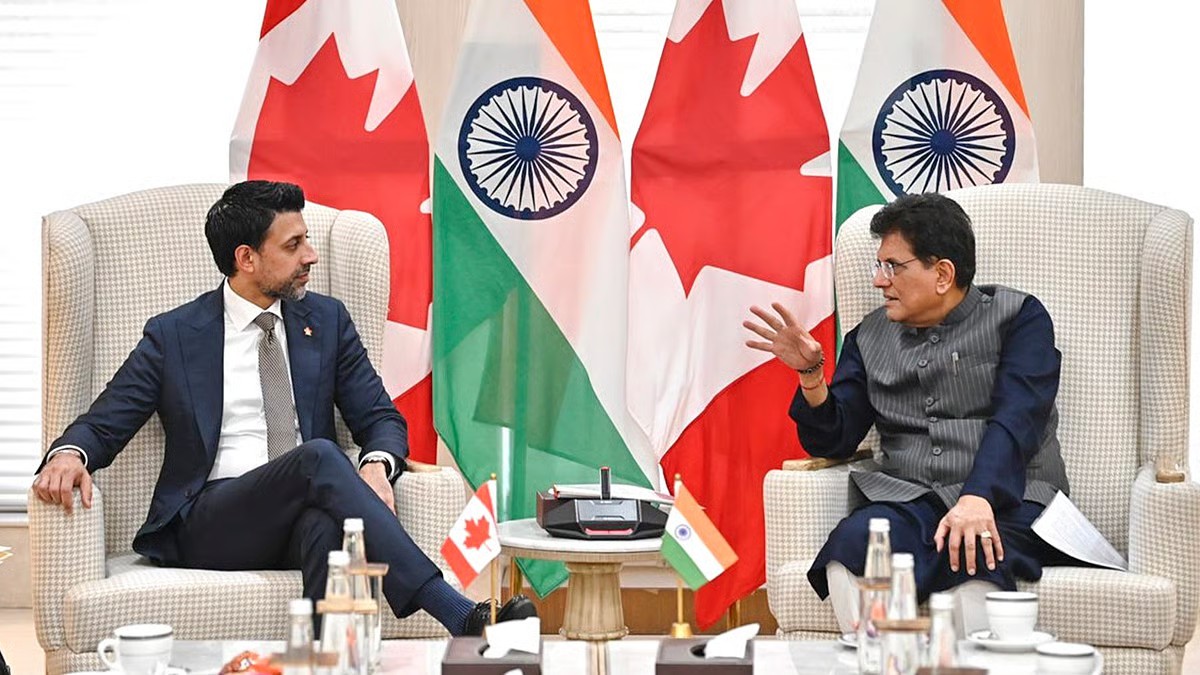
ÉVIAN-LES-BAINS, France — Canadian Prime Minister Mark Carney and Indian Prime Minister Narendra Modi officially reaffirmed their shared objective of concluding negotiations for a Comprehensive Economic Partnership Agreement (CEPA) by the end of 2026. The strategic milestone was finalized during a high-level bilateral meeting on the sidelines of the G7 Leaders' Summit in Évian-les-Bains. Moving beyond recent diplomatic friction, both heads of government reviewed the broader spectrum of bilateral economic cooperation, signaling a mutual determination to secure a sweeping free trade framework within the calendar year.
Leaders Express Satisfaction with Trade Progress
According to an official statement released by the Government of Canada, Prime Minister Carney and Prime Minister Modi expressed strong satisfaction with the tangible progress achieved during ongoing ministerial-level rounds. The proposed trade pact aims to substantially lower tariff barriers, streamline complex supply chains, and unlock cross-border investments across critical commercial fields, including clean energy, educational services, and agricultural technology.
Trade data indicates that a formalized agreement could significantly enhance economic resilience for both nations amid volatile shifts in global market dynamics. Corporate entities and consumer sectors in both jurisdictions stand to benefit from more secure, predictable supply corridors.
New Intelligence Pact Launched to Bolster Security
In a major expansion of the bilateral roadmap, the two leaders agreed to launch formal negotiations on a General Security of Information Agreement. This upcoming regulatory framework is designed to create secure administrative pipelines for exchanging classified defense, corporate, and technological intelligence between Ottawa and New Delhi.
The security initiative builds directly on momentum established earlier this year during Prime Minister Carney’s official bilateral state visit to India in March 2026. Geopolitical analysts note that the intelligence framework acts as a foundational counterweight to protect expanding industrial networks, particularly within critical minerals tracking and high-end tech manufacturing.
Context and Economic Background
The acceleration of trade talks marks a notable diplomatic pivot. Bilateral dialogue had previously cooled over domestic sovereignty concerns and localized political tensions. However, economic realities have driven both middle powers back to the negotiating table.
According to metrics from the Ministry of External Affairs (MEA), India-Canada bilateral merchandise trade exceeded $8 billion annually, supplemented by tens of billions in institutional investment from Canadian pension funds into Indian infrastructure.
The renewed framework falls under a shared vision of economic diversification. Canada is actively positioning itself as a major, reliable global supplier of Liquified Natural Gas (LNG) and heavy oil to South Asia, while India seeks specialized investments to scale its domestic semiconductor and advanced manufacturing ecosystems.
Official Sources Section
The details compiled in this report conform strictly to official diplomatic readouts published by the Office of the Prime Minister of Canada, statutory foreign policy briefings compiled by the Ministry of External Affairs of India, and joint bilateral declarations reviewed at the G7 Summit in France.
Quote Section
"Today, Prime Minister Mark Carney met with the Prime Minister of India, Narendra Modi, on the sidelines of the G7 Summit in Évian, France. The two Prime Ministers welcomed the positive momentum in India–Canada relations and noted with satisfaction the progress achieved... The leaders reaffirmed their shared objective of concluding CEPA negotiations in 2026 and agreed to launch negotiations on a General Security of Information Agreement."
— Official Statement, Government of Canada Readout
Why It Matters
For international investors and multinational corporations, a concluded CEPA will substantially mitigate regulatory risks, slash import duties on heavy machinery, and establish clear corporate arbitration rules. For consumers and domestic workforces, the agreement stabilizes food security pipelines through reliable pulse imports to India, while opening wider legal pathways for skilled tech labor exchange.
Key Facts at a Glance
Timeline: Formal commitment to finalize the bilateral CEPA negotiations before the end of 2026.
Defense Integration: Initiation of structural talks to institute a General Security of Information Agreement.
Geopolitical Forum: Negotiations solidified during a face-to-face meeting at the G7 Summit in Évian-les-Bains, France.
Strategic Scope: Prioritizes supply chain integration across critical minerals, LNG delivery, and technology joint ventures.
FAQ Section
Q1: What exactly is a CEPA?
A1: A Comprehensive Economic Partnership Agreement (CEPA) is an overarching free trade agreement that goes beyond standard tariff reductions to cover services, investment protection, intellectual property rights, and regulatory synchronization.
Q2: Why is the General Security of Information Agreement important?
A2: This agreement provides the legal and security architecture necessary for the two governments to share high-level intelligence and sensitive data without risk of exposure, facilitating deeper cooperation in defense manufacturing and sensitive technological development.
Q3: How does this impact regular businesses?
A3: It simplifies customs procedures, stabilizes corporate tax expectations, and lowers cross-border compliance costs, making it significantly easier for Canadian firms to expand into the Indian market and vice versa.
Source: Office of the Prime Minister of Canada, Ministry of External Affairs of India.