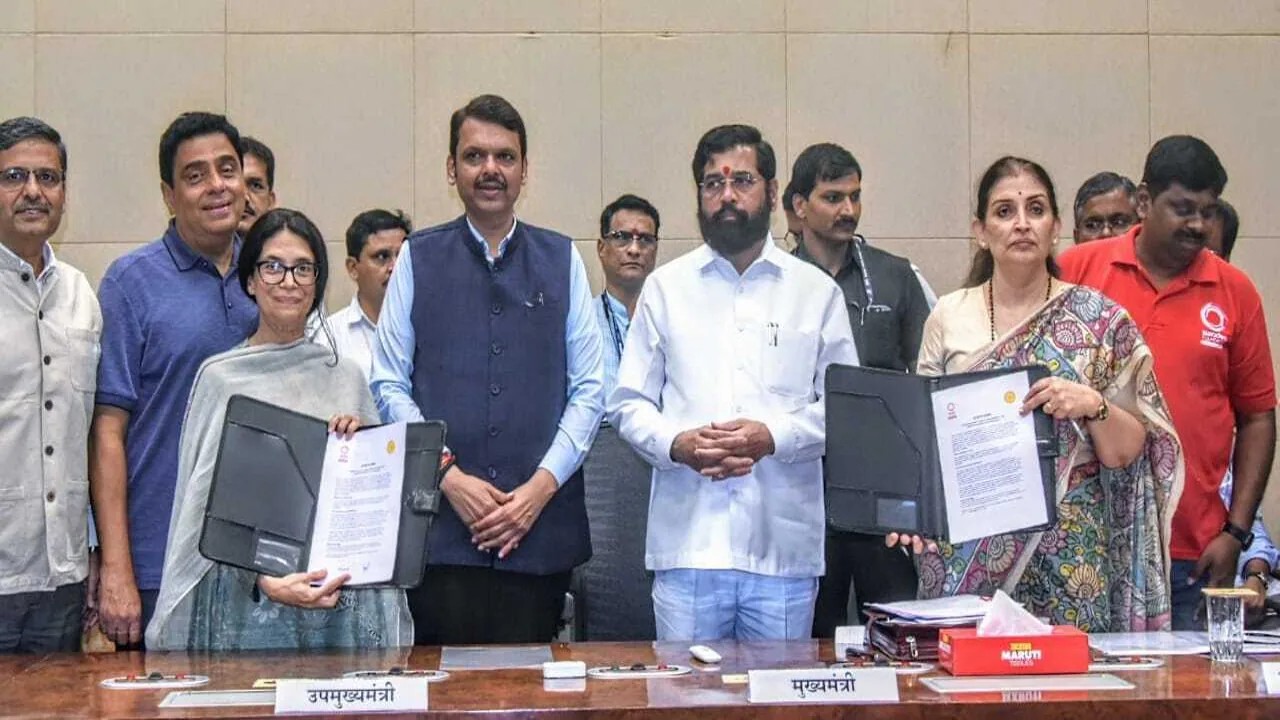
The Government of Maharashtra has enacted its New Technology Policy, a strategic framework targeting Rs 25,000 crore in private investments and 100,000 new technology jobs. The policy introduces stamp duty waivers, power subsidies, and spatial incentives to establish advanced AI, SaaS, and green data centers across secondary urban corridors.
MUMBAI, India — In a major move to solidify its position as India's premier digital economy hub, the State Government of Maharashtra has officially operationalized its comprehensive New Technology Policy. The newly implemented framework aims to secure Rs 25,000 crore in private sector investments and generate 100,000 high-value technology jobs over the next five years. Announced by the state administration, this strategic blueprint transitions Maharashtra from traditional computing paradigms toward specialized ecosystems, focusing heavily on Artificial Intelligence (AI), SaaS (Software as a Service), deep tech, and green data infrastructure.
Strategic Focus on Advanced Deep Tech and Ecosystem Building
According to detailed statutory guidelines released by the State IT Department, the New Technology Policy introduces custom financial and regulatory architectures designed to reduce operational friction for global enterprises and localized startups alike. The plan formally expands specialized financial incentives to business entities that align with advanced national initiatives, such as the central Ministry of Electronics and Information Technology (MeitY) frameworks.
Unlike previous development programs that focused primarily on traditional software export corridors in Pune and Mumbai, this revised industrial layout prioritizes geographical dispersion. State planners are establishing specialized tech zones in Tier-2 and Tier-3 cities—including Nagpur, Nashik, and Aurangabad—to decentralize the workforce and ease the urban density pressures impacting the state capital.
Financial Incentives and Eased Operational Norms
To attract institutional investors and venture capitalists, the policy leverages a complex matrix of fiscal relief tools. Official corporate documentation outlines the following operational adjustments:
Stamp Duty Exemptions: Up to 100% relief on stamp duty charges for land acquisition related to data centers, cloud infrastructure, and deep-tech innovation laboratories.
Electricity Duty Waivers: Power cost subsidies tailored specifically for massive server farms and advanced high-performance computing centers that utilize energy-efficient grids.
Capital Subsidies for MSMEs: Targeted micro, small, and medium enterprises can claim partial reimbursement on technological upgrades, heavily mirroring central assistance parameters established by the
Department for Promotion of Industry and Internal Trade (DPIIT).
Furthermore, the state has relaxed zoning laws, granting higher Floor Space Index (FSI) privileges to technology parks that incorporate green building designs and local employment guarantees.
Official Sources Section
The program updates and implementation schedules mentioned in this article are derived directly from the official gazette notifications published by the Directorate of Industries, Government of Maharashtra, along with collaborative policy briefs compiled alongside the NITI Aayog regional expansion initiatives for fiscal periods leading into 2026.
Executive Outlook
"According to officials from the state industry department, this policy framework acts as a foundational roadmap to scale our digital economy. The objective isn't merely about expanding real estate for tech companies; it is explicitly structured to cultivate local talent, integrate advanced AI modules across our industrial corridors, and position Maharashtra as a prime destination for institutional venture capital in South Asia."
Why It Matters
For global technology firms and real estate developers, this policy lowers the cost barrier to entering one of India's largest state domestic products. For the domestic workforce, it guarantees structural transitions through state-subsidized upskilling portals. Investors benefit from a highly predictable regulatory landscape, allowing long-term asset deployment into logistics, fiber networks, and hyperscale data storage facilities across the region.
Key Facts at a Glance
Total Investment Target: Rs 25,000 crore in verified institutional and private corporate capital.
Employment Creation: 100,000 certified tech positions spanning software engineering, data analytics, and AI modeling.
Regional Footprint: Strategic diversification out of Mumbai into nascent hubs like Nashik, Nagpur, and Chhatrapati Sambhajinagar (Aurangabad).
Sustainability Focus: Dedicated fiscal rewards for zero-emission cloud facilities and clean-energy compliance.
Frequently Asked Questions
Which specific sectors gain the most from Maharashtra's New Tech Policy?
The blueprint prioritizes businesses operating in deep tech, Artificial Intelligence, Software-as-a-Service (SaaS), quantum computing simulations, and clean-energy data infrastructure.
How does this policy help small-scale technology startups?
Startups recognized under the central DPIIT framework receive access to state-level seed funding portals, relaxed procurement compliance rules for government tenders, and substantial relief on initial leasehold costs within state-backed technology parks.
What is the primary geographic focus of the new job creation?
While Mumbai and Pune continue to act as foundational anchors, the state is deploying targeted infrastructure spending to ensure that a major portion of the 100,000 jobs develops in emerging Tier-2 hubs across the state.
Source: Government of Maharashtra Directorate of Industries, Ministry of Electronics and Information Technology (MeitY), Department for Promotion of Industry and Internal Trade.