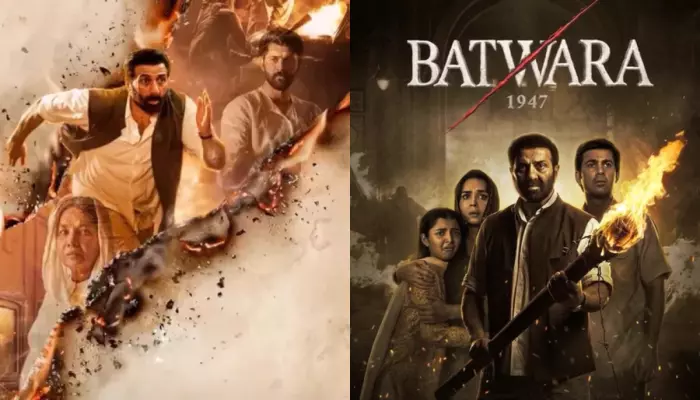
The upcoming historical drama Batwara 1947, starring Sunny Deol and directed by Rajkumar Santoshi, is a direct adaptation of Asghar Wajahat’s acclaimed play Jis Lahore Nai Vekhya, O Jamya E Nai. Produced by Aamir Khan, the film focuses on human courage during the Partition and releases on August 14, 2026.
MUMBAI — Bollywood action icon Sunny Deol is set to headline a highly anticipated historical drama that draws its narrative essence directly from celebrated Indian literature. According to formal production updates and a newly unveiled teaser released by Aamir Khan Productions on Thursday, June 18, 2026, the upcoming period feature Batwara 1947 is officially adapted from noted playwright Asghar Wajahat's landmark stage play, Jis Lahore Nai Vekhya, O Jamya E Nai. Directed by National Award-winning filmmaker Rajkumar Santoshi, the cinematic adaptation marks a deliberate pivot away from traditional, stylized action to deliver an emotionally driven human narrative set against the chaotic backdrop of the 1947 subcontinental division.
From Lahore 1947 to Batwara 1947: Navigating Geopolitical Context
The project's journey to its upcoming theatrical rollout involved significant creative evolution and strategic title changes. The movie was originally announced and shot under the working title Lahore 1947. However, in early June 2026, the creative team opted to formally rename the film Batwara 1947.
Production disclosures indicate the adjustment was implemented to bypass potential geopolitical sensitivities and smooth over cross-border political overtones amidst ongoing, strained regional relations between India and Pakistan.
By centering the definitive term "Batwara" (Partition), the narrative places its core focus squarely on the collective displacement and emotional upheaval shared by families on both sides of the newly drawn borders. The source material's title, Jis Lahore Nai Vekhya, O Jamya E Nai, translates from a traditional Punjabi adage meaning, "He who has not experienced Lahore has not truly been born." The play explores deep-seated themes of shared cultural heritage, identity, and personal belonging, tracing how regular citizens fiercely safeguarded their mutual humanity even as external societal forces succumbed to intense communal friction.
High-Profile Creative Collaborations Reunited After Decades
Batwara 1947 functions as a historic intersection for several of Indian cinema’s most prominent stalwarts, breaking decades of operational separation. The film reunites Sunny Deol with director Rajkumar Santoshi after a nearly 30-year hiatus. The duo previously defined 1990s Hindi cinema with an array of critical and commercial blockbusters, including Ghayal (1990), Damini (1993), and Ghatak (1996).
Furthermore, the project marks the first official professional collaboration between Sunny Deol and superstar Aamir Khan, who is serving as the primary producer under his corporate banner alongside co-producer Aparna Purohit.
The behind-the-scenes technical crew features a highly decorated lineup of industry veterans. The musical score is composed by Academy Award winner A. R. Rahman, featuring classical lyrics written by legendary poet Javed Akhtar. The visual language of the film was captured by National Award-winning cinematographer Santosh Sivan, while the auditory landscapes were mastered by Oscar-winning sound designer Resul Pookutty.
Detailed Plot Scope and Star-Studded Ensemble Cast
The screenplay, co-written by Rajkumar Santoshi and playwright Asghar Wajahat, focuses on individual human relationships rather than broad military maneuvers. Sunny Deol stars as Sikander Mirza, alongside Preity Zinta who plays his wife, Hamida Mirza. The broader narrative features veteran actress Shabana Azmi as "Mai," an elderly matriarch who refuses to abandon her ancestral home amidst the migration wave. The principal ensemble is rounded out by Ali Fazal as Nasir Kazmi, Abhimanyu Singh as the primary antagonist Yaqoob Pehalwan, and Karan Deol as Javed Mirza.
To recreate the authentic environments of 1940s undivided India, production designers erected extensive, historically accurate sets across Mumbai and Lucknow to replicate period-specific Lahori streets and traditional family havelis. Principal photography concluded in October 2025 after a massive, logistically demanding final shooting schedule across rural Punjab and Amritsar. This final leg featured an elaborate period-accurate train sequence depicting the chaotic trans-border migration waves using the vintage North Western State Railway network.
Official Sources Section
The casting lineups, production timelines, title adjustments, and literary source credits outlined in this news article were verified using official press statements, promotional packages, and teaser metadata distributed directly by Aamir Khan Productions and corporate media consultant Spice Media. Supplemental theatrical release parameters were cross-referenced with distribution schedules filed via PVR-Inox Pictures.
Quote Section
"When batwara drew lines between people, he chose courage over fear," the official statement from Aamir Khan Productions noted alongside the teaser launch. "The film is designed to present the story of a regular hero who stood tall against waves of hatred and violence to protect the core values of human empathy."
Why It Matters
The cinematic adaptation of Jis Lahore Nai Vekhya, O Jamya E Nai holds substantial practical implications for the Indian film industry, theater owners, and global cultural audiences. In an era where period films often lean heavily on digital visual effects and polarizing narratives, Batwara 1947 anchors itself in a highly respected, humane theatrical play that prioritizes reconciliation and emotional depth. For multi-national distributors and multiplex operators, the film serves as a premier tentpole release slated to drive substantial box-office traffic during the competitive Independence Day holiday weekend, signaling a resurgence of mature, performance-driven historical dramas.
Key Facts at a Glance
Literary Roots: The film is a direct adaptation of Asghar Wajahat's highly acclaimed partition-era stage play Jis Lahore Nai Vekhya, O Jamya E Nai.
Title Evolution: Originally publicized as Lahore 1947, the project was officially renamed Batwara 1947 to manage regional political sensitivities.
Historic Reunion: Marks the first creative collaboration between Sunny Deol and producer Aamir Khan, and reunites Deol with director Rajkumar Santoshi after 30 years.
Technical Pedigree: Features an elite creative crew including composer A. R. Rahman, lyricist Javed Akhtar, cinematographer Santosh Sivan, and sound designer Resul Pookutty.
Theatrical Schedule: The period drama is locked for a synchronized global theatrical release on August 14, 2026.
FAQ Section
Q: Why did the makers change the movie's title from Lahore 1947 to Batwara 1947? A: The production house updated the title to avoid potential political controversies and geopolitical friction surrounding the explicit mention of the city of Lahore, shifting the focus cleanly onto the universal human experiences of the Partition (Batwara).
Q: What is the primary plot of the original play by Asghar Wajahat? A: The original play tells the story of a Muslim family migrating from India to Lahore in 1947, who arrive at their newly allocated haveli only to discover an elderly Hindu matriarch (Mai) refusing to leave. It charts how they overcome initial hostility to form an unbreakable bond of mutual respect.
Q: When will Batwara 1947 be released in public theaters? A: The historical epic is officially scheduled to debut in cinemas worldwide on Friday, August 14, 2026, deliberately aligning with the national Independence Day holiday weekend.
Source: * Aamir Khan Productions Official Teaser Launch Dossier