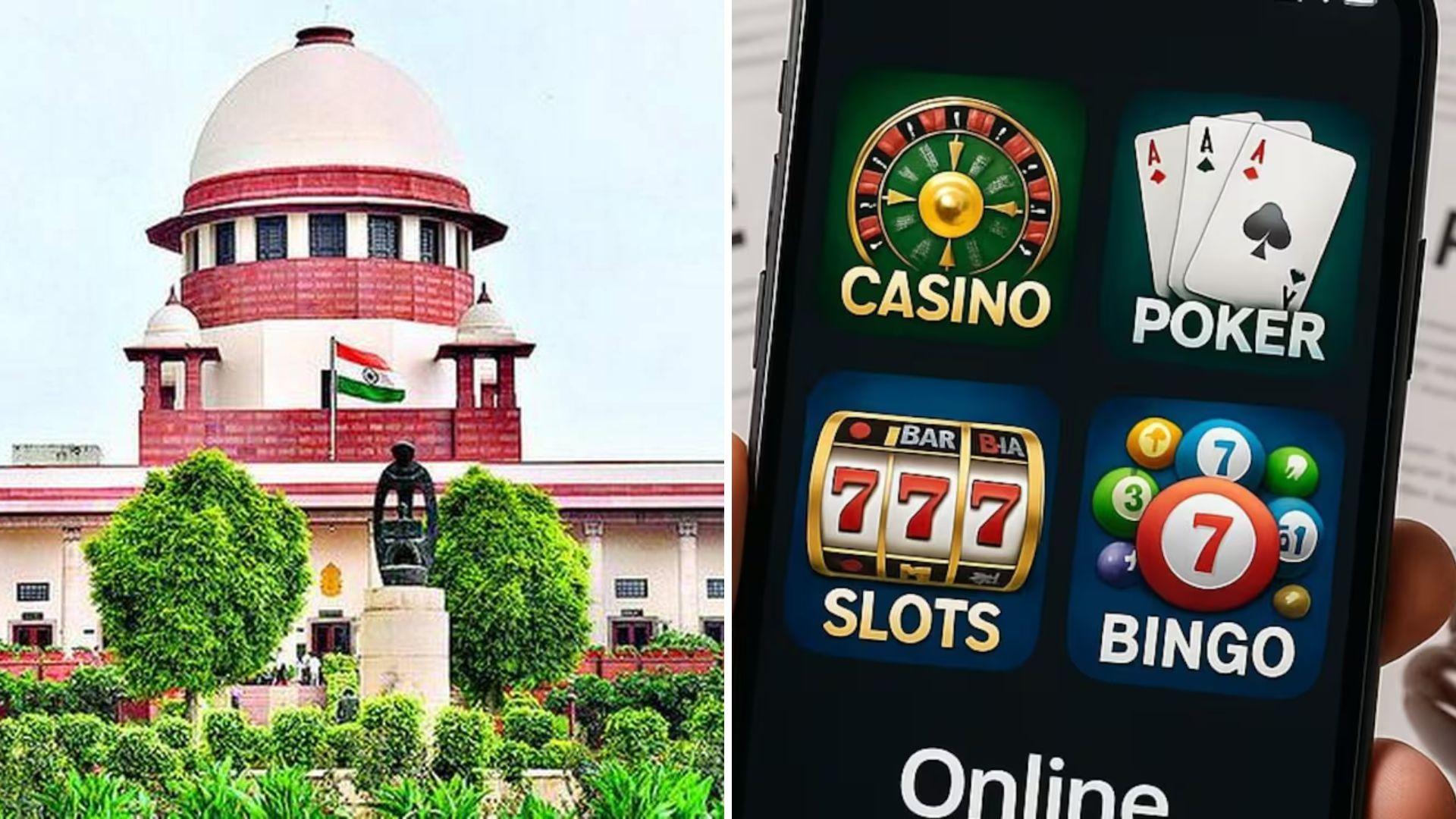
The Supreme Court of India upheld state laws banning real-money online gaming, declaring that staking money on any game constitutes betting regardless of the skill involved. Warning that smartphones have become "virtual gambling houses," the ruling allows states to ban platforms to protect public mental health and financial stability.
NEW DELHI — In one of its most consequential rulings for the digital economy, the Supreme Court of India has upheld the legislative competence of state governments to prohibit and restrict real-money online gaming. Delivering its judgment in the case State of Tamil Nadu & Ors. v. Junglee Games India Pvt. Ltd. & Ors., a division bench comprising Justices J.B. Pardiwala and R. Mahadevan set aside previous orders from the Madras and Karnataka High Courts that had protected skill-based games from state bans. The apex court warned that rapid technological advancements have effectively transformed every civilian smartphone into a "virtual common gambling house," presenting a severe threat to public mental health, financial stability, and societal tranquillity.
Redefining the Constitutional Boundaries of Betting
The legal battle centered around whether state governments could use their powers under Entry 34 of List II (State List) of the Seventh Schedule of the Constitution—which covers "Betting and Gambling"—to restrict games that require substantial skill, such as rummy, poker, and fantasy sports. The online gaming industry had long argued that skill-based platforms are protected commercial activities under Article 19(1)(g) of the Constitution and should not be legally categorized alongside pure games of chance.
The Supreme Court completely rejected this distinction when monetary stakes are involved. The bench ruled that interpreting the constitutional entry as "betting on gambling" was an aberration that misread the text. The apex court declared that the moment money is staked on an uncertain outcome, the activity legally constitutes betting and gambling, regardless of the underlying skill involved. Because wagering falls under the doctrine of res extra commercium (activities outside the domain of protected trade), operators cannot claim fundamental rights to shield themselves from state-level prohibitions.
Public Health and the "Virtual Gambling House" Threat
Beyond the constitutional technicalities, the Supreme Court’s judgment focused heavily on the adverse socio-economic and public health consequences of unregulated digital betting platforms. The bench noted that unlike physical casinos, online real-money gaming has a highly penetrative reach that disproportionately affects individuals from rural and lower-income groups.
| Impact Category | Documented Adverse Effects | Judicial Directive |
| Public Mental Health | Dopamine-driven rewards, escalating debts, severe depression | States bear a constitutional duty to protect citizens from behavioral addictions. |
| Socio-Economic Well-being | Compulsive behavior, financial ruin, rise in domestic suicides | Real-money platforms disturb public order and societal tranquillity. |
| Platform Fairness | Use of manipulative algorithms, automated bots, undisclosed agents | Traditional legal protections for "mere skill" cannot shield predatory digital mechanics. |
Invoking the right to mental health as an integral component of the right to life under Article 21, the court ruled that state legislatures are fully justified in implementing blanket bans to protect vulnerable populations, particularly young adults, from aggressive digital marketing campaigns that misrepresent real-money wagering as harmless entertainment.
Alignment with National Taxation and Regulatory Overhauls
The decision arrived alongside another major legal setback for the sector: the Supreme Court concurrently validated the constitutional legality of a 28 percent Goods and Services Tax (GST) levied on the full face value of online gaming bets. This tax ruling revives retroactive tax liabilities estimated at ₹2.5 lakh crore across fantasy sports and real-money applications.
Furthermore, the verdict strengthens the legal foundation for the central government's Promotion and Regulation of Online Gaming Act, 2025, which places severe restrictions on real-money gaming operations and financial channels. While the recently formed Online Gaming Authority of India (OGAI) is tasked with classifying and overseeing legitimate, non-monetary esports, the Supreme Court's endorsement of state bans leaves almost no legal room for platforms relying on real-money wagers to survive in restricted territories.
Official Sources Section
The constitutional interpretations, case citations (2026 INSC 594), and judicial observations detailed in this article are drawn directly from the official judgment records published by the Supreme Court of India. Statistical data concerning the ₹2.5 lakh crore tax enforcement notices and structural frameworks align with legislative updates from the Ministry of Finance and the regulatory protocols enforced by the Ministry of Electronics and Information Technology.
Quote Section
"According to officials from the Supreme Court registry, the extensive examination of public order doctrines confirms that the state's police power extends to regulating virtual environments that compromise public tranquillity."
"Organizers stated that the operational parameters enforced under the 2026 guidelines will cleanly separate competitive esports from any digital activities that involve the placing of financial stakes or wagers."
Why It Matters
The Supreme Court's ruling dramatically changes the landscape for digital businesses, consumers, and technology investors in India. For real-money gaming platforms and their backing investors, the combination of state-level bans and a 28 percent full-face-value tax creates massive financial hurdles that may force several companies to wind down their domestic operations. For everyday consumers and family units, the judgment gives clear legal backing to state governments trying to curb digital betting, paving the way for strict firewalls on bank accounts and digital wallets to block transactions tied to restricted real-money apps.
Key Facts at a Glance
State Authority Upheld: The Supreme Court restored the validity of strict gaming laws passed in Tamil Nadu and Karnataka, allowing individual states to ban real-money online platforms.
Skill Exception Rejected: The court held that staking money on any uncertain outcome constitutes betting, making the distinction between "skill" and "chance" irrelevant for real-money stakes.
Smartphone Warnings: The judiciary formally classified smartphones as "virtual common gambling houses" due to the constant, easy access they provide to real-money betting.
Tax Demands Revived: The judgment backed a 28 percent GST on the full face value of wagers, leaving the real-money gaming industry facing up to ₹2.5 lakh crore in retroactive tax notices.
Frequently Asked Questions
Does this Supreme Court ruling mean all online video games are banned in India?
No. The ruling applies strictly to real-money online gaming, where users stake money on uncertain outcomes. Non-monetary video games, casual apps, and recognized esports that do not involve financial betting remain unaffected and operate under standard regulatory rules.
Why did the Supreme Court reverse the previous High Court decisions?
The High Courts had ruled that states could not ban games like rummy or poker because they are traditionally seen as games of skill. The Supreme Court reversed this, explaining that when people bet money, the skill level does not matter—it legally counts as betting under the state's regulatory jurisdiction.
How will this judgment affect players using fantasy sports or rummy apps?
In states that have enacted bans or choose to pass new restrictions, users will find themselves legally blocked from participating. Furthermore, banking institutions are prohibited from processing financial transactions or deposits for real-money gaming platforms in those areas.
Sources: