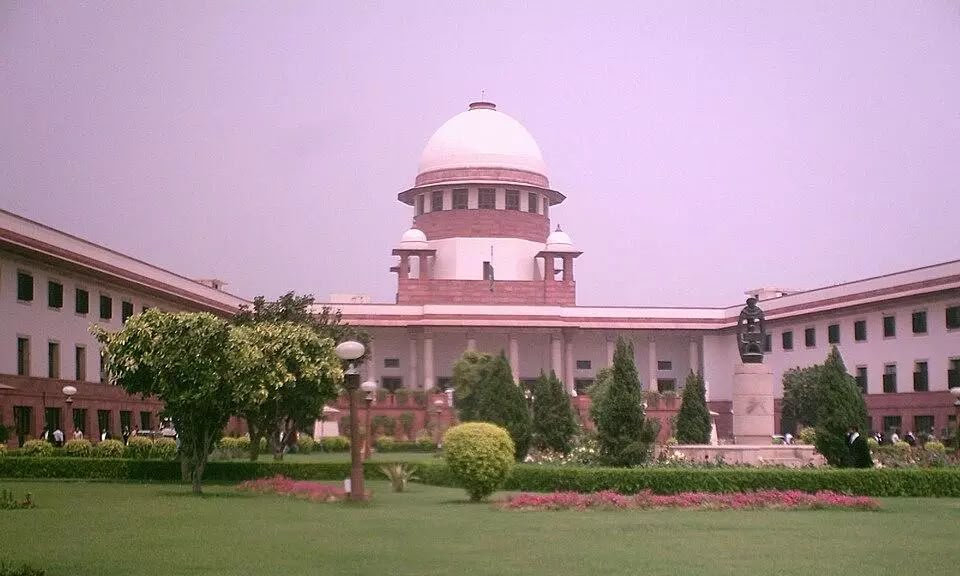
The Supreme Court has declined to stay the CBSE's new three-language policy for the 2026-27 academic session. While acknowledging the policy’s goal of promoting multilingualism, the court issued notices to the Centre, CBSE, and NCERT, demanding formal responses to logistical challenges regarding teacher shortages and textbook availability by July 29.
The Supreme Court has declined to stay the CBSE's new language mandate for the 2026-27 academic year but has demanded formal responses from educational authorities regarding implementation challenges.
NEW DELHI — The Supreme Court of India on Tuesday declined to grant an interim stay on the Central Board of Secondary Education's (CBSE) revised three-language policy, which mandates that students from Classes VI to IX study three languages, with at least two being native to India. A bench led by Chief Justice of India Surya Kant, alongside Justices Joymalya Bagchi and V. Mohana, acknowledged the petitioners' concerns but opted to schedule a detailed hearing for July 29, 2026.
The Legal Challenge
The court's decision follows a series of fresh petitions filed by students and parents challenging the abrupt implementation of the framework, which took effect on July 1, 2026. Petitioners argue that the CBSE’s circulars, particularly those issued in mid-May, lack statutory backing and were introduced without the necessary academic infrastructure, such as adequate textbooks and qualified teachers for the mandated Indian languages.
Counsel for the petitioners highlighted that the policy effectively forces students to drop foreign languages they have been studying for years, leading to "enormous mental stress" and academic disruption. Furthermore, they contended that the CBSE has advanced the timeline for this implementation, whereas the National Education Policy (NEP) 2020 had originally envisaged a phased rollout extending toward 2030.
Court Observations and Government Stance
During the proceedings, Chief Justice Surya Kant remarked that "learning a language never goes waste," signaling the court's general alignment with the policy's objective of promoting multilingualism. However, the bench expressed clear concern regarding the practicalities of the rollout, specifically the alleged shortage of learning materials and faculty.
Representing the Union government, Additional Solicitor General Aishwarya Bhati sought time to file a comprehensive reply. The court subsequently directed the Centre, the CBSE, and the NCERT to file their responses within 10 days, ensuring that these logistical concerns are addressed before the next hearing.
Impact on Students and Schools
The CBSE has defended the policy, asserting that it is essential for national integration and that nearly half of its affiliated schools were already compliant with the three-language framework. The Board clarified that students are not prohibited from studying foreign languages but must ensure that at least two of the three languages chosen are Indian. Additionally, the Board has noted that the third language will be assessed internally rather than through a formal Board examination in Class X, intended to reduce student pressure.
Despite these clarifications, schools and students remain in a state of uncertainty as the academic session is already underway, with the court's July 29 hearing now serving as the next critical juncture for the policy’s future.
Key Facts at a Glance
Policy Mandate: Students in Classes VI to IX must study three languages, with at least two being native Indian languages.
Court Status: The Supreme Court refused an interim stay but issued notices to the Centre, CBSE, and NCERT.
Next Hearing: The court has scheduled a detailed hearing for July 29, 2026.
Key Concerns: Petitioners cite a lack of textbooks, teacher shortages, and the sudden mid-session implementation as primary grievances.
FAQ
Did the Supreme Court stay the three-language policy? No, the Court declined to grant an interim stay and allowed the implementation to continue for now.
What are the primary grievances of the petitioners? Petitioners argue that the policy is being implemented without adequate infrastructure, such as trained teachers and textbooks, and that it disrupts students who were previously studying foreign languages.
Is the third language mandatory for Class 10 Board exams? No, the CBSE has clarified that the third language will be assessed through internal school evaluations rather than the Board examination.
Sources: Telangana today, Indian Express, NDTV, YouTube