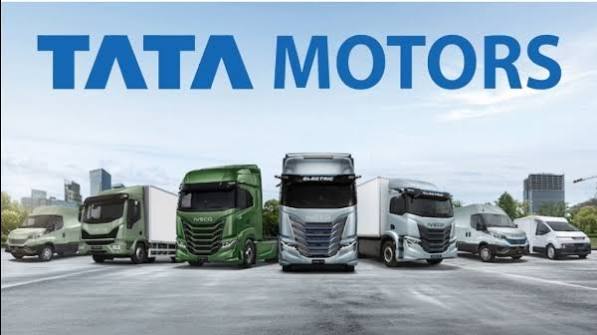
Tata Motors Commercial Vehicles is leveraging its €3.8 billion ($4.5 billion) acquisition of Italian automaker Iveco to expand its global market share across Europe and Latin America. The highly complementary deal is scheduled to close by Q2 FY27, opening up avenues to bring premium European trucks and tech platforms into India.
MUMBAI — Tata Motors Commercial Vehicles is aggressively positioning its upcoming acquisition of Italian truck and bus manufacturer Iveco Group as the cornerstone of its dual-engine growth strategy. The transaction, valued at €3.8 billion ($4.5 billion), is structured to unlock high-margin international markets while injecting premium European product platforms into Tata's domestic ecosystem.
Speaking to financial analysts and reporters on Thursday, June 25, 2026, Girish Wagh, Managing Director and CEO of Tata Motors Commercial Vehicles, confirmed that the acquisition process remains firmly on track for completion by the end of the second quarter of the 2027 fiscal year (FY27), subject to pending cross-border regulatory approvals. The announcement triggered a strong rally on Dalal Street, with Tata Motors shares closing 5.1% higher at ₹432.15 apiece on the Bombay Stock Exchange (BSE).
Geometric Diversification and Product Alignment
The fundamental rationale underlying the deal centers on a highly complementary, non-overlapping market alignment. While Tata Motors maintains a dominant leadership position across India, South Asia, parts of Africa, and the ASEAN region, its footprint in developed Western markets has historically been limited. Conversely, Turin-based Iveco commands an approximate 11% market share across Europe and Latin America, particularly in Brazil and Argentina.
Architects of the merger emphasize that the two companies' manufacturing and product portfolios exhibit a natural handoff rather than a competitive overlap.
The strategic integration points focus on three primary operational pillars:
Zero Portfolio Cannibalization: The pricing of most Iveco commercial products begins precisely where Tata Motors’ premium product categories peak, allowing for a seamless transition from entry-level to ultra-heavy-duty segments.
Domestic Market Introductions: Tata Motors has initiated preliminary evaluations to import select Iveco platforms into India to serve specialized, fast-growing domestic transport niches. The primary candidates include Iveco's heavy-duty mining tippers, high-capacity prime movers, and the versatile "Daily" minibus platform.
Cross-Continental Distribution: The transaction perimeter opens immediate pathways to introduce right-hand-drive Tata commercial trucks into developing South American corridors utilizing Iveco's long-established regional dealer and service networks.
Supply Chain Realignment and Shared Capex
Despite India's significant low-cost manufacturing advantages, Tata Motors has ruled out any immediate plans to relocate Iveco's primary production lines out of Western Europe. Management indicated that the immediate focus will remain on optimizing sourcing efficiencies and restructuring global tier-1 supply chains.
By shifting procurement away from high-cost Western European component manufacturers, the combined entity aims to leverage cost-competitive manufacturing bases in Eastern Europe and India. This supply chain reconfiguration is expected to drive substantial operating cost savings across both industrial groups.
Furthermore, the partnership aims to mitigate the massive research and development expenses associated with next-generation propulsion and software systems. The two vehicle manufacturers plan to pull together common investments to co-develop autonomous driving platforms, connected fleet analytics, vehicle electrification architectures, and advanced hydrogen-powered powertrains, successfully eliminating duplicated capital expenditures.
Official Sources Section
The corporate financial targets, synergistic structures, and acquisition timelines detailed in this report are sourced from official media briefings and regulatory disclosures hosted on the Tata Motors Investors Relations Portal. Product dimensions, historical unit volumes, and segment breakdown metrics correspond to the formal corporate filings published by Iveco Group N.V..
Quote Section
Evaluating the structural shift in corporate scope, executive leadership confirmed that the acquisition elevates the automaker into elite international automotive tiers.
According to statements delivered at the company's regional business meets:
"The proposed acquisition of Italian commercial vehicle manufacturer Iveco is a transformative step that will provide direct access to advanced technologies, expand our international market presence, and enhance our product capabilities across multiple continents. This transaction is fundamentally expected to support our long-term ambitions of ranking among the top four largest commercial vehicle manufacturers globally."
Why It Matters
For commercial fleet operators and logistics businesses in India, this corporate tie-up promises direct future access to heavy-duty European engineering, specialized mining tippers, and premium transit vehicles at optimized price points. On a broader macroeconomic level, global institutional investors view the acquisition as a vital cyclical buffer; by embedding a permanent revenue stream from Europe and Latin America, Tata Motors structurally cushions its balance sheet against localized downturns or seasonal freight volatility within the Indian domestic market.
Key Facts at a Glance
Transaction Valuation: The acquisition is valued at €3.8 billion ($4.5 billion) and covers Iveco’s truck, bus, and powertrain business units, while explicitly excluding its defense division.
Massive Combined Scale: The unified entity is projected to command combined annual sales exceeding 5.4 lakh commercial units, yielding estimated aggregate revenues of €22 billion.
Target Integration Window: Final execution and asset consolidation remain on schedule for closure by the end of Q2 FY27.
Ambitious Domestic Targets: Alongside international expansion, Tata Motors CV is leveraging its updated portfolio to reclaim a solid 40% market share in the Indian domestic market by FY28.
FAQ Section
Q: Why does the Iveco acquisition exclude the defense division? A: European national security regulations and foreign direct investment laws require a strict separation of military assets. Spinning off Iveco's defense business allows the commercial transaction to secure regulatory clearances efficiently.
Q: Will the retail price of existing Tata trucks change in India because of this deal? A: No immediate impact on standard domestic product pricing is expected. The initial synergies focus on backend procurement savings and adding premium Iveco models as high-end options to the existing lineup.
Q: How is Tata Motors financing this massive €3.8 billion global transaction? A: According to corporate investor presentations, initial funding has been fully secured via a dedicated bridge financing facility committed by global financial institutions, including Morgan Stanley and MUFG.
Source: Tata Motors Official Regulatory Press Archive, Iveco Group N.V. Corporate Governance Filings, Financial data feeds via Bombay Stock Exchange (BSE).