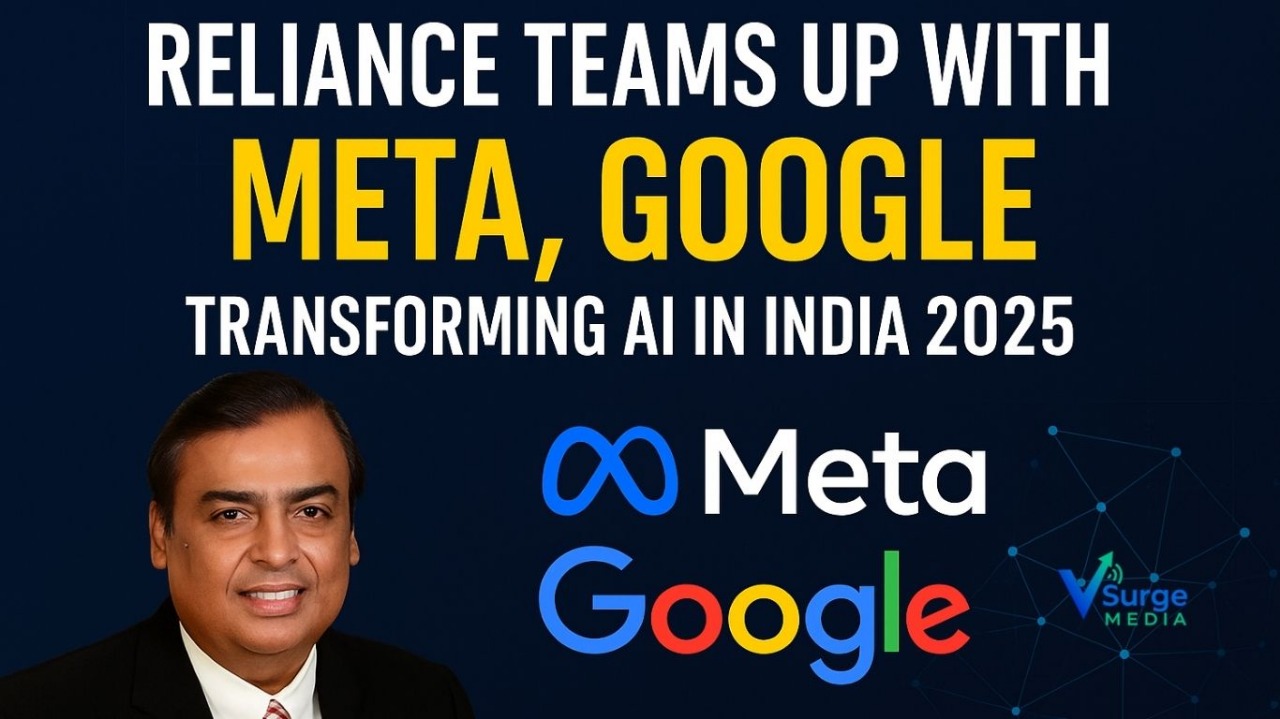
In a landmark development poised to redefine the landscape of artificial intelligence in India, tech giants Google, Meta, and Indian conglomerate Reliance Industries have announced a strategic partnership aimed at developing advanced AI capabilities and superintelligence infrastructure. Announced...
In a landmark development poised to redefine the landscape of artificial intelligence in India, tech giants Google, Meta, and Indian conglomerate Reliance Industries have announced a strategic partnership aimed at developing advanced AI capabilities and superintelligence infrastructure. Announced during Reliance’s 48th Annual General Meeting held in 2025, this collaboration marries global AI expertise with India’s vast technological potential and infrastructure to accelerate innovation across multiple sectors.
Key Highlights of the Historic Alliance
Formation of Reliance Intelligence
Reliance unveiled a wholly owned subsidiary named Reliance Intelligence, dedicated to spearheading AI adoption and infrastructure development in India. This entity aims to create gigawatt-scale AI-ready data centers, foster cutting-edge AI research, and democratize AI services across industries such as energy, retail, telecom, healthcare, and finance.
Google’s Role and Cloud Region Deployment
Google CEO Sundar Pichai highlighted their partnership by announcing the establishment of an exclusive Jamnagar cloud data center region powered by renewable energy, designed to serve Reliance’s AI ambitions and power its digital ecosystem. This collaboration leverages Jio’s extensive telecom network to provide scalable, secure, and sovereign cloud solutions for Indian enterprises.
Meta and Reliance Joint Venture for Enterprise AI
Meta CEO Mark Zuckerberg disclosed a separate joint venture with Reliance to develop enterprise-ready AI platforms using Meta’s open-source Llama models. This $100 million investment, shared 70% by Reliance and 30% by Meta, focuses on building AI tools tailored for Indian businesses and government entities. Zuckerberg described this venture as a stepping stone toward ensuring AI accessibility and eventually superintelligence for every Indian.
Revolutionizing Industries with AI
This alliance targets transformational changes across several key sectors:
Energy and Utilities: AI-driven optimization for sustainable energy management and smart grids.
Retail and Supply Chains: Enhancing efficiency through predictive analytics and AI-powered customer engagement.
Telecommunications: Leveraging AI for network optimization, service personalization, and digital inclusion.
Financial Services: Deploying AI for risk assessment, fraud detection, and personalized financial products.
Strategic Significance and National Ambitions
India stands at the cusp of becoming a global AI powerhouse, and this partnership signifies a milestone in that journey. It aligns with governmental priorities to strengthen digital infrastructure, encourage AI research, and ensure technology-driven economic growth. By combining Reliance’s pan-India reach and infrastructure with Google and Meta’s AI acumen, the collaboration promises to accelerate India’s innovation ecosystem.
Challenges and the Road Ahead
While the prospects are promising, hurdles such as data privacy regulations, talent shortages in AI, and global competition from the US and China remain critical challenges. The partners have committed to addressing these through robust frameworks, training initiatives, and scalable AI deployments.
Conclusion: Heralding a New Era of AI and Superintelligence in India
The collaboration between Google, Meta, and Reliance marks a pivotal moment in India’s tech evolution, setting the stage for transformative AI applications and the eventual realization of superintelligence. With a focus on innovation, sustainability, and inclusivity, this alliance aims to empower businesses, enhance livelihoods, and position India as a leading contributor to the global AI landscape.
Sources: CNBC, Times of India, Economic Times, TechCrunch, LinkedIn News, AICERTS.ai, Forbes, StartupPedia, News18.