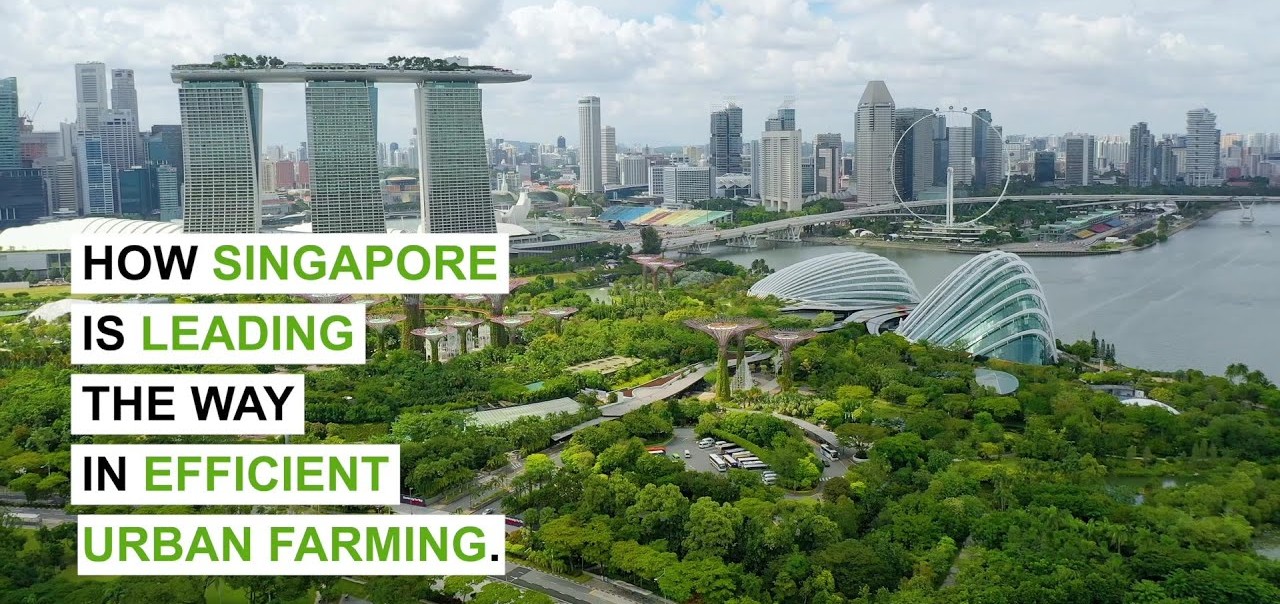
In a world grappling with rapid urbanization and shrinking agricultural land, Singapore stands as a beacon of innovation with its revolutionary vertical farming initiatives. These skyscraper farms represent a transformative future for food production, maximizing space and resources to feed dense...
In a world grappling with rapid urbanization and shrinking agricultural land, Singapore stands as a beacon of innovation with its revolutionary vertical farming initiatives. These skyscraper farms represent a transformative future for food production, maximizing space and resources to feed dense urban populations sustainably.
How Vertical Farming is Changing Singapore’s Food Landscape
Urban Farming Meets Technology
Singapore imports over 90% of its food, making local production a national priority. Vertical farms like Sky Greens use patented rotating towers of vegetable troughs within compact skyscraper-style structures, allowing crops to receive uniform sunlight and nutrients. This tech-driven approach integrates hydroponics and aeroponics with automation powered by AI and sensors to optimize plant growth year-round.
Maximizing Limited Land
With less than 1% of land suitable for traditional farming, growing crops vertically solves land scarcity by stacking farms vertically, multiplying yield per square foot while reducing the land footprint. These farms produce leafy greens and herbs five times more efficiently than conventional farming.
Sustainable and Water-Efficient
Vertical farming conserves water dramatically through closed-loop irrigation systems. Evaporated water is captured and recycled, enabling farms to use only a fraction of the water conventional methods consume. This innovation is especially critical for Singapore’s climate-sensitive environment.
Government Support and Food Security Goals
The Singaporean government’s “30 by 30” initiative aims to locally produce 30% of the nation’s nutritional needs by 2030, with vertical farming as a cornerstone of this vision. Grants, research investments, and regulatory support accelerate vertical farming innovations and commercial scale-up.
Expanding Global Impact
Singapore’s pioneering farms inspire similar models in other land-scarce, urbanized regions. The practical benefits include fresher produce with reduced transportation emissions, enhanced food safety, and year-round availability insensitive to seasonal variances.
Why Vertical Farms Signal Future Food Production
As cities grow and climate variability challenges traditional agriculture, vertical farms offer a resilient, eco-friendly solution that integrates cutting-edge science with urban sustainability. Singapore’s skyscraper farms exemplify how innovation can transform challenges into opportunities, nurturing a visionary agricultural renaissance.
Source: Earth Day, Economist Impact, AgriNextCon, NPR, Bloomberg