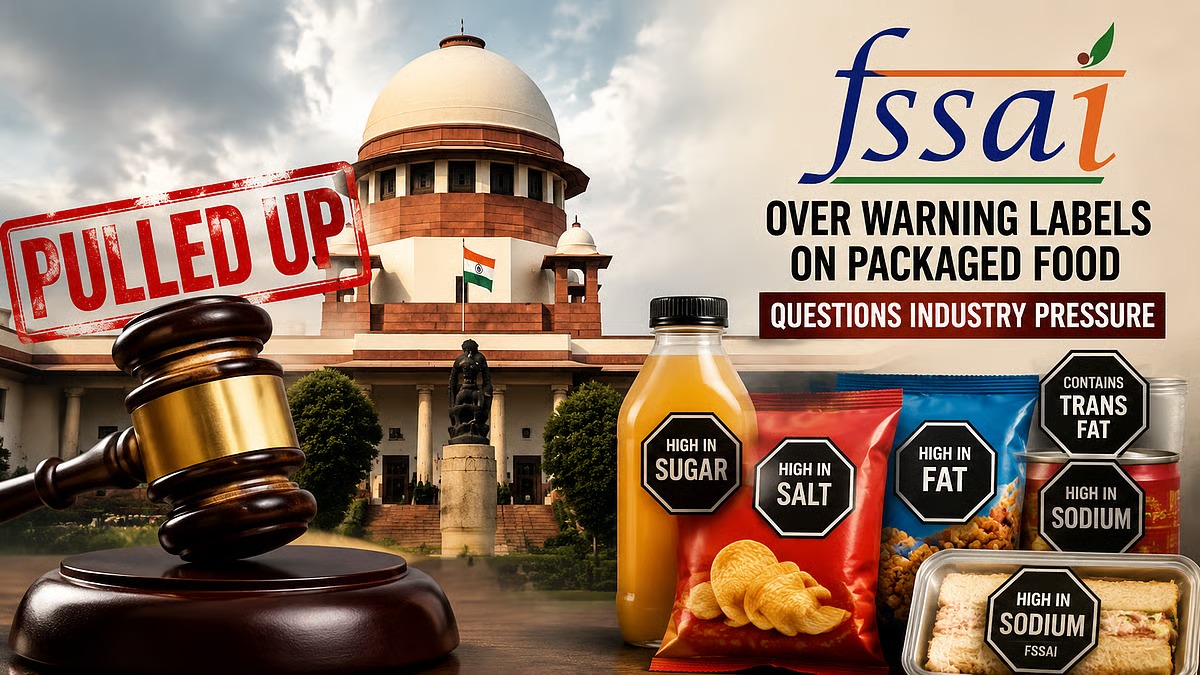
The Supreme Court of India expressed serious health concerns regarding ultra-processed foods during hearings on front-of-pack warning labels. Questioning FSSAI's phased implementation plan, the court pressed for robust disclosures, prompting the regulator to indicate openness to applying stricter nutritional warning thresholds right from the initial phase.
The Supreme Court of India expressed deep health concerns over ultra-processed foods, questioning regulatory delays and the phased rollout of front-of-pack warning labels.
New Delhi — Amid a high-stakes judicial hearing on public health, the Supreme Court of India sharply scrutinized the regulatory framework governing front-of-pack nutritional warning labels for packaged food and beverages. Presiding over the proceedings, the bench emphasized paramount concern for the health of citizens, particularly children, who face escalating exposure to ultra-processed foods high in sugar, salt, and fats. The court challenged the Food Safety and Standards Authority of India (FSSAI) regarding its proposed phased implementation and the adequacy of its regulatory thresholds, prompting the food safety regulator to signal openness to enforcing stricter rules immediately.
Judicial Scrutiny and Regulatory Pushback
According to official court proceedings and regulatory filings, the central debate centers on FSSAI's compliance affidavit proposing a red hexagonal warning label framework. The initial proposal outlined a two-phase rollout, where Phase I would restrict mandatory front-of-pack labels to products exceeding thresholds in two or more negative nutrients—such as added sugar, saturated fat, or sodium. Products high in only a single nutrient would be relegated to an undefined Phase II.
The Supreme Court questioned this bifurcated timeline, leading FSSAI representatives to clarify that the agency remains open to implementing comprehensive, stricter warning labels starting directly from the first phase. Concurrently, industry representatives, including the All India Food Processors Association (AIFPA), submitted interventions arguing that fixed per-100-gram thresholds require further scientific review, maintaining that serving-size or percentage-of-daily-intake metrics should be factored in to prevent market distortions. Conversely, public health advocates and petitioners countered that delayed timelines and multi-nutrient triggers create loopholes, enabling single-excess items to evade plain-sight warnings.
Impact on Consumers, Public Health, and the Food Industry
For everyday consumers and families, the final judicial verdict holds immense significance, as transparent warning symbols directly influence purchasing decisions and combat diet-related chronic conditions like diabetes and hypertension. For food manufacturers and multinational brands, stricter, unphased labeling mandates will necessitate rapid product reformulation and revised packaging standards across national supply chains.
Official Sources Section
Details concerning courtroom exchanges, regulatory counter-affidavits, and policy submissions are based on official proceedings from the Supreme Court of India and regulatory filings issued by the Food Safety and Standards Authority of India (FSSAI).
Quote Section
According to officials, the regulator is evaluating all judicial observations and remains open to adopting comprehensive labeling standards from the initial phase to safeguard consumer health.
Why It Matters
Establishing immediate, unambiguous front-of-pack health disclosures empowers consumers to identify ultra-processed items instantly, mitigating long-term public health risks associated with excessive sugar, salt, and fat intake.
Key Facts at a Glance
The Supreme Court of India voiced strong concern over public health, specifically highlighting the vulnerability of children to ultra-processed foods.
FSSAI defended its proposed red hexagonal warning system but expressed willingness to enforce stricter rules from Phase I.
Industry bodies urged adjustments to per-100-gram thresholds, while public health advocates demanded single-nutrient warning triggers.
Final deliberations build upon long-running petitions concerning front-of-pack nutritional transparency.
FAQ Section
Why is the Supreme Court reviewing food warning labels?
The apex court intervened via public interest litigations to address regulatory delays and ensure mandatory front-of-pack warnings for foods high in sugar, salt, and fat.
What was the core issue regarding the proposed implementation phases?
Petitioners and the court questioned why Phase I applied only to products high in two or more nutrients, potentially leaving single-excess items unlabeled without a binding timeline for Phase II.
How has the food regulator responded to the court's queries?
FSSAI informed the bench that it is open to implementing stricter and more comprehensive warning requirements starting directly from the first phase.
Source: Supreme Court of India, Food Safety and Standards Authority of India (FSSAI)