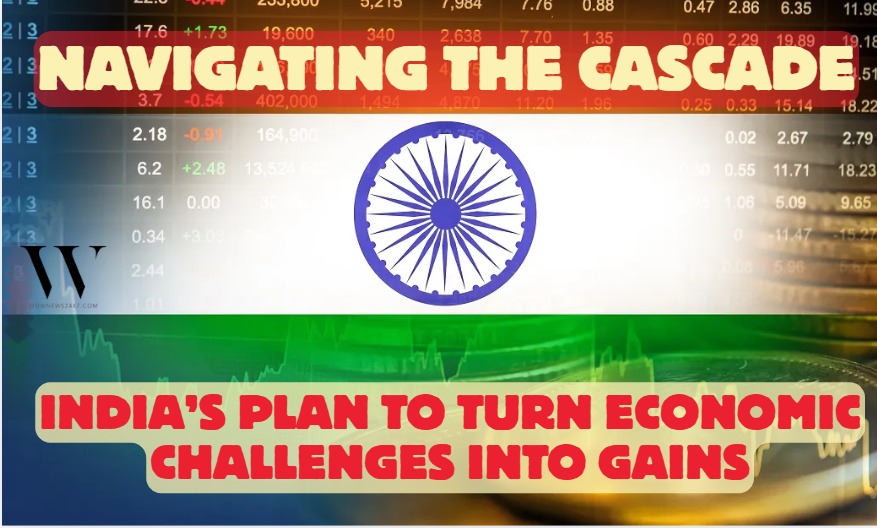
As the global economic landscape faces mounting pressure from geopolitical conflicts in West Asia and volatile energy markets, India is reinforcing its economic framework to ensure sustained growth. Despite global uncertainties, India achieved a robust GDP growth of 7.7% in the fiscal year 2025–26, outpacing initial projections and demonstrating fundamental strength. Entering the 2026–27 fiscal year, the government and the Reserve Bank of India (RBI) have recalibrated growth expectations to a projected 6.6% to 6.9%, a moderation attributed to persistent external headwinds. Experts emphasize that while the economy has proven resilient, the current climate requires a transition from reactive policy to proactive, "entrepreneurial" governance.
A Shift Toward Strategic Resilience
The Economic Survey 2025–26, tabled in Parliament earlier this year, explicitly advocates for a stance of "strategic sobriety". This approach prioritizes supply stability, the creation of robust resource buffers, and the diversification of trade and payment systems.
"India must run a marathon and sprint simultaneously," the survey noted, highlighting the dual need to maximize domestic growth while building deep shock-absorption capacity. To this end, the Centre has established an Economic Stabilisation Fund (ESF) designed specifically to provide a fiscal buffer against macroeconomic shocks.
Key Drivers of Current Economic Performance
India’s resilience is anchored in several structural factors that differentiate it from other emerging markets:
Strong Domestic Demand: Private final consumption expenditure and healthy corporate balance sheets have been primary drivers of growth, insulating the economy from a cooling global trade environment.
Public Investment: Sustained government-led capital expenditure in infrastructure—now representing 3.1% of GDP—continues to create a foundation for long-term productivity.
Diversified Trade: Proactive efforts to sign Free Trade Agreements (FTAs) and diversify export partners have helped India navigate shifting global value chains.
Robust Macro Fundamentals: With foreign exchange reserves covering approximately 11 months of imports and a contained external debt-to-GDP ratio of 20.4%, India maintains a comfortable safety margin.
Challenges and Future Outlook
Despite the positive trajectory, risks remain. The West Asia conflict continues to pose threats through higher energy prices and potential LPG shortages, which could weigh on producer margins and trigger inflationary pressure. Additionally, the potential for "systemic shock cascades"—where financial, technological, and geopolitical stresses amplify one another—remains a concern for policymakers.
According to officials, the path forward involves deepening industrial capabilities and accelerating AI-led productivity gains. The government’s recent focus on mission-mode platforms in sectors like semiconductors and green hydrogen signals a pivot from mere compliance to building tangible industrial capability.
Why It Matters
For citizens and businesses, the government’s focus on resilience means a greater emphasis on stability over rapid, high-risk expansion. By prioritizing strategic reserves—particularly for crude oil, gas, and fertilizers—and maintaining fiscal discipline, India aims to ensure that its "marathon" of long-term development is not derailed by short-term global volatility.
Key Facts at a Glance
GDP Growth: India grew by 7.7% in FY26 and is projected to grow by approximately 6.6%–6.9% in FY27.
Fiscal Prudence: The Gross Fiscal Deficit (GFD) is targeted at 4.3% of GDP for 2026–27, continuing a downward trend.
Investment Buffers: The new Economic Stabilisation Fund (ESF) provides a dedicated fiscal buffer against global headwinds.
Reserves: Foreign exchange reserves remain robust, sufficient to support approximately one year of imports.
FAQ Section
Q: Why has India’s growth projection moderated for FY27?
A: The moderation from FY26’s 7.7% to the projected 6.6%–6.9% for FY27 reflects the impact of global supply chain disruptions and elevated energy prices caused by ongoing geopolitical tensions in West Asia.
Q: What is the "strategic sobriety" policy stance?
A: It is an economic approach advocated by the government to prioritize supply chain security, the creation of resource buffers, and the diversification of trade routes to handle uncertainty without resorting to defensive pessimism.
Q: How is India protecting itself from global oil price volatility?
A: The government is actively exploring the diversification of gas sources, expanding its strategic petroleum reserves, and building strategic buffers for critical commodities like fertilizers.
Source: RBI Annual Report 2025-26, Economic Survey 2025-26, World Bank India Development Update, Times of India Business Report.