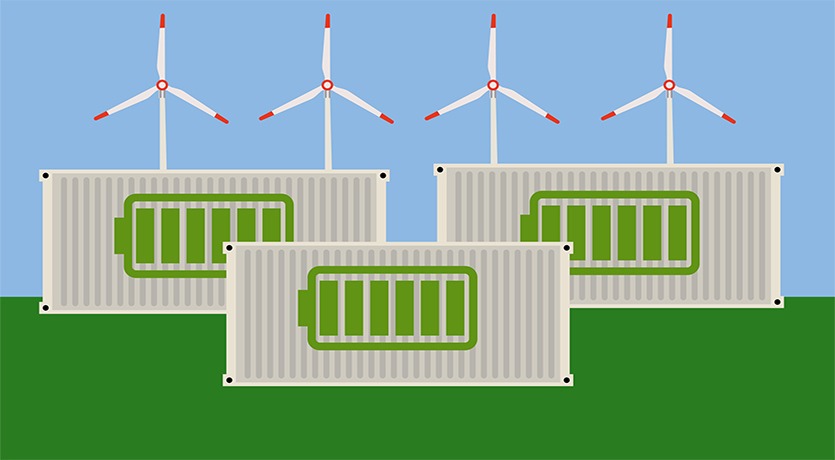
India's clean energy transition is accelerating as listed BESS stocks like Tata Power, JSW Energy, and Exide Industries scale up grid storage capacity. Backed by fiscal incentives and falling battery costs, these firms are building gigafactories and containerized storage systems to secure a stable, round-the-clock renewable energy grid.
MUMBAI — India’s transition toward round-the-clock green electricity has sparked a major industrial race, as prominent BESS stocks accelerate their utility-scale factory expansions to anchor the national power grid. With the federal government targeting substantial energy storage integration by 2030, institutional capital is flowing rapidly into corporations specializing in Battery Energy Storage Systems (BESS). This development is vital today as India integrates vast solar and wind generation capacities, requiring heavy-duty storage assets to maintain grid frequency and manage peak load demands during non-solar hours.
The domestic energy storage installation pipeline is expanding rapidly, with nationwide utility deployments expected to scale up to 5 GWh over the course of the 2026 fiscal cycles. Driven by production-linked incentive (PLI) schemes and basic customs duty exemptions on specialized battery manufacturing equipment, three major public companies are scaling up capital expenditures to capture early market share.
Tata Power Expands Co-Located Grid Storage Infrastructure
Tata Power Company Limited has steadily integrated energy storage infrastructure directly alongside its massive clean energy deployment strategy. The utility giant manages a comprehensive renewable energy portfolio exceeding 10.9 GW, consisting of 5.6 GW in active operations and an additional 5.3 GW under various execution phases. By embedding large-scale BESS modules into its existing engineering, procurement, and construction (EPC) workflows, the firm solidifies its ranking among the top-tier BESS stocks favored by long-term institutional investors.
Financial disclosures show that Tata Power maintains an efficient operational profile, delivering a robust cash conversion cycle alongside high double-digit returns on equity. The company's storage strategy relies heavily on hybrid solar-plus-storage projects designed to deliver firm, dispatchable renewable energy (FDRE) directly to state electricity distribution networks, shielding the parent firm from volatile spot-market pricing mechanisms.
JSW Energy Targets Aggressive Energy Storage Pipeline
JSW Energy Limited has emerged as one of the most aggressive project developers within the domestic grid-stabilization corridor. Operating through its dedicated subsidiary, JSW Neo Energy, the firm has established a formal corporate roadmap targeting 30 GW of aggregate generation capacity alongside a massive 40 GWh of energy storage capacity by 2030. This ambitious target establishes a unique operational footprint, differentiating it from traditional power generation utilities and placing it ahead of rival BESS stocks.
| Metric / Parameter | JSW Energy BESS Targets | Operational Status (2026) |
| Total Target Storage Capacity | 40 GWh by 2030 | 3.2 GWh Locked Portfolio |
| Key Standalone Allocations | 1 GWh SECI Awarded Project | Engineering Phase |
| Assembly Infrastructure Hub | 5 GWh Facility in Pune | Preparatory Setup |
The corporate strategy emphasizes vertically integrating its revenue streams. By combining standalone storage contracts, such as its ongoing 500 MWh utility project for the Rajasthan Rajya Vidyut Utpadan Nigam Limited (RVUNL), with local battery assembly complexes, the firm aims to capture higher manufacturing margins as global lithium-iron-phosphate (LFP) input costs trend downward.
Exide Industries Pivots to Advanced Lithium Cell Production
Exide Industries Limited, historically recognized as the dominant legacy brand in automotive and industrial lead-acid storage systems, is rapidly transforming its corporate model. The company has directed extensive capital expenditure toward setting up advanced gigafactories designed specifically for advanced lithium-ion cell fabrication and integrated BESS assembly. This shift demonstrates why equity analysts identify these manufacturers as key BESS stocks poised to profit from import substitution trends.
The company's advanced technology segment focuses on supplying multi-kilowatt containerized storage units tailored for commercial, industrial, and telecom infrastructure providers. By building out local technical capabilities, Exide reduces India's dependence on foreign component suppliers, positioning itself to supply both domestic grid developers and growing localized electric vehicle charging networks.
Official Sources Section
Company progress reports and capacity metrics have been collected from regulatory filings submitted to the National Stock Exchange of India (NSE) and BSE Limited. Macroeconomic growth data and fiscal incentive definitions are aligned with public notices published by the Ministry of Power and investment tracking boards under the Securities and Exchange Board of India (SEBI).
Quote Section
"According to officials keeping tabs on regional infrastructure deployments, the integration of heavy battery capacity is no longer an optional upgrade but a fundamental requirement for grid viability," industry compliance reports indicated. "The ongoing decline in international component costs, combined with domestic regulatory push, ensures that corporate entities investing heavily in local manufacturing will dictate the future trajectory of the power market."
Why It Matters
The rapid deployment of battery storage architectures directly influences commercial electricity pricing and grid reliability for citizens and heavy industries. For enterprise operations, reliable backup power blocks expensive diesel generator reliance, directly lowering structural overhead. For global investors, the expansion of these capital-intensive projects creates a multi-decade asset class backed by sovereign clean-energy procurement mandates.
Key Facts at a Glance
Installation Trajectory: National energy storage installations are on track to touch 5 GWh during 2026.
Tata Power Scale: The firm commands a 10.9 GW renewable portfolio with active storage integrations.
JSW Neo Roadmap: Targets an aggressive 40 GWh storage framework alongside its 5 GWh Pune assembly project.
Exide Transformation: Shifting legacy capacity into high-grade lithium cell production to replace expensive imports.
FAQ Section
What exactly does a BESS asset do for the electrical grid?
A Battery Energy Storage System (BESS) collects surplus power generated during peak solar or wind hours and discharges it when generation drops, maintaining grid balance.
Why are BESS stocks gaining significant attention in 2026?
These companies are benefiting from basic customs duty relief on manufacturing machinery, falling global battery cell prices, and government mandates requiring green energy developers to include storage capacity in new utility bids.
Which battery chemistry is most commonly used in these Indian projects?
Lithium Iron Phosphate (LFP) remains the primary chemistry chosen for utility-scale projects due to its superior thermal stability, safety profile, and longer lifecycle compared to alternative chemistries.
Source: Corporate regulatory submissions, exchange filings with National Stock Exchange of India (NSE), and the Ministry of Power baseline energy updates.