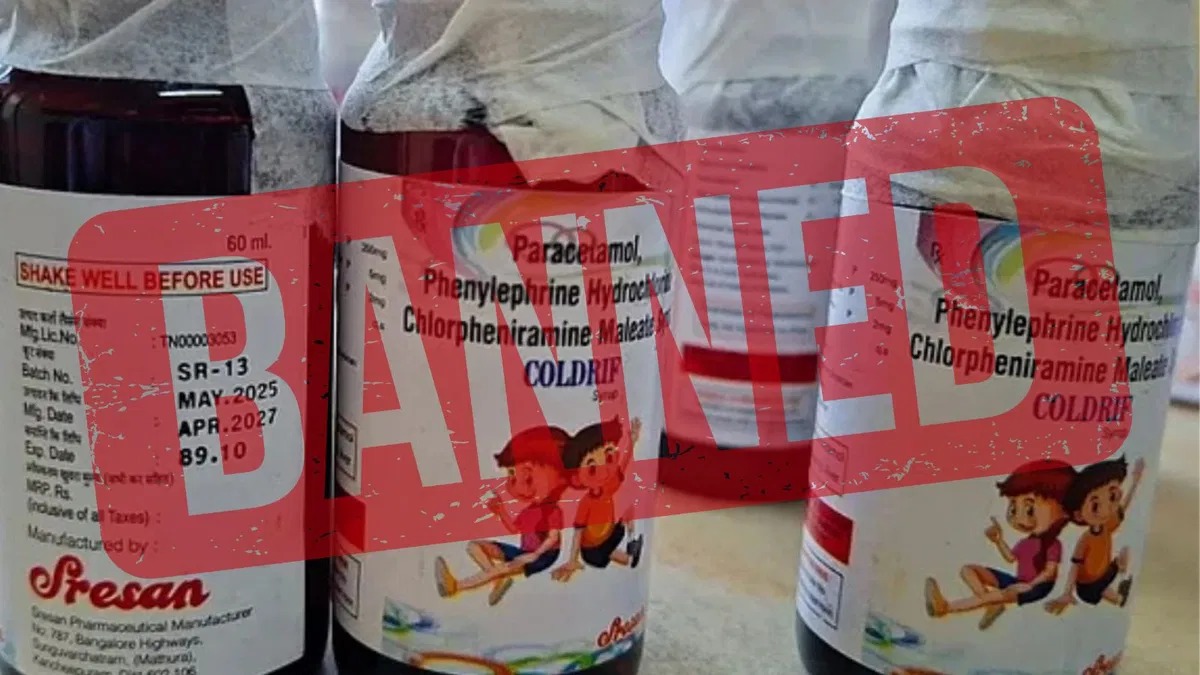
Telangana has banned two cough syrups—Coldrif and Cofstop—after detecting toxic Diethylene Glycol contamination. The state’s drug regulator issued urgent notices to halt sales and initiate recalls. The move follows similar bans in other states and raises national and global concerns over pharma safety, especially in pediatric formulations.
In a decisive public health move, Telangana’s Drug Control Administration (DCA) has issued a statewide notice halting the sale and distribution of two cough syrups found adulterated with Diethylene Glycol (DEG), a toxic compound linked to kidney failure and child fatalities in past global incidents. The action follows routine quality checks and aligns with growing national scrutiny over pharmaceutical safety.
Regulatory Action Highlights
- The two syrups—Coldrif and Cofstop—were flagged during random sampling by Telangana’s DCA, which confirmed DEG contamination exceeding permissible limits
- Diethylene Glycol is a solvent used in industrial applications and is lethal when ingested; its presence in medicinal syrups poses severe health risks, especially to children
- The DCA has directed all pharmacies, distributors, and healthcare facilities to immediately cease sale, recall existing stock, and report inventory levels
- Public advisories have been issued urging citizens to avoid these products and consult healthcare professionals if symptoms arise post-consumption
- The manufacturers, based in Tamil Nadu and Himachal Pradesh, have been served notices and may face further regulatory action pending investigation outcomes
- Telangana joins other states including Punjab, Maharashtra, and Karnataka in banning Coldrif, which has already been linked to multiple child deaths in Madhya Pradesh
- The Union Health Ministry is coordinating with state regulators to trace distribution channels and assess export exposure
- WHO has stated it will consider a global medical products alert once Indian authorities confirm contamination and its link to fatalities
Public Health Implications
- The incident underscores persistent gaps in post-market surveillance and batch-level quality control in India’s pharma supply chain
- DEG contamination has historically led to mass casualties, including notable cases in Gambia and Uzbekistan, prompting global regulatory reforms
- Experts call for stricter enforcement of GMP (Good Manufacturing Practices) and real-time traceability mechanisms for pediatric formulations
- The episode may accelerate digital batch authentication and centralized recall protocols across states
Market Outlook
- Pharma companies may face increased scrutiny, especially those involved in OTC pediatric products
- Export channels could be impacted if WHO issues a global alert, affecting India’s reputation as a generic drug supplier
- Regulatory bodies are expected to tighten compliance norms and enhance inter-agency coordination for drug safety
Sources: The Hindu, Deccan Chronicle, Telangana DCA Bulletin, NDTV Health Desk