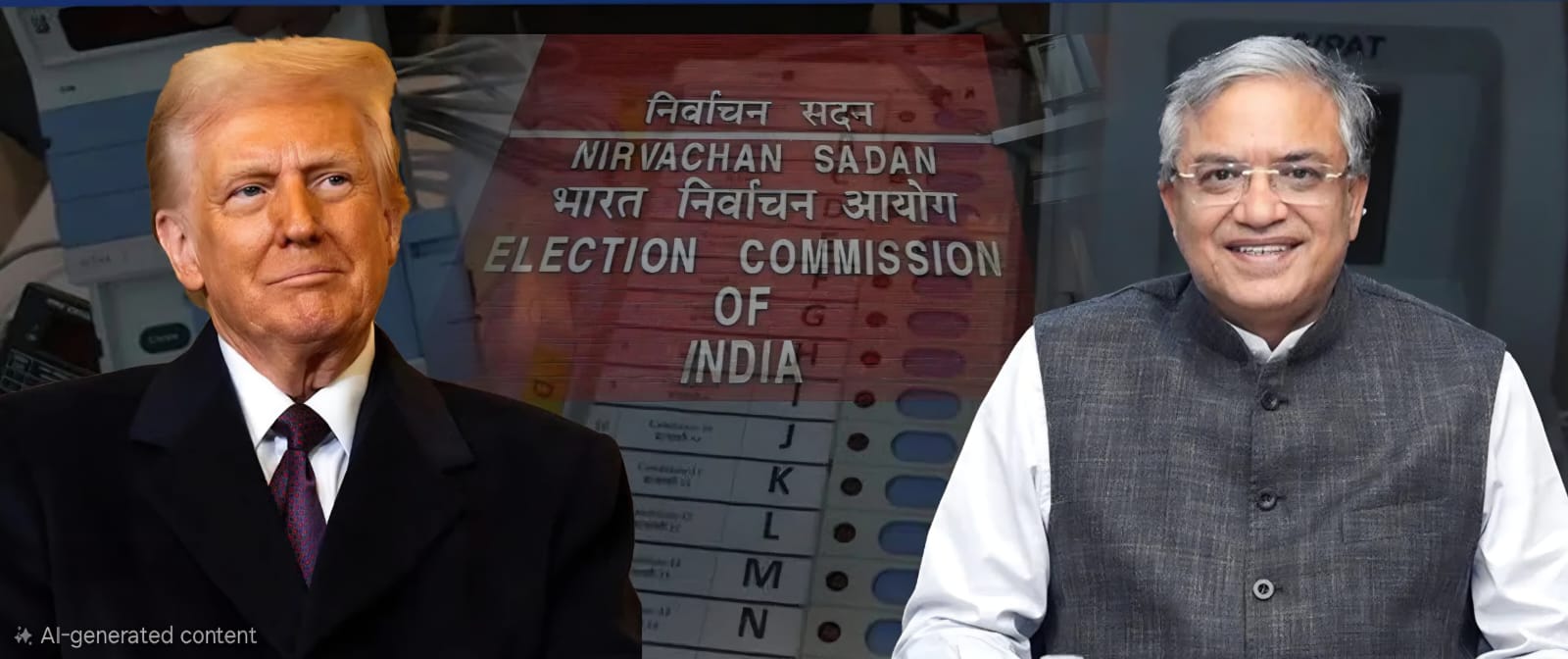
U.S. President Donald Trump praised India's mandatory photo voter ID system while pushing for the SAVE America Act on August 17, 2026. The remarks sparked sharp exchanges in New Delhi, where opposition parties pointed to ongoing disputes over electoral roll updates and voter deletions under the Special Intensive Revision.
WASHINGTON / NEW DELHI — United States President Donald Trump cited India’s electoral framework and mandatory photo voter identification cards as a gold standard model on August 17, 2026, using the example to advocate for the passage of the Safeguard American Voter Eligibility (SAVE) America Act. Writing on social media, Trump highlighted India's 2024 general elections, noting that over 646 million voters participated, with fewer than one percent utilizing mail-in ballots, and every elector presenting a valid photo identity document.
The U.S. President’s remarks ignited immediate political friction in New Delhi, intersecting directly with ongoing national disputes surrounding the Special Intensive Revision (SIR) of electoral rolls and opposition accusations of "vote chori" (voter fraud and deletion).
Intersecting U.S. Legislation and Indian Domestic Politics
President Trump stated that Chief Election Commissioner Gyanesh Kumar had engaged with U.S. administration officials, questioning how federal elections in the United States could proceed without requiring photo identification. The White House subsequently published a fact sheet highlighting how countries like India and Brazil link voter identity cards to biometric platforms, contrasting it with self-attestation systems used in many U.S. jurisdictions.
In India, the international spotlight intensified the political debate between the ruling Bharatiya Janata Party (BJP) and opposition parties:
US SAVE America Act: Proposed federal legislation requiring documentary proof of U.S. citizenship for voter registration, mandatory photo ID at polling stations, and strict limits on absentee postal voting.
Opposition Critique: Indian National Congress leaders mocked the U.S. President's commentary, suggesting chief election officials be sent to Washington while raising allegations regarding voter roll deletions during the Special Intensive Revision.
Ruling Party Defense: Government representatives defended the integrity of the Election Commission of India (ECI), emphasizing that rigorous biometric voter verification prevents fraudulent voting.
Supreme Court Review: Petitions filed by civil society groups and opposition figures remain under judicial review, challenging the methodology used during electoral roll updates.
Impact on Electoral Institutions and Public Perception
The intersection of foreign endorsement and domestic scrutiny highlights contrasting views on voter identification policies across democratic nations. For election administrators and policymakers, the global debate underscores the balance between preventing voter impersonation and ensuring voter access.
For citizens, voters, and international observers, the development draws attention to procedural safeguards in large-scale democratic exercises. While American legislators weigh federal standardization against state-level voting procedures, Indian political actors continue to debate the administrative execution of voter verification processes.
Official Sources Section
Statements regarding electoral data and proposed legislative frameworks were released by the following official bodies:
Statements on U.S. voting policy and the SAVE America Act were published by the White House
Official statistics on voter turnout and electoral roll administration are maintained by the Election Commission of India
Official Quotes
According to statements published by U.S. President Donald Trump on Truth Social:
"Earlier this month, India's Chief Election Commissioner, Gyanesh Kumar, asked our Administration — How can you have Elections in the US without a valid Photo ID? India's last Election had 646,000,000 Voters! Less than one per cent voted by mail, and every single Voter had to have a VALID Photo Identity Document."
Congress MP and senior spokesperson Pawan Khera stated in response on social media:
"Please take Gyanesh Kumar Gupta to America. And keep him there... To SIR With Love, from India."
Why It Matters
The global reference to India's voter ID system brings international visibility to electoral administration practices. As the U.S. debate over voter identification and citizenship verification continues in Congress, the political reaction in India emphasizes how administrative procedures, such as electoral roll revisions, remain central to domestic political debate and institutional trust.
Key Facts at a Glance
U.S. Proposal: President Trump cited India’s electoral system to advocate for the passage of the SAVE America Act.
Voting Statistics: Over 646 million electors voted in India's 2024 general election, with less than 1% using postal ballots.
Domestic Debate: Indian opposition parties raised questions over voter deletions during the Special Intensive Revision (SIR).
Judicial Review: India's Supreme Court continues to examine petitions regarding electoral roll verification procedures.
Frequently Asked Questions
What is the SAVE America Act cited by Donald Trump?
The SAVE America Act is a proposed U.S. federal law aimed at requiring documentary proof of citizenship for voter registration, mandatory photo ID at polling stations, and restrictions on absentee mail-in ballots.
What is the "vote chori" debate in India?
The term refers to political allegations made by opposition parties accusing election authorities of improper deletions and irregularities in electoral rolls during administrative update exercises.
Source: Official updates published on Truth Social, press releases from the White House, and official data from the Election Commission of India.