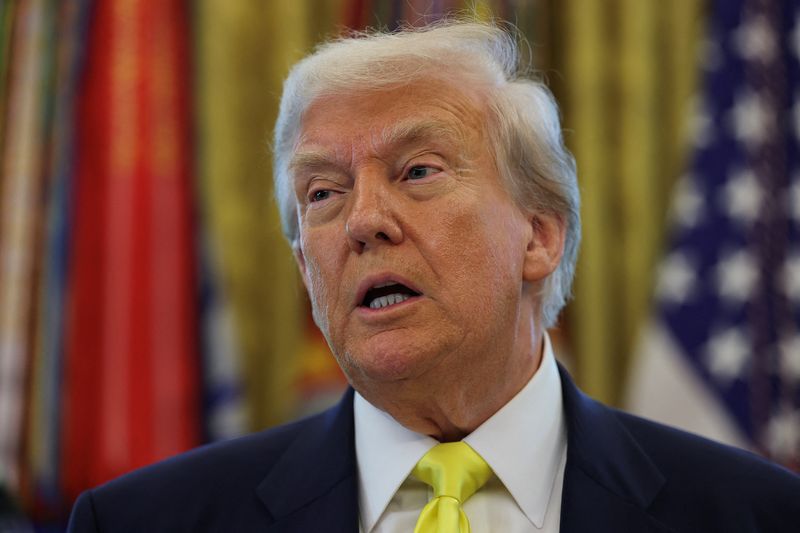
In a surprise move that sent ripples across global markets, former U.S. President Donald Trump has signed an executive order extending the China tariff deadline by 90 days. The announcement, confirmed by CNBC citing a White House official, comes just hours before the previous ceasefire was set to...
In a surprise move that sent ripples across global markets, former U.S. President Donald Trump has signed an executive order extending the China tariff deadline by 90 days. The announcement, confirmed by CNBC citing a White House official, comes just hours before the previous ceasefire was set to expire on August 12, 2025. This marks the third such extension in the ongoing trade standoff between the world’s two largest economies.
Key Highlights of the Executive Order
The 90-day extension pushes the new tariff deadline to mid-November 2025.
The move preserves the current reciprocal tariff rates, which were lowered in May to avoid escalation.
Treasury Secretary Scott Bessent and Chinese Vice Premier He Lifeng are expected to formalize the extension during bilateral talks in Stockholm.
The extension comes despite earlier White House signals that no further pauses would be granted.
This decision reflects a strategic recalibration by Washington, likely influenced by election-year sensitivities and mounting pressure from U.S. businesses reliant on Chinese supply chains.
Context: A Fragile Trade Truce
The U.S.-China trade relationship has been under strain since Trump’s sweeping import tax regime was unveiled in April 2025. Key developments include:
Reciprocal tariffs ranging from 15% to over 100% were imposed on goods from China, Europe, Japan, and others.
A 90-day ceasefire was initiated in May to allow for negotiations, with the August 12 deadline looming as a potential flashpoint.
Despite progress on frameworks with the EU, Japan, and the Philippines, talks with China have remained complex and unresolved.
The extension buys time but does not resolve core disputes around technology transfers, industrial subsidies, and export controls.
Market Reaction and Strategic Implications
Global markets responded positively to the news:
Asian indices opened higher, with the Hang Seng and Nikkei gaining over 1.5%.
U.S. futures rose modestly, reflecting relief among manufacturers and retailers.
Commodity prices, especially metals and electronics components, stabilized after weeks of volatility.
However, analysts caution that the extension merely delays the inevitable:
The baseline tariff rates of 15–20% are still slated to kick in later this year.
The lack of a comprehensive deal leaves businesses exposed to policy uncertainty.
Supply chain diversification efforts may accelerate as firms hedge against future disruptions.
Political Calculus Behind the Move
The timing of the extension is politically significant:
The next deadline now falls just ahead of the U.S. midterm election cycle.
Trump’s administration has touted the extension as a strategic pause to secure better terms.
Critics argue it reflects indecision and risks emboldening Beijing without securing concessions.
The White House has also pointed to recent trade frameworks with the EU and Japan as signs of progress. These deals include:
A 15% tariff agreement with the EU covering pharmaceuticals, semiconductors, and autos.
A similar 15% rate with Japan, alongside pledges of $550 billion in U.S.-bound investment.
These deals are being positioned as leverage in ongoing talks with China.
Outlook: What Comes Next?
The next 90 days will be critical:
Negotiators are expected to meet regularly, with Stockholm serving as the initial venue.
Businesses will closely monitor developments, especially around tariff schedules and exemptions.
Any breakthrough could reshape global trade flows, while failure may trigger a new wave of protectionism.
For now, the extension offers temporary relief—but the underlying tensions remain unresolved. The world watches as Washington and Beijing navigate a delicate balance between economic pragmatism and geopolitical rivalry.
Sources: CNBC, Yahoo Finance