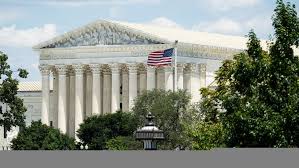
The U.S. Supreme Court expanded presidential power by ruling that executive agency heads can be fired at will, overturning a 91-year precedent. However, the court carved out a 5-4 exception for Federal Reserve Governor Lisa Cook, blocking her immediate ouster and prompting vows of further action from President Trump.
WASHINGTON — President Donald Trump issued a series of statements on June 29, 2026, welcoming a landmark U.S. Supreme Court ruling that significantly expanded presidential power over independent federal regulatory bodies, while simultaneously criticizing separate rulings regarding the Federal Reserve, voter identification, and a civil defamation judgment. The high court's final rulings of the term drastically altered a 91-year-old constitutional precedent on executive branch dismissals, granting the White House broader authority to fire independent agency leaders at will, though explicitly exempting the Federal Reserve Board of Governors on a narrow procedural basis.
Executive Removal Authority Radically Expanded by High Court
In a major constitutional shift, the Supreme Court of the United States ruled 6-3 to overturn the 1935 Humphrey’s Executor precedent. The decision grants the sitting president the authority to terminate the heads of most independent federal agencies at will, nullifying statutory "for-cause" protections enacted by Congress. Chief Justice John Roberts, writing for the conservative majority in a case involving former Federal Trade Commission (FTC) member Rebecca Slaughter, affirmed that restricting a president's removal power violates the separation of powers.
President Trump praised the outcome on his Truth Social platform, labeling it an unprecedented affirmation of executive authority. The ruling allows the administration to remove previously insulated regulatory heads across numerous federal boards without providing specific cause or awaiting the expiration of fixed terms.
Federal Reserve Exemption Draws White House Vow of Action
Despite the broader executive victory, the Supreme Court ruled 5-4 against the administration's immediate attempt to dismiss Federal Reserve Governor Lisa Cook. Cook, a Biden administration appointee whose 14-year term runs until 2038, was terminated by Trump in August 2025 over unproven allegations of pre-appointment mortgage fraud. Cook immediately filed a lawsuit to block her ouster, denying any wrongdoing.
The high court upheld a lower court's preliminary injunction, allowing Cook to remain in her post while her legal challenge proceeds. Chief Justice Roberts, joined by Justice Brett Kavanaugh and the three liberal justices, clarified that the administration failed to provide the statutory procedural protections Cook was legally owed.
Responding to the decision, President Trump stated that the loss was "strictly procedural" and vowed to continue his efforts to remove Cook from the central bank board, asserting his lack of confidence in her professional integrity. Cook maintained that the administration's actions were a pretext designed to undermine the statutory independence of U.S. interest rate policy.
High Court Declines Appeals on Mail-In Ballots and Carroll Judgment
The Supreme Court dealt the administration two distinct legal setbacks in separate orders issued on the same day:
Elections and Mail-In Voting: The justices rejected a Trump-backed challenge against state laws that allow mail-in ballots postmarked by Election Day to be counted in the days following an election. Trump criticized the decision as a "tremendous loss" for election integrity.
Civil Defamation Verdict: The court declined to review an appeal seeking to overturn a $5 million civil jury verdict finding Trump liable for sexual abuse and defamation against writer E. Jean Carroll. Trump blasted the decision, reiterating his position that the civil suit was an illegitimate use of "lawfare." Carroll issued a statement noting that the high court's refusal to intervene finalized her quest for legal accountability.
Renewed Push for the Legislative SAVE America Act
Following the court's refusal to restrict late-arriving mail-in ballots, President Trump renewed his public demand for Congress to pass the stalled Securing American Voter Eligibility (SAVE) Act. The proposed legislation seeks to mandate strict documentary proof of citizenship for federal voter registration and implement a nationwide ban on mail-in ballots, with narrow exceptions for military personnel, individuals with disabilities, and citizens traveling abroad. The administration has signaled it may withhold signatures on unrelated bipartisan legislation until the voting measure advances.
Official Sources Section
The legal details, case numbers, and institutional responses contained in this report are verified by:
The official majority and dissenting opinions published in Trump v. Cook (No. 25A312) by the Supreme Court of the United States.
Statutory text from the Federal Reserve Act (12 U.S.C. § 242) governing the removal of governors.
Public statements distributed via the White House press pool and verified social media accounts of the President.
Press releases issued by the Federal Reserve Board of Governors on behalf of Member Lisa Cook.
Quote Section
"It is such an Honor to be the sitting President who won this Historic and Unprecedented Ruling, one of the most important ever given with respect to Presidential Powers," President Donald Trump posted on social media following the FTC ruling.
"Allowing the ouster now would turn for-cause protection into little more than at-will employment... and turn the Federal Reserve into an entity without any judicial check after," wrote Chief Justice John Roberts in the majority opinion protecting Cook.
Why It Matters
The Supreme Court's decisions carry significant long-term implications for U.S. governance, financial markets, and the upcoming midterm elections. By dismantling parts of the administrative state's independence, corporate entities and investors must adapt to a regulatory landscape more directly influenced by shifting presidential administrations. However, the narrow defense of the Federal Reserve preserves, for now, the wall separating monetary policy and interest rate adjustments from direct political control, providing temporary stability to Wall Street markets anxious over potential executive interference.
Key Facts at a Glance
Precedent Overturned: The Supreme Court voted 6-3 to strike down the 1935 Humphrey's Executor ruling, granting the president broad power to fire independent agency heads at will.
Fed Exception: In a 5-4 ruling, the court blocked the immediate firing of Fed Governor Lisa Cook, citing a lack of proper statutory procedure by the White House.
Voting Rules Intact: The high court declined to block states from counting mail-in ballots received after Election Day, provided they are postmarked on time.
Carroll Verdict Stands: The court rejected an appeal to review the $5 million civil defamation judgment against Trump brought by writer E. Jean Carroll.
Legislative Ultimatums: The administration is leveraging the rulings to push for the immediate passage of the SAVE America Act to mandate nationwide voter ID laws.
FAQ Section
Q1: What does the Supreme Court's ruling mean for independent federal agencies? A1: Excepting the Federal Reserve, the president now possesses the constitutional authority to fire the heads of most independent regulatory agencies, such as the FTC, at will, removing long-standing protections established by Congress to prevent political interference.
Q2: Why was Federal Reserve Governor Lisa Cook treated as an exception by the court? A2: A 5-4 majority determined that the administration failed to provide the explicit pre-termination procedural process required under the Federal Reserve Act, meaning she cannot be removed while her broader lawsuit continues.
Q3: How does the ruling affect current mail-in voting practices? A3: The Supreme Court's refusal to intervene leaves existing state laws intact, allowing election officials in states like Oregon and Washington to continue counting valid mail-in ballots that arrive after Election Day if postmarked by the close of polls.
Source: Supreme Court of the United States, U.S. Department of Justice, and Federal Reserve Board of Governors.