President Donald Trump announced that US "boots on the ground" are not currently required in Iran, citing effective air and naval containment. The statement follows a wave of failed Iranian missile strikes against US assets in Kuwait and Bahrain, which were completely intercepted by American defense forces.
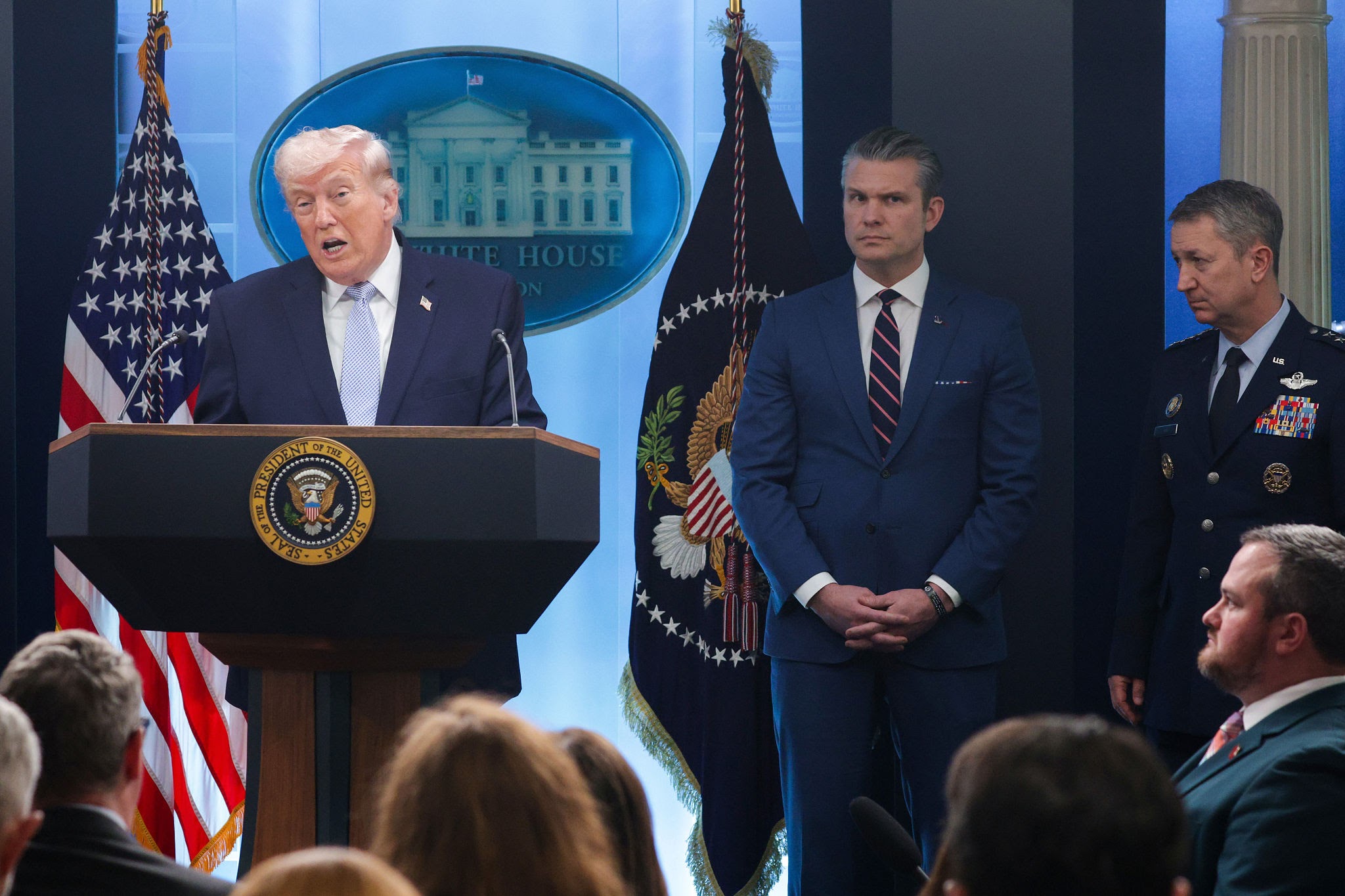
WASHINGTON, D.C. - US President Donald Trump announced on June 3, 2026, that the United States does not require "boots on the ground" in Iran at this stage of the ongoing conflict. Speaking from the White House, Trump asserted that the extensive air and naval campaign launched earlier this year under Operation Roaring Lion has successfully neutralized major conventional threats, making a massive ground invasion of the Middle Eastern nation unnecessary for achieving immediate security objectives.
The President’s remarks followed a turbulent overnight exchange in the Persian Gulf, where Iran launched a series of ballistic missiles and drones targeting US military facilities in Kuwait and Bahrain. According to statements from the US Central Command (CENTCOM), the incoming Iranian strikes failed to hit their intended targets due to successful interceptions by American regional air defense systems.
Air and Naval Supremacy Alters Ground Strategy
The administration’s military strategy has relied heavily on technical superiority rather than large-scale troop deployments to the Iranian mainland. President Trump stated that the joint US-Israeli air campaign has achieved "complete and total control" over Iranian airspace, striking nearly 2,000 targets including missile production infrastructure, naval assets, and command centers since the conflict intensified.
This overwhelming reliance on standoff weapons and stealth bombers has shifted the strategic calculations of the Pentagon, allowing the White House to push back against domestic political concerns over a prolonged ground war reminiscent of previous conflicts in the region.
While the administration has consistently refused to categorically eliminate any future military options, the President emphasized that current tactical realities dictate a minimal ground presence. The primary goals remain focused on preventing Tehran from securing weaponized nuclear assets and permanently dismantling its long-range ballistic missile stockpiles.
Rising Tensions and Regional Economic Realities
The ongoing hostilities have directly impacted regional infrastructure and global commodity frameworks. Following the overnight missile exchanges, authorities in Kuwait temporarily suspended commercial flights after an Iranian strike targeted land adjacent to the capital's international airport, resulting in localized disruptions and minor injuries.
Concurrently, CENTCOM confirmed the maritime interception of a seventh oil tanker attempting to breach the defensive American blockade of Iranian ports, highlighting the strict enforcement of energy restrictions in the Strait of Hormuz.
Despite these intense flashpoints, President Trump struck an optimistic note regarding broader global economic indicators, predicting that domestic gasoline and energy prices would begin a steady decline in the near future as international maritime supply chains adapt to the containment protocols.
Official Sources Section
Operational combat data, interception metrics, and details regarding the naval blockade were gathered directly from official public briefings provided by the US Department of Defense and US Central Command. Diplomatic tracking and administrative comments were verified via White House press pool transcripts published through the Foreign Press Association.
Executive Declarations
"We don’t need boots on the ground now," stated President Donald Trump during his press briefing at the White House. "The situation is evolving very rapidly, and I predict a very positive outcome. Our Navy and Air Force have done an incredible job. We are flying over their territory at will, and they have already agreed that they are not going to have a nuclear weapon. We are winning this conflict by a lot without risking our soldiers on the ground."
Why It Matters
The President’s public shift away from a ground invasion provides critical stability to global financial markets and maritime shipping industries fearful of an uncontrolled regional escalation.
By keeping the conflict confined to a naval blockade and targeted aerial strikes, the United States lowers the risk of catastrophic disruption to the global energy transit routes running through the Persian Gulf. For international businesses and consumer markets, this containment strategy helps keep crude oil prices within predictable boundaries, avoiding the severe inflationary shocks that typically accompany multi-theater ground campaigns in the Middle East.
Key Facts at a Glance
Ground Force Stance: President Trump explicitly ruled out the current necessity for US "boots on the ground" in Iran.
Overnight Escalation: Iranian ballistic missiles targeted US military facilities in Kuwait and Bahrain but were successfully intercepted by CENTCOM forces.
Aviation Impact: Commercial flight operations in Kuwait were temporarily suspended following localized strike damage near the national airport.
Blockade Status: US naval forces intercepted a seventh oil tanker trying to bypass strict maritime sanctions on Iranian energy ports.
Frequently Asked Questions
Does this mean US ground troops will never enter Iran?
The administration has not permanently removed the option from its strategic planning. However, officials maintain that current tactical achievements via air and naval operations make a ground invasion unnecessary at this time.
What are the primary objectives of the current US military campaign?
According to White House and Pentagon disclosures, the operation aims to eliminate Iran's conventional ballistic missile threats, disrupt drone manufacturing networks, enforce a strict naval energy blockade, and permanently halt Tehran's pathway to a nuclear weapon.
How is the conflict affecting global energy and flight transit?
While regional flashpoints have led to temporary airport closures in countries like Kuwait, the US maritime blockade remains tightly enforced in the Strait of Hormuz, with the administration predicting a stabilization of global fuel prices as containment continues.
Source: US Department of Defense, US Central Command Media Portal