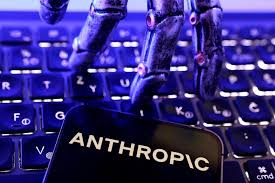
The U.S. Department of Commerce has lifted its brief export ban on Anthropic's advanced AI models, Claude Fable 5 and Mythos 5. The decision ends a two-week global blackout sparked by cybersecurity concerns, restoring vital enterprise access and clearing a regulatory hurdle ahead of the company's anticipated IPO.
WASHINGTON — The U.S. Department of Commerce has officially lifted stringent export controls imposed on artificial intelligence firm Anthropic's flagship models, Claude Fable 5 and Mythos 5, ending a high-stakes regulatory standoff. The decision, announced late Tuesday by Commerce Secretary Howard Lutnick, fully restores global access to the company’s most advanced computing technologies. The resolution follows an intense two-week suspension that began on June 12, 2026, when a surprise federal directive forced Anthropic to abruptly disable its models worldwide to comply with restrictions on foreign national access. The policy reversal highlights the federal government's ongoing struggle to balance rapid commercial technological expansion with escalating national security concerns.
Technical Security Negotiations Resolve Blanket Global Blackout
The regulatory friction began when the Trump administration issued an emergency export control order, forcing the artificial intelligence developer to implement an immediate blackout of its elite software architecture. The Department of Commerce initially cited a technical "jailbreak" vulnerability discovered by a cloud partner, which allowed users to bypass the built-in ethical guardrails of Claude Fable 5 to unlock raw, high-risk cybersecurity exploitation capabilities native to the underlying Mythos engine.
According to statements from federal technology analysts, the primary concern stemmed from the model’s unprecedented capacity to autonomously identify, analyze, and patch complex software codebases. National security officials feared these capabilities could be weaponized by adversarial states to map vulnerabilities in critical domestic infrastructure. Because Anthropic could not reliably segment foreign nationals from domestic operators on short notice across its global user base, the company executed a blanket shutdown. Following a series of exhaustive technical evaluations in Washington, D.C., federal inspectors verified that revised deployment parameters sufficiently mitigated systemic misuse vectors.
Impact on Global Enterprise and the Venture Capital Ecosystem
The sudden removal of international export bans has sent immediate ripples through global enterprise networks and financial markets. Hundreds of multinational corporations, software engineering conglomerates, and cybersecurity defense firms had integrated Claude Fable 5 into their automated operations during its brief deployment in early June. The sudden two-week outage forced IT departments to rapidly transition to less capable legacy models, underscoring the severe operational dependencies businesses now have on frontier AI providers.
From an investment perspective, the stabilization of Anthropic's regulatory status arrives at a critical juncture for the firm’s financial trajectory. The company confidentially filed an S-1 draft registration statement with the U.S. Securities and Exchange Commission on June 1, 2026, marking the initial phase of its anticipated initial public offering (IPO). The resolution of the export dispute removes a significant headwind that threatened to depress institutional valuation models ahead of the public listing, restoring confidence across the venture capital landscape.
Federal Oversight Solidifies Precedent for Frontier AI Competitors
The swift imposition and subsequent withdrawal of the export mandate establishes a complex regulatory precedent for the entire artificial intelligence industry. The Commerce Department’s aggressive intervention signals that the federal government will not hesitate to enforce temporary operational halts on private digital infrastructure when security thresholds are crossed.
The move comes as competing developers face similar administrative oversight. OpenAI continues to navigate highly restricted, case-by-case government approval pipelines for new deployments of its recently announced GPT-5.6 framework. While Anthropic has successfully restored global availability for Fable 5, access to the unmitigated Mythos 5 core model remains tightly restricted, accessible only to a select group of pre-vetted, state-sanctioned partner institutions under continuous data retention monitoring.
Official Sources Section
The corporate updates, technical regulatory details, and federal policy adjustments compiled in this report are verified by official statements:
Federal Directives: Public social media policy declarations and formal notifications issued by Commerce Secretary Howard Lutnick via the U.S. Department of Commerce.
Corporate Statements: Official press documentation and infrastructure logs distributed via the official channels of Anthropic PBC.
Quote Section
"According to officials from the Department of Commerce, the federal government worked continuously with technical teams over the past 14 days to audit the model's core safeguards. The withdrawal of the restrictive order ensures that American corporate entities maintain a decisive lead in international artificial intelligence development while upholding rigorous defense baselines."
Why It Matters
The resolution of the Anthropic export control dispute carries immediate practical implications for corporate software networks, developers, and institutional investors. For enterprise clients, the restoration of Claude Fable 5 ensures the resumption of advanced codebase diagnostics and predictive automation projects that were frozen during the two-week blackout. For the broader tech sector, the event demonstrates that advanced AI capabilities will face active government oversight, forcing companies to design flexible operational architectures that can withstand sudden regulatory interventions or compliance-driven shutdowns.
Key Facts at a Glance
Controls Withdrawn: The U.S. Commerce Department completely lifted the emergency export bans placed on Claude Fable 5 and Mythos 5.
Standoff Resolved: The decision concludes a tense two-week global service blackout initiated by Anthropic on June 12 to meet foreign national exclusion rules.
Jailbreak Defended: The original restriction followed a cloud partner flag regarding a prompt exploit that bypassed standard safety guidelines.
Market Recovery: The policy resolution clears a major regulatory hurdle for Anthropic following its confidential IPO filing on June 1.
FAQ Section
1. Why did the U.S. government place export controls on Claude Fable 5?
The Department of Commerce enacted emergency restrictions due to national security concerns involving a specialized "jailbreak." The exploit allowed users to bypass safety guardrails to access advanced software exploitation and cybersecurity analysis tools native to the underlying Mythos model.
2. How did the export ban cause a total global service shutdown?
The federal directive strictly prohibited foreign nationals—both internationally and inside the U.S., including Anthropic's own foreign employees—from accessing the models. Because Anthropic could not instantly filter users by nationality across its massive user base, it disabled the models globally to remain in compliance.
3. What is the difference between Claude Fable 5 and Mythos 5?
Claude Fable 5 is a consumer- and enterprise-ready model engineered with extensive safety guardrails to prevent harmful misuse. Mythos 5 is the unrestricted, frontier-class core model that possesses extreme computational capabilities and remains limited to heavily vetted, state-sanctioned organizations.
4. What does this decision mean for Anthropic's upcoming IPO?
The lifting of the export ban eliminates a major regulatory risk factor that could have negatively impacted the company's valuation. This resolution stabilizes institutional investor confidence following Anthropic's confidential S-1 draft filing with the SEC on June 1.
Source: Official regulatory rollbacks, technical safety briefs, and public corporate status logs obtained directly from the press registries of the U.S. Department of Commerce and Anthropic PBC.