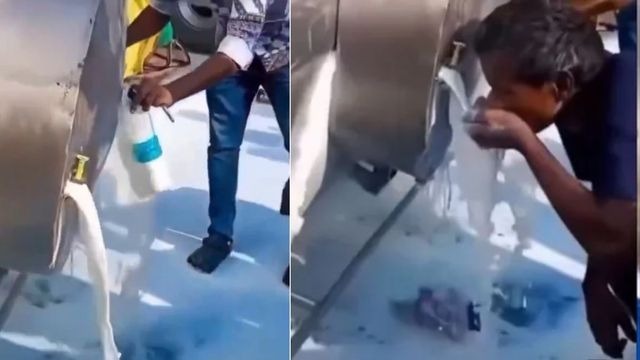
A viral video in Patna, Bihar, captured a crowd rushing to collect milk from an overturned tanker. Authorities intervened to manage the scene, while health experts warn that consuming milk salvaged from roadways is hazardous due to severe bacterial contamination and exposure to road pollutants.
Bystanders in Patna were seen gathering thousands of liters of milk from an overturned tanker, raising significant concerns regarding public safety and health risks.
PATNA — A viral video circulating on social media has captured a chaotic scene in Patna, Bihar, where a tanker carrying thousands of liters of milk overturned on a public roadway. Shortly after the vehicle tipped over, local residents were filmed rushing to the site with buckets, pots, and plastic bottles, creating an impromptu "loot" of the spilled cargo.
The footage, which has drawn widespread attention across various platforms, shows a large number of people crowding the damaged tanker as milk gushed onto the asphalt. While the incident resulted in no immediate reports of major injuries, it has prompted discussions regarding the safety hazards of consuming food products salvaged from roadside accidents.
Incident Details and Public Response
According to initial reports and viral clips, the milk tanker lost control and turned on its side, spilling its contents across the road. Within minutes of the accident, onlookers and passersby converged on the site. Instead of keeping a safe distance, many individuals began filling various containers with the milk, seemingly unconcerned about potential contaminants such as road grime, oil, or bacteria.
Local law enforcement eventually arrived at the scene to disperse the crowd and manage the cleanup. While authorities worked to clear the road and prevent traffic disruptions, the visual of citizens collecting the fluid has become a point of contention among safety experts and social media users who noted the hygienic risks associated with such behavior.
Health Risks of Salvaged Food Products
Medical professionals and safety advocates caution that consuming food or liquids salvaged from a crash site is inherently dangerous. Even if the milk was clean while inside the tanker, the act of it spilling onto a public roadway exposes it to significant contamination.
"Milk is a perishable product that is highly susceptible to bacterial growth," noted one public health observer. "Once it comes into contact with a road surface, it is exposed to pollutants, bacteria, and debris that cannot be removed through standard household methods."
Beyond the risk of foodborne illnesses such as E. coli or Salmonella, consuming such products can lead to severe digestive distress, including vomiting, nausea, and diarrhea. Experts emphasize that the pasteurization process that happens at a facility is designed for sealed environments; exposure to the elements negates any previous safety measures.
Potential Environmental and Safety Hazards
Beyond the health risks to individuals, large-scale liquid spills present broader safety concerns for motorists. A layer of milk on a roadway can create a slippery surface, significantly increasing the likelihood of secondary accidents.
According to roadway safety standards, liquid spills must be treated as hazardous material incidents, requiring professional mitigation. When liquid cargo—even non-toxic food-grade items—is spilled, it can also disrupt local drainage systems and, in some cases, displace oxygen in nearby waterways, posing a risk to local aquatic life.
Official Sources
While local police were dispatched to secure the area and restore order, no official statement has yet been released by the transport or health departments regarding the specific cause of the crash or the long-term impact on the area. Local authorities are currently assessing the debris and cleanup requirements to ensure the road remains safe for commuters.
Why It Matters
This incident serves as a critical reminder of the dangers posed by roadside accidents involving heavy tankers. For the general public, it highlights the importance of maintaining a safe distance from crash sites. For businesses and logistics companies, it underscores the necessity of strict vehicle maintenance and driver safety training to prevent rollovers that can lead to public health hazards and costly road closures.
Key Facts at a Glance
Location: The incident occurred on a public road in Patna, Bihar, drawing hundreds of onlookers.
Safety Warning: Health experts advise against consuming any food or beverage salvaged from the site of an accident due to high contamination risks.
Traffic Hazard: Spilled liquids create slick road conditions, potentially causing secondary vehicle collisions.
Crowd Behavior: Law enforcement had to intervene to manage the crowd and prevent further safety risks during the cleanup process.
FAQ
Is it safe to drink milk that has spilled onto the road?
No. Road surfaces contain grease, oil, bacteria, and other contaminants that make salvaged milk unsafe for human consumption, regardless of its original quality.
Why do tankers carrying liquid cargo tip over so easily?
Partial loads in tanker trucks can cause a "sloshing" effect, which shifts the vehicle's center of gravity and increases the risk of rollovers during sudden turns or stops.
What should bystanders do if they see a tanker accident?
The public should move to a safe distance, avoid touching any spilled substances, and contact emergency services immediately. Do not attempt to salvage cargo.
What are the legal consequences of "looting" spilled cargo?
Depending on local regulations, taking spilled goods can be categorized as theft or interference with an accident scene, which may result in police action.
Source: YouTube: Milk tanker overturns, crowd rushes to collect milk in viral video, Healthline: Risks of Spoiled Milk, Atlanta Truck Accident Lawyers: How to Handle a Tanker Truck Accident