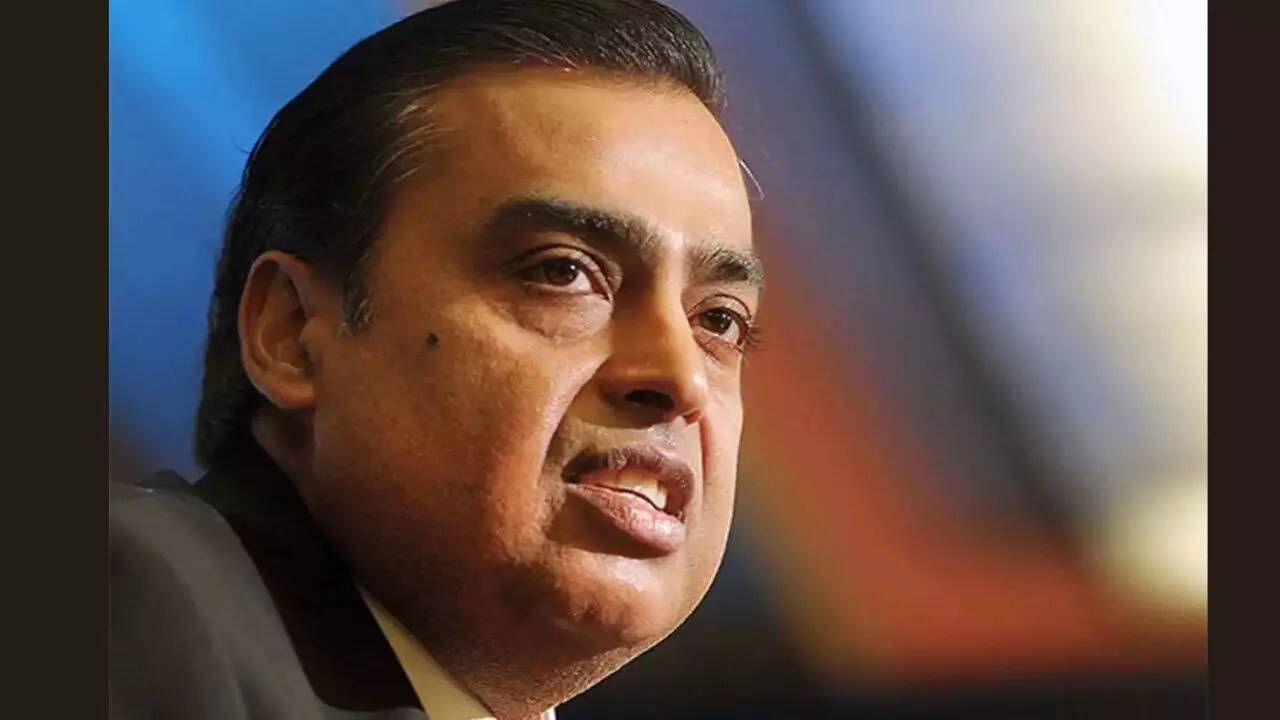
India's Economic Titans and the Wealth Gap
In 2025, Mukesh Ambani, chairman of Reliance Industries, solidifies his position as the richest individual in India with an astounding net worth reaching approximately ₹28 lakh crore (around $117 billion). This figure notabl...
India's Economic Titans and the Wealth Gap
In 2025, Mukesh Ambani, chairman of Reliance Industries, solidifies his position as the richest individual in India with an astounding net worth reaching approximately ₹28 lakh crore (around $117 billion). This figure notably doubles that of Gautam Adani, who holds the second spot with a net worth valued at about ₹14 lakh crore (approximately $68 billion). These valuations represent the dominant financial forces reshaping India's corporate and economic environment.
Key Highlights and Wealth Comparison
Mukesh Ambani's net worth stands near ₹28 lakh crore ($117 billion), representing diversified interests in petrochemicals, oil and gas, telecommunications (Jio), retail, and green energy sectors.
Gautam Adani's wealth is around ₹14 lakh crore ($68 billion), reflecting his group's prominence in infrastructure, ports, airports, power, and renewable energy.
Ambani remains the sole Indian member of the exclusive $100 billion+ club in 2025.
The wealth gap underscores Ambani's expanding empire, growing nearly twice as large as Adani's portfolio amidst fluctuating global and domestic market dynamics.
Despite recent corrections, Ambani's diversified holdings and new ventures into 5G and sustainable energy stabilize his top rank.
Adani's wealth has seen variances over recent years due to tariff issues and market shifts but continues robustly in infrastructure and energy domains.
Ambani’s Growth Drivers and Business Empire
Reliance Industries under Ambani has expanded past traditional energy and petrochemicals into a tech-driven future-focused conglomerate.
Jio’s transformation of India's digital landscape, offering affordable 5G services, is a major contributor to Ambani’s wealth.
He is advancing green energy projects, including massive renewable power generation and battery storage ambitions, positioning Reliance as a sustainability leader.
Retail businesses contribute significantly, leveraging India’s growing consumption and digital payment ecosystems.
Ambani's strategic investments and stake sales in tech startups further diversify his asset base.
Adani’s Economic Footprint and Market Position
Adani Group dominates key infrastructure sectors such as ports in India’s largest private port operator, airports, and logistics.
Strong emphasis on renewable energy projects aligns with global sustainability trends, driving future growth prospects.
Despite regulatory and tariff challenges in export markets like the US, Adani maintains expansion plans and market resilience.
Significant contributions to power generation and urban infrastructure bolster Adani’s domestic importance.
Broader Implications for India's Wealth Landscape
The top echelons of India’s wealth reflect a concentrated but influential group capable of shaping economic policies, innovation pathways, and international trade.
These figures highlight resource control, employment generation, and tax contributions critical to India's socio-economic fabric.
The division between Ambani and Adani also mirrors sectoral differences—tech, diversified conglomerates versus infrastructure-heavy portfolios.
Conclusion: A Tale of Two Titans
Mukesh Ambani’s surge to ₹28 lakh crore wealth, doubling that of Gautam Adani’s ₹14 lakh crore, encapsulates the evolving dynamics within India's billionaire hierarchy. While Ambani’s diversification, technological innovation, and green energy transition fuel his wealth ascent, Adani’s infrastructure dominance secures his significant but comparatively leaner stature. Both remain central to India’s growth narrative, symbolizing ambition, resilience, and the shifting contours of economic power.
Sources: Forbes India, Bloomberg, Economic Times