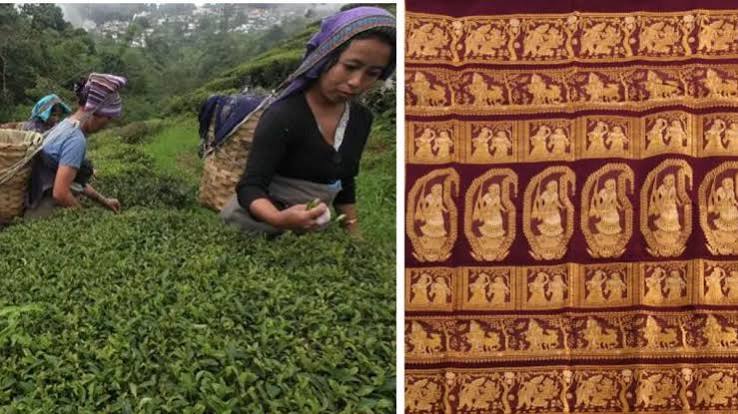
West Bengal has secured the 3rd spot nationally with 59 Geographical Indication (GI) tags, leading India in food-related categories. Recent additions include traditional sweets and crafts like jalbhara sandesh and Santiniketan batik. The state government is now focusing on QR-code authentication and market promotion to boost rural economic growth.
KOLKATA — West Bengal has solidified its position as one of India's most significant hubs for heritage preservation, securing the third-highest number of Geographical Indication (GI) tags in the country. With 59 registered products—ranging from the world-renowned Darjeeling Tea to the intricate Baluchari Saree—the state continues to leverage intellectual property rights to safeguard its agricultural and cultural legacy.
This development, confirmed by recent data from the Patent Information Centre (PIC) under the West Bengal State Council of Science and Technology, marks a pivotal shift in how the state manages its traditional knowledge. While Uttar Pradesh and Tamil Nadu lead the national standings, West Bengal has emerged as the premier state for food-related GI registrations, holding 13 of the country's 64 recognized food items.
Expanding the Portfolio: Beyond Traditional Crafts
The state’s GI portfolio has expanded significantly in recent months. In June 2026, the government added 23 new products to the registry, including Chandannagar’s jalbhara sandesh, Janai’s monohara, Santiniketan’s batik art, and the traditional ektara instrument associated with the Baul tradition.
State Science and Technology and Biotechnology Minister Kalyan Chakraborty stated that these additions are part of a broader strategy to ensure the authenticity of Bengal’s traditional offerings. "We are taking concrete steps to utilize the GI logo and QR codes to ensure the genuineness of original products," Chakraborty said.
The inclusion of diverse items—from nolen gur (date palm jaggery) and Krishnanagar clay dolls to Cooch Behar’s sitalpati—reflects a concerted effort by the state to protect rural artisans and agricultural producers from counterfeit competition and unauthorized branding.
Official Sources and Institutional Support
The recent surge in registrations is attributed to the Patent Information Centre (PIC), which has acted as a catalyst for local producer communities. According to official government releases, the PIC provides critical support by:
Drafting complex technical documentation required for GI applications.
Coordinating between various government departments and local producer groups.
Launching awareness programs on Intellectual Property Rights (IPR).
Conducting capacity-building workshops to help artisans navigate the registration process.
Why It Matters: Economic and Social Impact
For the people of West Bengal, a GI tag is more than a certification; it serves as "economic armor" for rural economies. By legally defining the geographical origin of a product, the tag prevents misuse of brand names and helps producers command premium prices in both domestic and international markets.
Experts suggest that while legal protection is the first step, the long-term success of these tags depends on sustained marketing and infrastructure. Research indicates that the GI framework provides a competitive edge to traditional products, allowing them to differentiate themselves in an increasingly globalized market. For the state's small and medium-sized enterprises, this recognition is expected to boost exports and promote regional tourism, particularly for heritage-rich hubs like Santiniketan and Bishnupur.
Key Facts at a Glance
National Ranking: West Bengal holds the 3rd position in India with 59 registered GI tags.
Food Sector Leadership: The state leads the nation in food-related GIs, boasting 13 recognized items.
Pioneer Status: Darjeeling Tea, West Bengal's most famous export, was the first product in India to receive a GI tag in 2004.
Recent Growth: 23 new products were added to the state's GI list in June 2026 alone.
Ongoing Applications: Seven additional products, including rasamalai and mishti doi, are currently under consideration for GI recognition.
Frequently Asked Questions (FAQ)
What is a Geographical Indication (GI) tag?
A GI tag is a sign used on products that have a specific geographical origin and possess qualities or a reputation that are due to that origin. It functions as a certification of authenticity and quality.
How does a GI tag benefit local artisans?
It provides legal protection against counterfeiting, helps maintain traditional manufacturing standards, and allows producers to differentiate their goods from mass-produced imitations, often leading to higher market value.
Which states hold the top two spots in GI registrations?
As of July 2026, Uttar Pradesh ranks first with 83 registered GI products, followed by Tamil Nadu with 76.
Can any product receive a GI tag?
No. A product must prove it possesses unique characteristics or a reputation directly linked to its traditional method of production or the specific climate/geography of its region.
Source: Patent Information Centre (PIC) West Bengal, Geographical Indications Registry India, Department of Science and Technology and Biotechnology, West Bengal