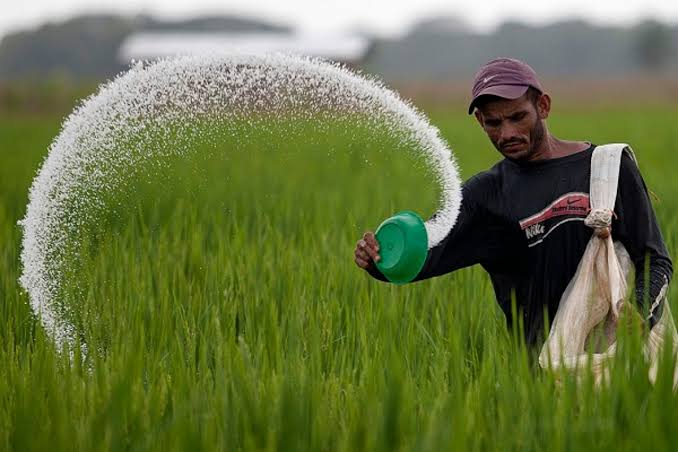
India imports nearly 50% of its nitrogen fertilizer from West Asian nations, but a geopolitical storm — from the Iran war to the Strait of Hormuz blockade — has turned a chronic dependency into a national emergency. As supply chains buckle and subsidy bills soar, New Delhi is betting big on Make in India to grow its own food security from the ground up.
India's fertilizer vulnerability has never been more exposed. The ongoing West Asia conflict has effectively stalled a third of global fertilizer trade that passes through the Strait of Hormuz, leaving Indian fertilizer plants in Maharashtra operating at just half capacity. With the June kharif sowing season approaching, the government is rationing existing stocks — and urgently rewriting its long-term agricultural supply strategy.
The Dual Dependency That Cracked Open
India doesn't just import finished fertilizers — it also imports the liquefied natural gas (LNG) needed to power domestic urea production plants. This "dual dependency" on West Asia means a single regional shock simultaneously blocks imports and spikes domestic production costs. A bag of urea that costs a farmer ₹266.50 costs the Government of India ₹4,184 — a subsidy burden that is now fiscally unsustainable as global prices double.
The Make In India Momentum
Despite the crisis, India's domestic fertilizer output hit an all-time high of 524.62 lakh tonnes in 2025, up from 433.29 lakh tonnes in 2021. In 2025, nearly 73% of the country's total fertilizer requirement was met through domestic production — a significant milestone. Five previously dormant urea plants — Gorakhpur, Sindri, Barauni, Ramagundam, and Talcher — have been revived, adding 76.2 lakh metric tonnes per annum of indigenous urea capacity since 2014–15.
Diversification On All Fronts
India is simultaneously diversifying its import basket. New Delhi is in active talks with Russia, Belarus, Morocco, and Canada to secure alternative supply corridors. State-owned firms RCF and NFL have signed NDAs with Russian partners to set up India's first overseas fertilizer plant, expected to produce over 2 million tonnes of urea annually. Long-term agreements have also been signed with Saudi Arabia's Maaden for 31 lakh metric tonnes of DAP/NPK annually through 2029–30.
The Nano Frontier And Policy Levers
IFFCO has already sold 3.3 million tonnes of nano urea worth ₹7 crore between 2021 and 2024, and six Nano Urea plants and four Nano DAP plants are now operational across India. The government is also exploring coal gasification as a domestic feedstock alternative to reduce reliance on imported LNG. Experts, however, warn that unless urea pricing reform is tackled — including a proposed 50% price hike offset by higher PM Kisan payouts — structural dependence will persist.
Make In India Fertilizer Insights
Sources: The Hindu BusinessLine (May 9, 2026), Economic Times, PIB India, Indian Chemical News, WUSF/NPR, Moneycontrol, Outlook Business, Times of India, Business Standard