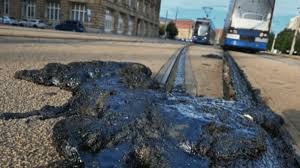
The structural failure of European roads at 40°C, contrasted with the resilience of Indian highways above 45°C, is a product of climate-specific engineering. Europe uses softer bitumen to prevent winter frost cracking, which melts under extreme summer heat, whereas India utilizes harder viscosity-grade binders designed specifically to withstand high-temperature thermal loads.
LONDON — As an early-summer heatwave pushes temperatures toward 40°C across Western Europe, regional transport systems are facing severe infrastructure damage, with reports of melting asphalt surfaces, buckling tram tracks, and warped highways. This development stands in stark contrast to emerging economies like India, where highway networks regularly survive ambient temperatures exceeding 45°C without widespread structural failure. The disparity, which has triggered emergency maintenance protocols across European transport ministries, stems directly from differing engineering standards, binder selection, and regional climate design baselines rather than variations in construction quality.
The Molecular Chemistry of Road Failure
The core vulnerability of European roads during a heatwave lies in the grade of bitumen used in the asphalt mix. Bitumen, a sticky, black, highly viscous liquid or semi-solid form of petroleum, acts as the glue holding the mineral aggregates together. In the United Kingdom and Germany, municipal engineering specifications have historically prioritized resistance to prolonged, sub-zero winter temperatures.
To prevent roads from cracking under frost heave or winter freeze-thaw cycles, European engineers utilize softer, lower-viscosity bitumen grades. Furthermore, many British highways use Hot Rolled Asphalt (HRA) or dense asphalt concrete, which features finer stone aggregates combined with a higher ratio of this flexible bitumen. When localized air temperatures rise to 40°C, the actual temperature on black asphalt surfaces can soar beyond 60°C. At these extreme levels, the softer binder reaches its softening point, causing the matrix to lose structural rigidity and deform under the heavy axle loads of commercial traffic.
Engineering Resiliency for 45°C Environments
In contrast, the Indian road network is engineered precisely to handle sustained thermal stress. According to the Indian Roads Congress (IRC), highway specifications mandate the use of heavy-duty, harder Viscosity Grade (VG) binders, predominantly VG-30 and VG-40 bitumen. These materials possess high kinematic viscosity and elevated softening points, allowing them to remain structurally stable under intense heat.
Indian road designs also integrate bituminous concrete with significantly larger, angular aggregate gradations. This geometric configuration forms an interlocking stone skeleton that distributes vehicular weight mechanically, reducing reliance on the bitumen binder alone to resist shear stress. Consequently, when Indian roads face temperatures above 45°C, the harder bitumen resists liquefaction, preventing the severe rutting and surface displacement observed in Europe.
Impact on Logistics, Trade, and Public Budgets
The vulnerability of European roads has immediate downstream economic impacts on logistics, commuter transport, and corporate supply chains. Transport authorities in France and Germany have implemented temporary weight restrictions on heavy goods vehicles (HGVs) to minimize permanent deformation on softened roads. Municipalities have also deployed sand-spreading trucks to cover sticky roads, an emergency measure intended to absorb rising oils and prevent tires from stripping the surface layer.
For logistics operators, these structural failures mean delayed deliveries and optimized routing costs. For municipal authorities, repairing heat-induced rutting demands significant budgetary allocations at a time when climate projection models indicate that extreme summer anomalies will become regular structural challenges.
Official Statements on Infrastructure Adaptations
Regulatory and government bodies are acknowledging the necessity of updating national construction frameworks to mirror changing global baselines. The World Health Organization (WHO) confirmed that early-season heatwaves across the continent have placed unprecedented strain on physical infrastructure, alongside public health resources. Regional highway agencies have initiated internal policy reviews to evaluate whether traditional asphalt mixtures remain viable.
Quote Section
"According to officials from regional transport departments, infrastructure metrics across the United Kingdom and continental Europe were engineered to withstand historic localized baselines, where winter durability took priority over extreme summer thresholds. Adjusting asphalt mixture properties to resist 40°C temperatures means running the counter-risk of increased stone cracking during freezing winter periods, creating an ongoing dilemma for municipal planners."
Why It Matters
The structural failure of European roads at temperatures that Indian networks routinely handle underscores a systemic challenge in climate change adaptation. Infrastructure built for a mid-20th-century climate cannot cope with modern thermal spikes. If Western nations do not alter their foundational engineering parameters—potentially shifting toward polymer-modified binders—the frequency of transport disruptions, emergency asphalt resurfacing, and logistics bottlenecks will escalate continuously, driving up public capital expenditures and consumer delivery costs.
Key Facts at a Glance
Binder Difference: European roads use softer bitumen to prevent winter cracking, while Indian highways utilize harder VG-30 and VG-40 bitumen to resist extreme summer temperatures.
Surface Heat Multiplier: Ambient temperatures of 40°C can cause black asphalt road surface temperatures to exceed 60°C due to high solar radiation absorption.
Structural Mixture: Indian road specifications leverage larger stone aggregates to create an interlocking structural skeleton, minimizing surface displacement.
Economic Cost: Heat-damaged roads result in weight limits on commercial freight, delivery delays, and unexpected infrastructure outlays for municipal budgets.
Frequently Asked Questions
Why can't European nations simply switch to the harder asphalt used in India?
If European transport authorities adopt harder binders without modifying other material components, the roads will become brittle during cold winters. This brittleness causes extensive cracking and potholes when temperatures drop below freezing, leading to severe winter damage.
What is the exact temperature at which European roads begin to fail?
Most standard European road mixtures are designed for ambient conditions below 30°C. When ambient temperatures hover between 35°C and 40°C, the surface temperature approaches 60°C, reaching the softening point of the low-viscosity bitumen binder.
Are concrete roads more resilient to heatwaves than asphalt roads?
Yes, rigid concrete pavements expand and contract systematically using pre-designed expansion joints. They do not experience the plastic deformation or melting characteristic of flexible asphalt pavements under intense heat, though they can suffer from joint buckling if expansion tolerances are exceeded.
How are highway agencies temporarily protecting melting roads?
Maintenance crews regularly spread stone dust or fine sand over softened asphalt. This sand binds with the liquefied bitumen tracking to the surface, creating a protective layer that mitigates tire adhesion and reduces structural shifting under vehicle tires.
Source: Official updates on national infrastructure design guidelines are available directly through the Indian Roads Congress and regional European transport frameworks monitored via the World Health Organization.