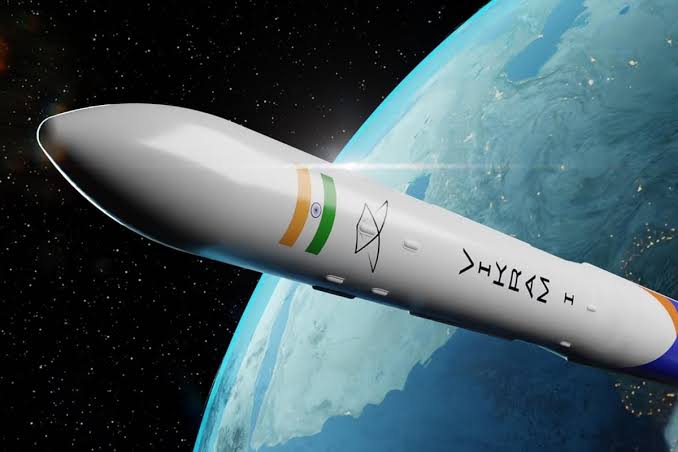
The upcoming Vikram-1 rocket launch reflects the growing strength of India's public-private partnership in the space sector, according to ISRO Chairperson Dr. V. Narayanan. Developed by Skyroot Aerospace with ISRO technical support, the orbital launch highlights how policy reforms are accelerating private small-satellite deployment capabilities across India's commercial space economy.
BENGALURU, India — The upcoming orbital launch of the Vikram-1 rocket demonstrates the expanding strength of public-private partnerships within India's space ecosystem, stated Indian Space Research Organisation (ISRO) Chairperson Dr. V. Narayanan on Friday, July 31, 2026. Speaking at an industry conference hosted by the Indian Space Association (ISPA), Narayanan emphasized that joint technical testing, infrastructure access, and regulatory facilitation are enabling domestic aerospace startups to transition from suborbital technology demonstrators to full commercial satellite deployment operations.
Developed by Hyderabad-based private aerospace firm Skyroot Aerospace, the Vikram-1 rocket is a multi-stage launch vehicle designed to place small satellites into low Earth orbit (LEO).
Technical Infrastructure Sharing and IN-SPACe Facilitation
The progression of the Vikram-1 vehicle from initial engineering design to orbital readiness relies on statutory support from the Indian National Space Promotion and Authorization Centre (IN-SPACe). Formed as an autonomous single-window agency under the Department of Space, IN-SPACe facilitates private sector access to ISRO's primary testing facilities and launch sites, including the Satish Dhawan Space Centre (SDSC) in Sriharikota.
| Parameter | Specification / Detail |
| Developer | Skyroot Aerospace (Hyderabad, India) |
| Target Payload Capacity | Up to 300 kg to Low Earth Orbit (LEO) |
| Propulsion Architecture | All-carbon-composite solid & liquid stages |
| Primary Launch Facility | Satish Dhawan Space Centre (SDSC SHAR) |
| Regulatory Oversight | IN-SPACe / Department of Space |
Engineers at Skyroot Aerospace conducted critical stage-testing and acoustic qualification trials at ISRO test stands, validating the vehicle's carbon-composite rocket motor casing and 3D-printed liquid engines. The collaborative model allows private firms to reduce capital expenditure on heavy testing infrastructure while adhering to established national flight safety and environmental standards.
Expansion of India's Commercial Space Economy
The operational deployment of Vikram-1 marks a key milestone in India's space sector reforms initiated by the central government. By opening launch infrastructure to private entities, the government aims to increase India's share of the global commercial space market from approximately 2% to over 8% over the coming decade.
The growth of small satellite constellations for earth observation, agricultural monitoring, maritime tracking, and telecommunications has created steady demand for dedicated small-launch vehicles. Heavy launch systems like ISRO's LVM3 and PSLV focus primarily on major national scientific missions and large commercial payloads, leaving a market opening for private micro-launchers like Vikram-1 to offer flexible, cost-effective launch schedules.
Impact on Industry, Satellite Operators, and Investors
The integration of private launch vehicles into India's space infrastructure delivers direct commercial and technological benefits:
For Global Satellite Operators: Dedicated small-satellite launches provide customized orbital insertion options without reliance on secondary rideshare availability on heavy rockets.
For Aerospace Startups and Investors: Successful orbital flights validate private venture capital investments, encouraging further capital deployment into domestic satellite component manufacturing, propulsion R&D, and ground-station software.
For Commercial Businesses: Enhanced satellite coverage improves real-time data availability for precision agriculture, logistics tracking, disaster response, and rural connectivity initiatives.
Official Sources Section
According to official administrative announcements, corporate releases, and space policy updates:
Quote Section
According to official leadership disclosures and space conference proceedings:
"According to officials, the development and upcoming launch of the Vikram-1 rocket reflects the growing maturity of India's public-private partnership framework, combining private innovation with national space agency infrastructure to expand commercial launch capacities."
Why It Matters
Private launch capability is essential for establishing a self-sustaining commercial space industry. By enabling private firms like Skyroot Aerospace to leverage national test facilities while designing cost-efficient launch vehicles, India strengthens its domestic supply chains, retains engineering talent, and positions GIFT City and domestic space parks as international hubs for commercial satellite services.
Key Facts at a Glance
Milestone: Vikram-1 orbital launch highlights advancing public-private collaboration in India's space sector.
Key Official: ISRO Chairperson Dr. V. Narayanan commended private aerospace integration during industry discussions.
Developer: Designed and manufactured by Skyroot Aerospace using carbon-composite structures and 3D-printed propulsion.
Regulatory Gateway: Facilitated through IN-SPACe and ISRO infrastructure access at Sriharikota.
Frequently Asked Questions (FAQ)
What is the Vikram-1 rocket?
Vikram-1 is a multi-stage small-satellite launch vehicle developed by private Indian aerospace firm Skyroot Aerospace, capable of delivering payloads of up to 300 kg into low Earth orbit.
What role does ISRO play in private rocket launches?
ISRO provides access to launch pads, specialized testing facilities, acoustic vibration chambers, and technical guidance through the statutory agency IN-SPACe.
What is IN-SPACe?
IN-SPACe (Indian National Space Promotion and Authorization Centre) is an autonomous single-window agency under the Department of Space that authorizes and promotes private space sector activities in India.
Where can the public verify official updates on India's space sector reforms?
Official releases and policy guidelines are available on the portals of ISRO, IN-SPACe, and the Department of Space.
Source: Indian Space Research Organisation, IN-SPACe, Skyroot Aerospace