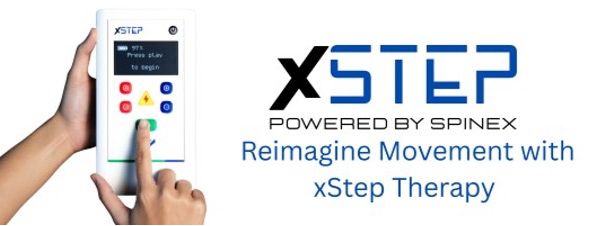
Dr. Parag Gad, CEO of SpineX Inc. and Vivatronix Tech Pvt. Ltd., spent 17 years researching spinal cord neuromodulation at UCLA before returning to India in 2023. His device xStep, a non-surgical spinal cord stimulator for paralysis and cerebral palsy, received CDSCO approval in October 2025 and secured a ₹1 crore Shark Tank India Season 5 deal from three Sharks.
A PhD at UCLA, a Mentor Who Changed Everything, and a Mission That Never Wavered
• Parag Gad moved to the United States in 2008 to pursue his Master's and PhD. There was no single defining moment that drew him toward paralysis research. It was gradual: an encounter with a mentor, Dr. V.R. Edgerton, widely regarded as the father of modern spinal neuromodulation, and the slow, growing realisation that the human spinal cord contained far more capacity for recovery than medicine had previously believed.
• The foundational insight behind xStep is counterintuitive: movement is not controlled by the brain alone. It depends on communication between the brain, spinal cord, and muscles. Scientists call the spinal cord's own contribution to movement organisation "spinal memory." When a spinal injury disrupts signals from the brain, the spinal circuits themselves may still retain the capacity to organise movement. xStep activates those circuits from outside the body, applying painless electrical pulses to the skin over the spine, without surgery, without implants, and without anaesthesia. Think of it as a pacemaker for the spinal cord.
• After years of research in California, Dr. Gad returned to India in 2023. In January 2025, he formally incorporated Vivatronix Tech Pvt. Ltd. in Bengaluru as the Indian manufacturing and commercial arm of SpineX Inc. In October 2025, xStep received approval from CDSCO, India's national drug and device regulatory authority, for clinical and home use across the country.
The Shark Tank Moment — A Live Demonstration That Stopped the Room
• On Shark Tank India Season 5 Episode 8, Dr. Gad walked onto the stage and invited Vineeta Singh for a live demonstration. The xStep device was applied to her arm. Gentle stimulation began. Her fingers twitched and lifted involuntarily.
• He had asked for ₹1 crore for 1% equity. Three Sharks, Namita Thapar, Vineeta Singh, and Kunal Bahl, invested together, closing at ₹1 crore for 10% equity. The deal brought not just capital but three of India's most connected business minds into the xStep ecosystem.
Scale and Real-World Impact
• xStep has received FDA Breakthrough Device designation for two separate indications in the United States. It has received CDSCO approval in India as of October 2025. The device has been deployed in multiple global clinical trials across spinal cord injury, cerebral palsy, stroke, and multiple sclerosis. xStep has reached patients outside India, including injured soldiers in Ukraine. The manufacturing cost at the time of the Shark Tank pitch was approximately ₹46,000 per unit, sold at ₹3 lakh, with a target to reduce manufacturing cost to ₹20,000 to ₹25,000 to dramatically improve accessibility. Dr. Gad's Google Scholar profile lists 3,955 citations, reflecting the depth of the scientific foundation behind the technology.
The Business Lesson — The Deepest Impact Takes the Longest to Build. Build It Anyway.
• The sharpest lesson from Dr. Parag Gad's journey is the one the startup world most consistently undervalues: some problems require decades, not months.
• In a landscape driven by quick exits, fast funding, and 18-month product cycles, Dr. Gad spent 17 years in a laboratory before his first commercial launch. He did it because the problem demanded that level of commitment. Paralysis does not have a minimum viable product. A device that helps a paralysed child lift a finger for the first time must be right.
• "This is a defining moment. Patients who have long been waiting for hope and recovery now have access to proven, noninvasive therapy," Dr. Gad said at the CDSCO approval announcement.
• He described xStep's journey as "born in CA, built in Ka," a phrase that captures his dual commitment to global scientific rigour and Indian accessibility. The technology was developed in California. The patients it was always meant to serve are here.
Seventeen years. One device. Millions of lives waiting.
Sources: The Better India, Indian Startup Times, Business Wire, Business Remedies, Snapdeal Blog, Google Scholar