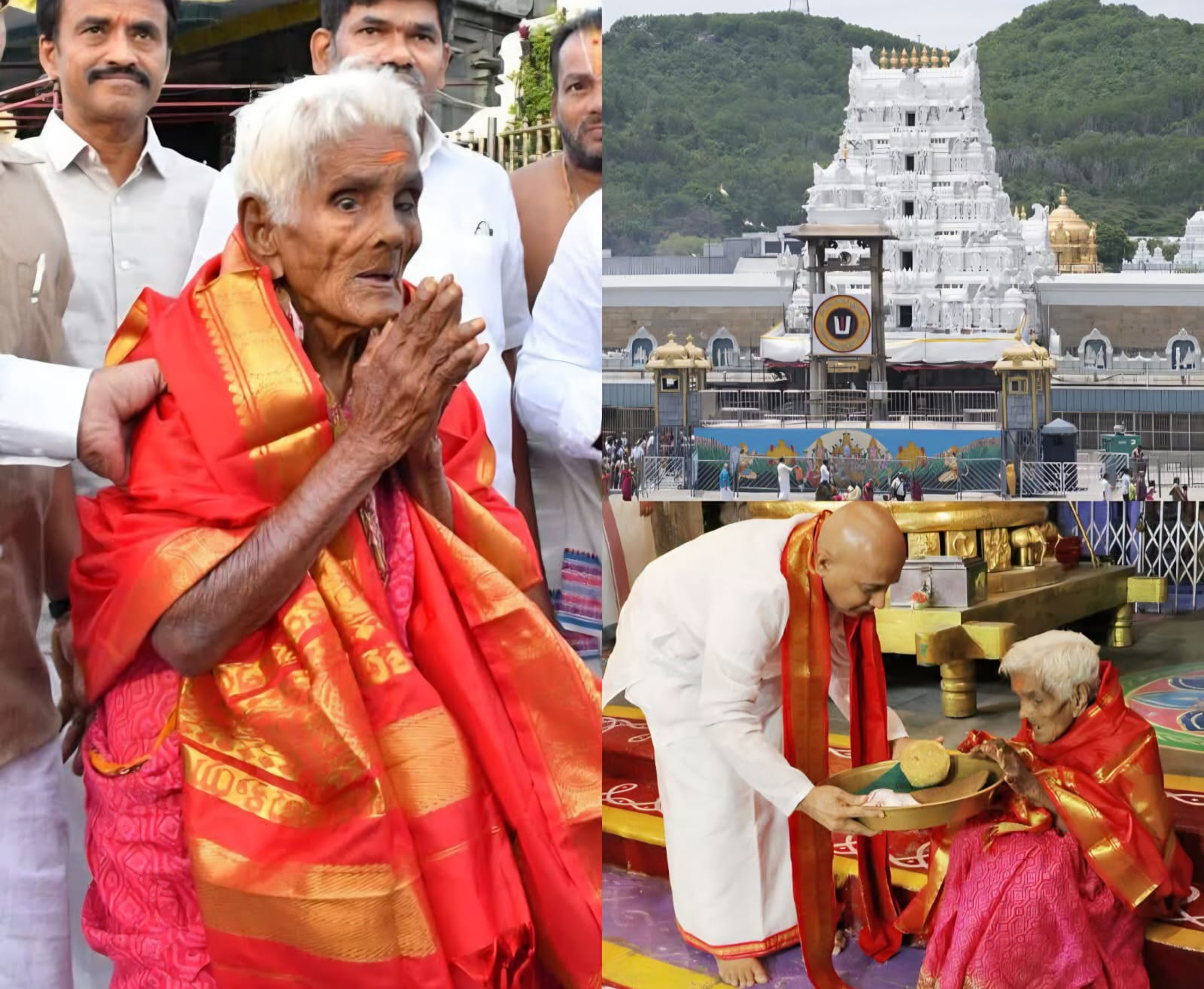
A 116-year-old pilgrim completed the demanding 9-kilometer Tirumala trek via the Alipiri footpath on Monday, July 6, 2026. Ascending 3,550 stone steps without mechanical aid, the centenarian reached the Lord Venkateswara shrine, highlighting the effectiveness of the medical and structural safety nets managed by the Tirumala Tirupati Devasthanams.
TIRUMALA, India — A 116-year-old pilgrim completed the arduous pedestrian journey to the hilltop shrine of Lord Venkateswara on Monday, July 6, 2026, demonstrating remarkable physical endurance. Navigating the steep stone steps of the traditional Alipiri footpath, the centenarian successfully scaled the Seshachalam hills to reach the holy temple town. The event has drawn widespread attention from both the public and local administrative bodies, serving as a poignant testament to the profound intersection of personal faith, advanced age, and physiological resilience in modern spiritual practices.
The Scale of the Alipiri Pedestrian Trek
The traditional Tirumala trek via the Alipiri foot route is a physically demanding journey spanning approximately 9 kilometers. It requires pilgrims to climb a total of 3,550 stone steps cut into steep mountainous terrain. While a significant portion of the route is now covered by protective overhead canopies, the elevation gain and sustained physical exertion pose severe physiological challenges, even for younger, physically fit devotees.
According to logs maintained by the security and medical wings of the Tirumala Tirupati Devasthanams (TTD), the centenarian pilgrim advanced steadily along the trail, accompanied by family members who assisted with pacing. Security volunteers stationed along the path monitored the progress to ensure access to amenities. Observers noted that the 116-year-old devotee declined mechanical transport options or sedan chairs (palanquins), which are routinely provisioned by temple administrators for elderly or infirm individuals.
Structural and Safety Protocols for Pedestrians
The Tirumala Tirupati Devasthanams (TTD), the independent trust that manages the daily operations of the hill shrine, maintains strict safety protocols along its pedestrian corridors. Given the vast influx of visitors, which frequently exceeds 60,000 to 80,000 people daily, the trust operates dedicated medical centers along both the Alipiri and Srivari Mettu footpaths.
TTD health officials stated that emergency medical stations equipped with trained paramedics, oxygen cylinders, and essential cardiovascular drugs are operational at fixed intervals along the steps, particularly near steep segments like the Gali Gopuram. Mobile medical units and ambulances are kept on standby at intersecting bypass roads to handle sudden exhaustion or cardiac emergencies. For the 116-year-old pilgrim, these support networks remained observant, though the journey was concluded without requiring emergency medical intervention.
Socio-Cultural Impact and Devotee Demographics
The completion of the Tirumala trek by a centenarian has resonated deeply with the millions of devotees who track the daily happenings of the Andhra Pradesh shrine. Temple sociologists note that while youth and working-age populations dominate the modern biometric booking lines, elderly individuals consistently attempt the walking trails as an act of deep penance and spiritual fulfillment.
The event highlights the broader operational dynamics of the temple town, where infrastructural facilities must simultaneously accommodate high-speed digital ticketing, rapid vehicle transit via twin ghat roads, and traditional foot-pilgrims. For the vast community of fans, travelers, and spiritual observers, such occurrences reinforce the cultural significance of the ancient walking tracks, which have been traversed by historical saints and rulers for over a millennium.
Official Sources Section
The logistical details, structural parameters, and institutional procedures outlined in this news report are based on official operational frameworks published by the Tirumala Tirupati Devasthanams (TTD) Administrative Portal, alongside security logs and crowd-management directives from the Tirupati District Police.
Quote Section
"The safety and physical well-being of foot-pilgrims remains our absolute priority, with specialized amenities deployed across all pedestrian pathways."
— Tirumala Tirupati Devasthanams (TTD) Management Desk
"According to officials, medical outposts and continuous patrolling teams are systematically positioned along the hillsides to guarantee that devotees of all ages can navigate the steps securely."
Why It Matters
From a practical perspective, this milestone underscores the critical importance of robust public infrastructure and dedicated medical safety nets in managing mass religious tourism. As the global demographic curve shifts toward longer lifespans, public administrations and religious trusts must continually refine their health monitoring systems, rest zones, and emergency response capabilities to support elderly citizens who choose to engage in rigorous, traditional physical journeys.
Key Facts at a Glance
The Accomplishment: A 116-year-old devotee successfully completed the pedestrian Tirumala trek on July 6, 2026.
Route Specifications: The journey involved ascending 3,550 stone steps over a 9-kilometer mountain trail via the Alipiri pathway.
Institutional Support: Devotees on foot are monitored by TTD medical teams stationed at strategic locations like the Gali Gopuram.
Daily Footfall: The Tirumala shrine manages an average daily influx ranging between 60,000 and 80,000 pilgrims across various entry points.
Frequently Asked Questions
What are the primary pedestrian routes to reach Tirumala?
There are two major pedestrian pathways: the Alipiri footpath, which starts from Tirupati and features 3,550 steps, and the Srivari Mettu route, which is shorter but steeper with around 2,400 steps.
Are there facilities for elderly pilgrims who cannot walk the full distance?
Yes, the TTD provides paid sedan-chair (palanquin) services for individuals with limited mobility. Additionally, free transport options and specialized direct-entry queues are available for senior citizens and medical patients at the hilltop.
How does the temple administration handle medical emergencies on the stairs?
The TTD operates multiple fully equipped first-aid centers and oxygen stations along the walking tracks, backed by round-the-clock mobile medical teams and emergency transport networks.
Sources: Deccan Chronicle, Tirumala Tirupati Devasthanams Official Board,