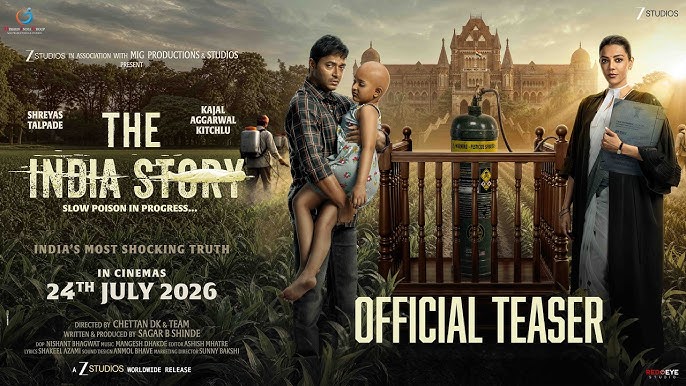
Following the sudden removal of Diljit Dosanjh’s film Satluj from ZEE5 just two days after its digital debut, the upcoming feature The India Story has had its release paused. The delay reflects a tightening regulatory environment as OTT platforms wait for formal CBFC clearance on sensitive historical narratives.
MUMBAI, India — Following the sudden weekend removal of the Diljit Dosanjh-led film Satluj from the digital platform ZEE5 just 48 hours after its premiere, the upcoming socio-political drama The India Story has reportedly had its digital rollout paused as it awaits official certification from the Central Board of Film Certification (CBFC). The dual disruption highlights an escalating enforcement regime where Indian streaming services, long operating under more flexible self-regulatory IT frameworks, are increasingly feeling the strict administrative hand of traditional film certification boards. The sudden removal of Satluj has sent ripples through production houses in Mumbai and New Delhi, signaling that digital content addressing historical and sensitive regional narratives faces a much narrower path to distribution.
The Precedent: Why Satluj Was Taken Down
The sudden disappearance of Satluj from ZEE5’s active Indian catalog on Sunday, July 5, 2026, served as the immediate catalyst for the current industry anxiety. Directed by Honey Trehan and produced by RSVP and MacGuffin Pictures, the movie is a biographical drama based on the life of human rights activist Jaswant Singh Khalra, who investigated the alleged illegal cremation of thousands of unidentified bodies in Punjab between 1984 and 1994 before his own abduction and murder in 1995.
The film had spent more than three years locked in an administrative impasse with the CBFC, which had initially demanded an unprecedented 127 cuts and forced multiple title changes from Ghallughara to Punjab '95, and finally to Satluj. Looking to bypass a restricted theatrical release window, the producers secured a direct digital premiere on July 3, 2026, streaming the project in its unedited form.
However, the streaming service pulled the film within two days, citing unconfirmed administrative pressures and "current developments." The unexpected removal triggered immense political debate across Punjab, alongside intense social media criticism from filmmakers like Sanjay Gupta, Onir, and Ranvir Shorey, who voiced concerns over the growing normalization of post-release digital takedowns.
Technical Bottlenecks Facing The India Story
In the immediate wake of the Satluj controversy, corporate sources within the streaming sector confirmed that several other politically themed and historical projects are undergoing intense internal legal and regulatory reviews. Chief among these is The India Story, an upcoming long-form narrative feature designed for direct-to-OTT distribution.
According to compliance officers tracking the project, the film’s post-production teams are currently navigating an extended review window with the CBFC's examining committee. Under the revised Cinematograph (Amendment) guidelines, content intended for public display across any broadcast medium—including digital streaming platforms that opt for an official CBFC rating badge for marketing or operational compliance—is subjected to strict historical and socio-political verification.
Entertainment industry legal analysts note that the delay surrounding The India Story stems from an ongoing dialogue regarding specific dialogue files and localized historical references. Rather than risk a post-release legal challenge or an abrupt platform takedown similar to Satluj, the platform executives behind The India Story have chosen to keep the project on hold until an official Cinematograph Certificate is printed and handed over by the board.
Economic and Strategic Impact on Streaming Portfolios
The aggressive regulatory scrutiny is fundamentally modifying the economic calculations of over-the-top (OTT) networks, content creators, and institutional media investors across India. For years, digital platforms positioned themselves as a sanctuary for mature, complex, and uncompromised storytelling that could not survive traditional theatrical exhibition.
The current landscape alters that dynamic. Studios are now facing prolonged capital locks, where multi-crore production budgets remain frozen for years due to certification delays. This has direct downstream impacts on consumers, who face sudden disruptions in content availability, and on corporate investors, who must recalibrate the risk profiles of Indian media assets. Industry insiders suggest that production houses are beginning to steer away from controversial real-world historical events, pivoting instead toward safer commercial genres like romantic comedies and apolitical action thrillers to protect their financial pipelines.
Official Statements Section
The regulatory data and platform statuses outlined in this report correspond with official public corporate declarations posted by ZEE5 compliance teams and documentation filed within the operational frameworks of the Central Board of Film Certification (CBFC).
Quote Section
"In light of the current developments, Satluj will be unavailable in India until further notice. We remain committed to exploring every appropriate avenue through due process to bring the film back to our audiences."
— Official Corporate Statement by ZEE5 Compliance Division
"According to officials close to the censor board, digital-first features that voluntarily seek certification or feature politically sensitive historical themes must undergo thorough procedural checks to ensure alignment with public broadcasting guidelines."
Why It Matters
The regulatory gridlock confronting The India Story and the erasure of Satluj represent a major turning point for the streaming industry. As digital platforms are pulled closer into line with traditional theatrical censorship, the line between internet-delivered entertainment and broadcast television is disappearing. For the wider media landscape, this shift means that independent filmmakers must now design their projects with institutional censors in mind from day one, potentially reducing the diversity of historical perspectives available to the Indian public.
Key Facts at a Glance
The Immediate Trigger: Satluj, starring Diljit Dosanjh, was pulled from ZEE5 in India on July 5, 2026, just 48 hours after its long-awaited digital launch.
The Delayed Film: The India Story has had its digital rollout paused as its creators wait for an official clearance certificate from the CBFC.
Censorship Context: Satluj originally faced more than three years of delays and an estimated 127 requested cuts over its depiction of 1990s Punjab history.
Industry Shift: Major OTT networks are moving away from direct, unedited digital releases of politically sensitive projects to avoid sudden legal or administrative takedowns.
Frequently Asked Questions
Why was the film Satluj removed from streaming?
While the platform has not detailed the exact legal or administrative notice it received, ZEE5 confirmed the film was taken down due to "current developments" and stated they are exploring legal channels to safely restore the title.
Does the CBFC legally regulate OTT content in India?
OTT platforms are primarily governed by the IT Rules under the Ministry of Information and Broadcasting. However, when digital films seek official certification for wider distribution or marketing, or when their themes draw formal scrutiny, they frequently interface directly with the CBFC's evaluation standards.
What is the status of The India Story?
The release of The India Story remains temporarily suspended. The production team and its digital distribution partner are actively working through the CBFC review process to secure a clean certification before locking an official streaming date.
Source: ZEE5 Press Room, Times of India